
'Having survived the Southport attack, I live with the consequences of knife harm every day'
Policing and Crime Minister Sarah Jones has challenged retailers to strengthen their action on marketing knives, following a public inquiry into the Southport attack, where three young girls - Bebe King, Elsie Dot Stancombe and Alice da Silva Aguiar - were tragically murdered.
“We cannot wait.”
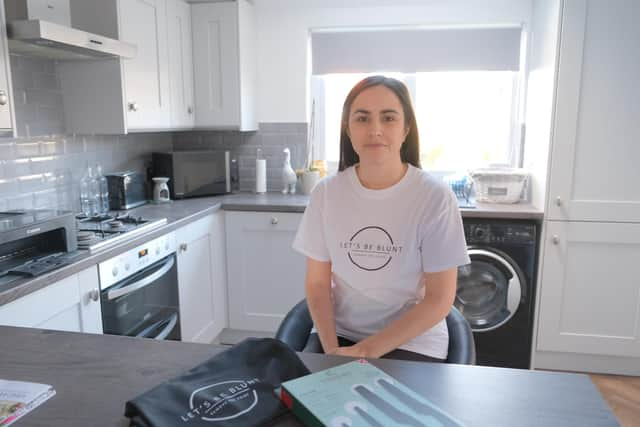

For one survivor of the devastating Southport attacks it’s quite simple - retailers must take responsibility. And the government agrees.
Teacher Leanne Lucas, now a knife crime campaigner, said: “Having survived the Southport attack, I live with the consequences of knife harm every day, and I founded Let’s Be Blunt to help prevent others from experiencing that devastation.
“Every knife has a lifecycle - from design and manufacture to marketing, display, sale, storage and access - with opportunities for prevention at every stage. Everyday pointed-tip kitchen knives must be part of the discussion about stronger safeguards.
““Retailers must take responsibility for what they stock and how knives are marketed, stored, displayed and sold, giving staff the education, training and support to put policies into practice. We need businesses to make bold commitments, follow them through and become role models across the sector.
“We cannot wait for the next tragedy to make simple, practical changes, whether knives are sold in shops or online.”

Businesses have now been warned to stop using combat and violence to market knives and ensure dangerous weapons are not displayed where they can be easily accessed.
Across two summits, hosted by Policing and Crime Minister Sarah Jones, law enforcement, major retailers, online marketplaces, trade associations, Trading Standards, and the Advertising Standards Authority and campaigners were brought together to identify practical steps to strengthen safeguards around the sale and online marketing of knives.
Irresponsible advertising of knives, particularly online, has been highlighted by campaigners as being a key factor in helping to feed fixations of violence. The need to tackle this was a major theme in the report following the first phase of the public inquiry into the tragic murders of three young girls - Bebe King, Elsie Dot Stancombe and Alice da Silva Aguiar -in July 2024.
In the first summit, the Minister challenged online retailers and marketplaces in one summit on how they will ensure knife listings comply with the law and what further action they will take to prevent irresponsible marketing.
At a second summit, businesses with traditional ‘bricks and mortar’ shops were pressed to strengthen standards for displaying and selling knives in stores and support a renewed Responsible Retailers' Scheme, a voluntary code that promotes best practice in the sale and display of knives.
Policing and Crime Minister Sarah Jones said: “Knife crime destroys lives and devastates families, and everyone involved in the sale of knives has a responsibility to help prevent harm.

“Businesses and online retailers need to take a hard look at how knives are marketed, sold and displayed, and take every possible step to prevent irresponsible sales.
“We are making progress, but I want businesses to go further and do everything possible to stop dangerous knives reaching the wrong hands.”
Also speaking to ‘bricks and mortar’ retailers was campaigner Alan Bacon, whose mother Tracy was stabbed and killed in 2015. Alan spoke about the need for safer display and sales in shops to stop easy access to knives and prevent further tragedies.
lan Bacon, campaigner and founder of No Point Knives said: “For ‘No Point Knives’ these summits are the culmination of a decade's worth of campaigning and highlighting shops that are selling knives without consideration for safety. Thanks to this government we finally have the chance to present our evidence to the industry and make a difference.”
The summits were also attended by enforcement partners from the National Knife Crime Centre, which was set up to coordinate efforts to reduce knife crime.
Commander Stephen Clayman, head of the National Knife Crime Centre (NKCC) and NPCC knife crime lead, said: “Knife-enabled crime remains a complex issue that policing cannot tackle it alone. It requires agencies, partners, businesses and communities to work together, addressing the issue from a range of different perspectives.
“At the NKCC, we are working tirelessly to restrict illicit knife supply through the unregulated grey market and importation of prohibited weapons from countries with different legislation to the UK, both of which remain significant concerns for law enforcement.
“But retailers, whether online or on the high street, also have a significant role to play, and that was made abundantly clear at today’s summit. Responsible selling and marketing practices are vital if we are to reduce children’s access to dangerous weapons.
“The consequences of knife-enabled crime can be devastating for victims, families and whole communities. We will continue working with the Home Office to deliver the 2025 online review of knife sales recommendations and work with retailers and partners to develop long-term solutions that restrict access to dangerous weapons, prevent harm and help keep our communities safe.”
The summit supports the government’s wider mission to halve knife crime, combining stronger safeguards on knife sales through Ronan’s Law with targeted prevention programmes and data-led policing in the areas most affected by serious violence.
- Under the Knives Act 1997, a person commits an offence if they market a knife in a way which indicates, or suggests, that it is suitable for combat; or is otherwise likely to stimulate or encourage violent behaviour involving the use of the knife as a weapon.