
‘Get on with it’ Government urged to create new offence after Southport attacks

The Government has been urged to create a new offence of plotting Southport-type non-terrorist mass casualty attacks by a legal watchdog.
The independent reviewer of terrorism laws, Jonathan Hall KC, told the Press Association he recommended creating the offence for a purpose and action needs to be taken. He made the recommendation in March last year after a review sparked in the wake of the Southport atrocity, in which three young girls were murdered at a dance class.
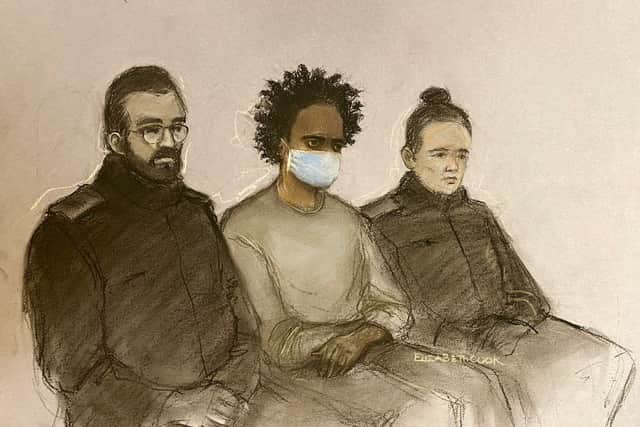


There was also a second case where a 16-year-old had planned a primary school massacre in Luton after killing his family. Then-home secretary Yvette Cooper pledged in July last year to change the law, but this has not yet happened.
Mr Hall said: “I’m completely convinced that my recommendation is right. I’m afraid that there is a particular way with mass casualty attacks which attracts future attackers, and that’s why I think my recommendation is warranted. There was a case that went through the courts of a man who had dug the graves of his future victims and carried out reconnaissance on his targets.
“And there are cases where people fantasise about doing mass killings, which will not qualify as terrorism, where the police are thinking, what can I arrest this person for? And if I arrest them, what can they be charged with? I understand the Government has got to manage its legislation, and it has to be drafted, but I made the recommendation for a purpose. They need to get on with it.”
Questions were raised in the wake of the Southport attacks after murderer Axel Rudakubana was only charged with a terror offence in relation to possession of ricin, and not the atrocity itself. He was also referred to the anti-extremism scheme Prevent three times, but had his case closed due to lack of a terrorist ideology.
Chris Walker, the solicitor who represents the families of Elsie Dot Stancombe, seven, Bebe King, six, and Alice da Silva Aguiar, nine, who were murdered in Southport, said he would back the plan as long as the new crime was taken as seriously as terrorism.
The new offence should involve “the same microscopic analysis, same resources, same judicial system outcome” as someone found to be plotting a terrorist attack, he said.
The first report of the public inquiry into the Southport atrocity is due to be published on April 13. The families of the girls who died have raised concerns that people obsessed with extreme violence are treated as less of a threat than someone with terrorist beliefs, which they say is wrong.
“There are definitely two different pathways of how people are treated, whether or not there is a perceived ideological threat, and we say that’s wrong,” Mr Walker said. A person who intends to commit mass murder, the ideological cause or lack of ideological cause is immaterial.”
If someone is referred to the government anti-extremism scheme Prevent, and found not to follow a specific ideology, the case can be referred to a multi-agency safeguarding hub (Mash).
Mr Walker, who is director of serious injury at Bond Turner, said: “There is no obligation on the individual to comply with the requirements of Mash and what they intend to achieve in terms of rehabilitation and surveillance outcomes. Whereas if you do have an ideological component, there is a significantly greater amount of resources poured into you as an individual, because you’re regarded as somebody who has a significantly higher risk factor. And we say that’s not correct. A person who has extreme views and intent to commit mass murder, irrespective of the cause, is the risk.
“There has to be the powers of the state to compel somebody without an ideological component, to comply with the various state agencies. These are extremely serious individuals with a very serious intention to cause mass murder, who often meticulously prepare for mass murder, and further, as we see, sometimes they carry it out.”
A review in February 2025 found that there had been too much focus on the Southport killer’s lack of ideology by Prevent staff. The teenager attacked a pupil with a hockey stick, used school computers to look up the London Bridge terror outrage and carried a knife on a bus and into class before he carried out the Southport murders.
In a separate case last month, a would-be copycat who idolised the Southport killer was found to have twice been referred to Prevent – once when officials found he was driven by autism not ideology, and a second that was still being processed when he was charged with possessing information useful to terrorists.
Nicola Ryan-Donnelly, serious injury solicitor at Fletchers who represents other families affected by the Southport attack, said: “The lack of an ideology should not shield perpetrators from the full weight of the law, particularly at a time when we are facing increasing threats from violence-obsessed individuals and ‘lone wolf’ attacks which challenge the definition of terrorism.
“Disgraceful attitudes towards women are being increasingly shared and normalised online, and they fear these views have the potential to motivate certain young men to commit violent acts of terror against women and girls.
“Until legislation reflects the true nature of these evolving threats, everybody affected by the terror of that day will continue to be denied the comprehensive justice and safety they deserve.”
The Government is still considering the best way to close the gap in legislation and bring in the new offence recommended by Mr Hall.
A Government spokesperson said: “Our thoughts remain with the family and friends of Bebe King, Elsie Dot Stancombe and Alice da Silva Aguiar.
“The threat posed by individuals fixated on violence and mass casualties is extremely serious, which is why this Government has committed to closing gaps in existing legislation on mass casualty attacks. Work continues, and a response to this recommendation will follow in due course.”