
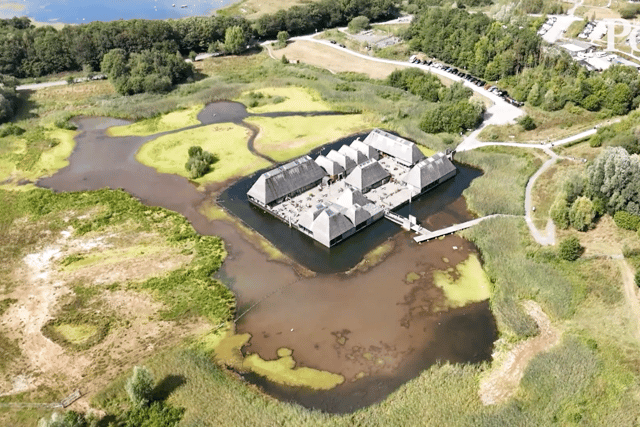
Brockholes from above - check out Lancashire's flagship nature reserve like never before
The Lancashire Post is celebrating its 140th anniversary. As part of this, we’ve taken to the skies to look at some of the area’s best-loved landmarks from a different angle. Here’s the sights and story of Brockholes Nature Reserve.
The Lancashire Post isn’t alone in celebrating a milestone birthday this year - one of Lancashire’s favourite family attractions is celebrating its 15th anniversary as well.
Brockholes Nature Reserve - Lancashire Wildlife Trust's flagship centre and a haven for birds, insects, mammals, plants and amphibians -officially opened in 2011.
But it’s story actually began in 1992.

Before being transformed into a nature reserve, the site beside the M6 motorway, was a prominent, active sand and gravel quarry. First run by Tarmac, it was acquired by Hanson Aggregates in 2000 as part of a £32.9million deal for 14 separate sites.
LWT began challenging the quarrying of the site in 1992, concerned about the impact on ancient landscapes and wildlife, and after years of advocacy, when extraction work came to an end in 2006, they seized a groundbreaking chance to purchase the site and safeguard it from development.
Pivitol moment
Thanks to the support of members and a financial contribution from the Northwest Regional Development Agency (NWDA), January 2007 marked a pivotal moment for the Lancashire Wildlife Trust, as the Brockholes project was born. Adam Khan Architects came up with an innovative design concept named 'A Floating World', and in January 2009, Brockholes started to come alive as a team of volunteers contributed over 100 hours to assist in propagating 20,000 reed seedlings on-site.
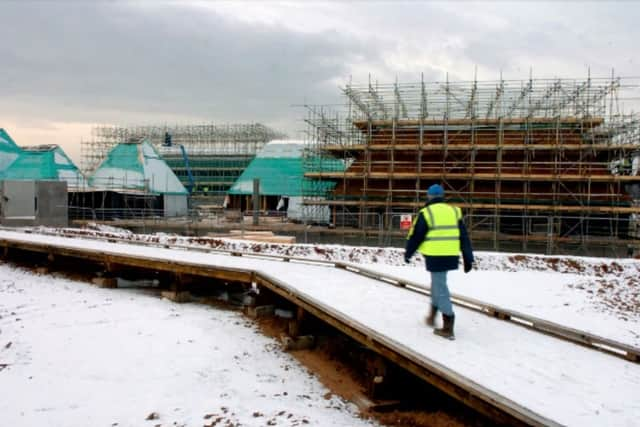
During December 2009, the construction of the iconic floating visitor village commenced. In November 2010, the reserve team welcomed their first group of grazing assistants – a herd of longhorn cattle. These magnificent additional team members played a vital role in establishing and preserving Brockholes' unique habitat diversity. Besides their conservation efforts, these beloved bovines have become a visitor favourite and continue to charm guests on the reserve to this day
The whole site was opened in April 2011.
In spring 2012, Brockholes received a record breaking three RIBA awards, including the highly esteemed North West Building of the Year accolade. During the summer of the same year, the reserve held its inaugural wedding ceremony, marking the beginning of many happy couples choosing Brockholes as their perfect place to say 'I do'.
Over the following years, the reserve flourished as a thriving habitat with notable wildlife sightings such as curlew, avocet, and pallid harrier. Recognised as a wildlife haven, Brockholes gained nationwide attention in 2017 when the BBC Countryfile team visited to film a segment on our captivating boxing hares. The accolades continued to pour in with the team's outstanding achievements, leading to Brockholes being honored as the 'Best Hospitality Venue of the Year' at the esteemed Lancashire Business Awards and 'Best Venue by the Water' at The Great Northern Wedding Awards.
Before the Brockholes Nature Reserve
The earliest written records of Brockholes date back to 1246, when the land was granted to the Lathom family.
In the 17th century, the land was divided into Higher and Lower Brockholes, which included historic manor farmhouses. Lower Brockholes Farmhouse still stands today, featuring a porch stone dated 1634.
By the 1950s, the character of the area changed massivey when the M6 motorway—the UK's first motorway—opened in December 1958, cutting directly through the historic landscape.
From the late 1980s to 2006 the site alongside the River Ribble operated extensively as a sand and gravel extraction quarry. When industrial operations ceased, it left behind a scarred, industrial landscape with flooded pit sections.