
Barber's anniversary celebration of Lostock Hall - and why it matters so much
A Lostock Hall barbers is cutting a fresh new look, celebrating the history of the village.
David Dawson owns Vintage Barbers in Watkin Lane, which celebrates its 10th anniversary at the start of next month. To mark the occasion, David has recently commissioned a full refurbishment of the shop, not only to freshen the look, but also as a gesture of gratitude and appreciation to the community that has supported them over the years.
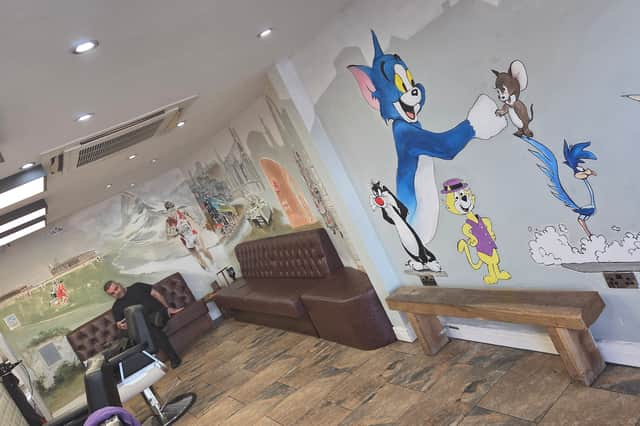
While the exterior has been updated with a new sign and other features, it is the inside that really tells a story. The internal walls are undergoing a transformation by local artist Robert Newbiggin to reflect the history of Lostock Hall and the wider South Ribble area. And although not quite finished, the look is already capturing customers’ attention.
David said: “I wanted to embody the spirit of the community. It’s a unique place and the history is quite inspiring. One of the images is of local runner Billy Burns, whose story shows what can be achieved if you put your mind to it.”
He adds: “The village went through a lot of trauma in the Second World War, which led to the formation of the local football team, so that’s reflected too. Then there’s the iconic gas tanks, carnival pictures, and the Train Shed which is famous for it’s contribution to steam engines among train spotters.
“For me, it’s amazing for such a small place to have such a profound history. As a barber, I see customers who are 90-plus, and babies who come in for their first haircut. I want the younger ones to be aware of the area’s identity, and for it to live on.”
The 42-year-old who went to Walton-le-Dale High School, also said the work is a thank you to the community, who have supported him and his three barbers for 10 years. He said: “I was made redundant from Leyland Trucks in the recession and I learnt how to barber and I love it. So this is also a thank you to the people of Lostock Hall, who have given me and three other barbers a livelihood.”
Robert Newbiggin has recently finished work on a mural on the Royal British Legion building in Brownedge Road. The artwork inside Vintage Barbers is set to be completed this weekend and as well as historical images, there are also cartoon characters in the children’s corner.

The images
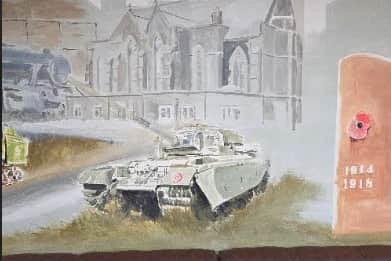
WW1 Memorial (Lostock Hall)The Lostock Hall WW1 memorial commemorates the men from the village who gave their lives in the Great War. It became a focal point of remembrance, especially after the sheer scale of sacrifice was felt across the cotton mill and railway communities in the area. Every year, it continues to be central to local remembrance services, ensuring their sacrifice is never forgotten.
The Tank (Centurion Tank – Made in Leyland)Stationed for years at Tardy Gate, the Centurion Tank was built in nearby Leyland by Leyland Motors, a company that played a huge role in supplying vehicles during and after the Second World War. The tank became a landmark in Lostock Hall, symbolising both the industrial heritage of the area and the connection to those who served.
The Gasworks, Wateringpool Lane / Lostock St Gerrard’s. The old Gasworks on Wateringpool Lane was once vital for energy supply, providing gas to local homes and businesses in the early to mid-20th century. Its presence shaped the working lives of many families in Lostock Hall. Nearby, Lostock St Gerrard’s Church and community has long been a hub for local gatherings, football, and school life, giving generations a shared sense of identity.

Ward Street bombing during the Second World War. Lostock Hall was hit in the Blitz when Ward Street was bombed. Tragically, lives were lost, and homes destroyed. The event is a permanent reminder that even small communities felt the direct impact of global conflict. The resilience shown afterwards reflected the strength of spirit in the village.
The Carnival: Lostock Hall Carnival has been a long-standing tradition, bringing the community together with parades, floats, music, and celebrations. It showcases the pride and unity of the village, raising funds for local causes while providing fun and togetherness. For many, it’s one of the highlights of village life each year.
The Cenotaph (Tardy Gate): Another key remembrance site, the Cenotaph at Tardy Gate honours both World Wars and later conflicts. It’s a place of reflection and community gathering, where residents continue to pay respects annually at Remembrance Sunday, linking past and present generations in memory.
BR Standard Class 7 – 70013 Oliver Cromwell: This preserved steam locomotive is part of Britain’s railway heritage, and while not built in Lostock Hall, it has strong ties to the area through the Lostock Hall Motive Power Depot (engine sheds). The depot was one of the last bastions of steam in the UK, closing in 1968 at the end of British Rail’s steam era. Locals remember Oliver Cromwell visiting, and rail enthusiasts still see it as part of Lostock Hall’s railway story.
The Engine Room – Lostock Hall Train Station: Lostock Hall railway station has long been a gateway in and out of the village. Its nearby engine sheds (the Lostock Hall Motive Power Depot) were crucial in maintaining steam locomotives right up until the 1960s. The “engine room” heritage cemented Lostock Hall as a railway village, with many families employed in the sheds.
Billy Burns – Mountain Runner: Billy Burns from Lostock Hall was a remarkable fell and mountain runner who gained recognition for his endurance and talent. He became part of the village’s sporting pride, representing the grit and determination that characterises many from the area. His achievements in running were a source of local inspiration.
Lostock Hall St Gerrard’s Church: Our Lady and St Gerard’s Roman Catholic Church has been at the heart of Lostock Hall’s community since 1913. Built in striking Gothic style, it quickly became more than just a place of worship – it has served as a gathering point, a school base, and a spiritual home for generations of families in the area. The church, with its school and parish community, has shaped the identity of Lostock Hall, supporting both faith and village life for over a century.