
180m wind turbine and 17,000 solar panels planned for Chorley countryside in £27m groundbreaking initiative
A £27m energy park could revolutionise the way companies - and the community - access power.
A major pet food producer is hoping to create a £27m renewable energy park in Chorley countryside - featuring a 180m wind turbine and 17,000 solar panels.
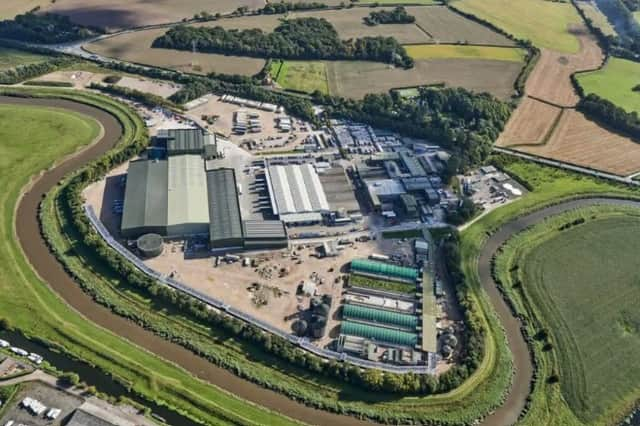
GA Pet Food, which produces dry dog and cat food for over 3,000 brands worldwide at its site at Plocks Farm, Liverpool Road, Bretherton, has teamed up with Bretherton Parish Council to form Bretherton Energy Partnership. They hope to create Asland Energy Park on 100 acres of arable land on the banks of the River Douglas - and beside the Leeds Liverpool Canal - to generate power for both the factory and the village.
Background
In 2023, the business consumed 23 million kWh of gas and 23 million kWh of electricity annually, which is 17 times Bretherton’s total energy use. GA Pet Food’s annual energy bill currently stands at £11.6 million per year and the business is responsible for around 25 per cent of Chorley’s industrial CO2 emissions.
In addition, they say that Bretherton’s 280 homes, along with the school and local businesses, have an estimated annual energy use of 1.4 million kWh of electricity and 4.6 million kWh of gas. It is estimated that the area’s households spent around £500,000 per year on electricity and heating before the energy crisis, averaging £1,900 per home and more than the UK ‘price cap’ average.
How would it work?
The site is projected to generate 25.7 GWh of clean, renewable electricity every year - enough to offset 7,000 tonnes of carbon emissions annually - the same as taking 500 cars off the road.
It would generate around 65 per cent of GA’s power needs while five per cent of the wind and solar electricity generated would be supplied to the community via a cable that runs to Bretherton’s electricity substations. Any surplus electricity from the residents’ five per cent allocation would be sold to GA Pet Food or the National Grid to generate income that could then be invested in local community projects.
Bretherton Energy Partnership hope the Park it will create a blueprint for how Lancashire communities and businesses can work together to take control of their energy future, reduce costs, and tackle climate change at the same time.

What would it consist of?
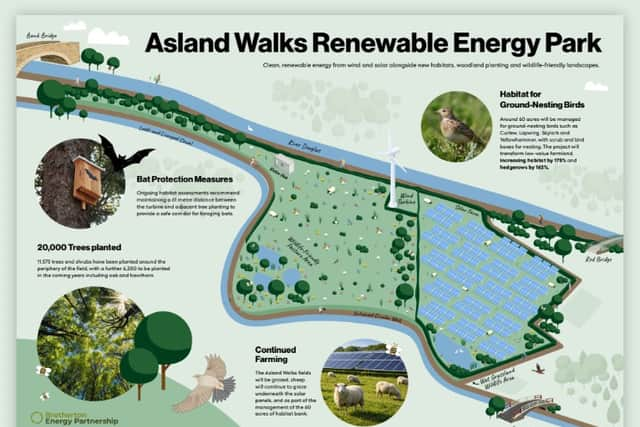
Called The Asland Walks Renewable Energy Park, it would consist of a single 179.8m wind turbine and a solar field of 17,000 panels acoss 11 hecatres, situated between the River Douglas and the Leeds and Liverpool Canal. There would also be battery storage capable of stabilising supply and storing surplus energy for when it’s needed most.
Planned future ecological improvements include:
- Tree planting: To date, 11,575 trees and shrubs have been planted around the edge of the field, with a further 6,300 planned in the coming years.
- Visitor centre: This will provide information about the Energy Park, how it works, and live generation data.
What stage is this at?
A planning application was submitted in December following four to five years of assessments, consultations and community engagement. GA are hopeful that a decision will be made by Chorley Borough Council in the autumn.
If permission is granted at that time, they expect a further 12 months of legal agreements to take place, the wind and the solar installation would then be installed in a phased approach, the wind turbine would be installed first followed by the solar and the batteries.
Roger Bracewell from GA Pet Food said: “GA accounts for around 25 per cent of Chorley’s industrial CO2 emissions. We’ve committed to cutting our carbon emissions by 50 per cent every decade to reach Net Zero by 2050. But beyond our environmental responsibility, this project makes business sense.
“Between 2019 and 2024, our energy costs tripled, peaking at £13.7 million. While they’ve fallen slightly since, they’re forecast to rise significantly again by 2029. The Asland Walks Energy Park will help us achieve 65-70 per cent decarbonisation of our electrical demand while protecting us from volatile energy markets. This project secures 650 local jobs by giving us control over our energy costs. That’s what energy security looks like in practice.”
How would it work for Bretherton residents?
Bretherton residents who join the Co-operative and install smart meters can access this renewable electricity at discounted rates resulting in electricity bill savings. These savings are designed to act as a catalyst for local decarbonisation, helping households transition from gas boilers to heat pumps and adopt electric vehicles, steps that might otherwise be financially out of reach.
Beyond individual savings, any surplus energy not used by the village will be sold back to GA Pet Food or the grid, creating a sustainable funding stream currently estimated to be worth £35,000 annually. This income will be reinvested into a Community Benefit Fund, with members appointing a board of directors to oversee its distribution. Potential initiatives identified by the community include grants for home energy efficiency, subsidised community transport, and the development of new youth outdoor activity areas.
The Co-operative was originally established following a £40,000 Rural Community Energy Fund grant from Lancashire County Council.
For Karen Wait, Parish Councillor and chair of the Bretherton Energy Working Group, not only is it about energy, but also legacy. Karen said it is beneficial for the village to be part of something that helps a major local employer become more energy independent, as well as helping the village itself.
“A lot of the land is also being left for wildlife and habitat,” Karen said. “That is something I’m really fond of, it is a great project for the future.”