
'Don’t ignore the signs' – The message from North West Cancer Research to lower oesophageal cancer rates
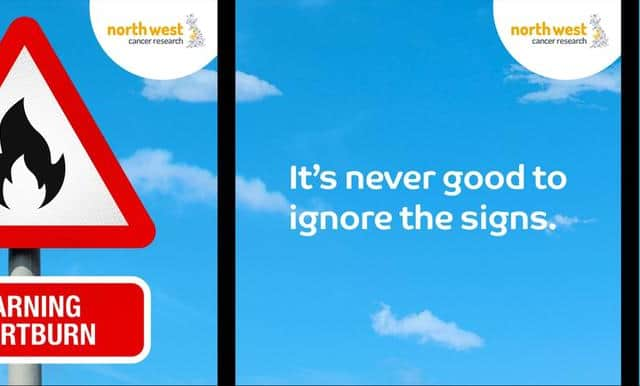
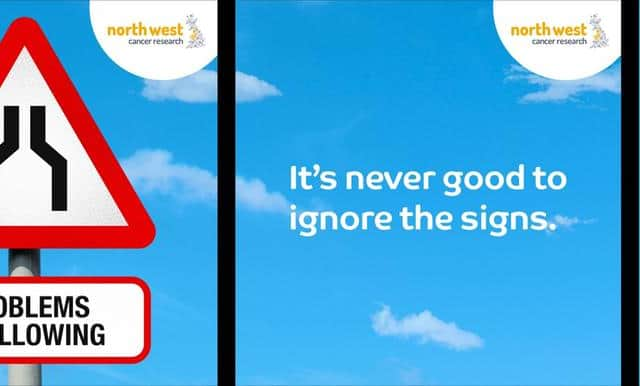
Problems swallowing, unexplained weight loss and heartburn are just some of the signs that North West Cancer Research is telling us not to ignore, as part of its latest campaign.
Launched today (Wednesday, January 22), Don’t Ignore the Signs highlights the most common symptoms of oesophageal cancer, urging people to take notice and to see their doctor.
The campaign features well-known road signs – that we would never ignore – to help raise awareness of the impact the disease has on the region and how to improve early detection.
In the North West, oesophageal cancer rates are 24% higher than the national average, while death rates are 19% higher the national norm, according latest data.

As part of its vital work to tackle the cause, improve the care and find the cures for cancer, North West Cancer Research is hoping its latest campaign will make a difference in fighting the disease.
Among those backing the initiative is Micheala Pennington, from Blackpool, who was diagnosed with oesophageal cancer in 2022.
The 40-year-old mum-of-one, said: “I’d started to find it difficult to fully swallow my food and would get hiccups after eating – this became gradually worse until I would need a pint of water after every meal to stop the hiccupping.
“At first, I thought that I was maybe rushing my food and eating too quickly but, after it continued, I knew something wasn’t right and went to get it checked. Initially, my doctor wasn’t too concerned and said that I was very young, but sent me for further tests as a precaution.
“I’ll never forget the moment they called me in and told me that it was cancer – my whole world froze, and I didn’t know what to think.”
Michaela, who works as a store manager, underwent multiple rounds of chemotherapy and surgery, and is now on the road to recovery.
She added: “I am cancer-free and feel incredibly lucky to still be here. Throughout treatment, my daughter was incredible and would tell me “Mummy, you look beautiful” when I lost all my hair – she kept me strong and determined to fight.
“Now, I’m passionate about urging people to know their bodies and listen to the signs when something isn’t right. Although oesophageal cancer is more common in older men, it can develop in anyone, so don’t ignore the signs.”
Oesophageal cancer is a condition that affects the tube that carries food to the stomach, and can occur in any part of the oesophagus, including where it joins the stomach.
While it is more common in older people and also more likely in men, anyone can get it so knowing the signs is important, that charity says.
The main symptoms of oesophageal cancer include:
- Having problems swallowing
- Feeling or being sick
- Heartburn or acid reflux
- Symptoms of indigestion, such as burping a lot
Other symptoms include a continued cough that doesn't appear to be getting better; a hoarse voice; loss of appetite or unexplained weight loss; feeling tired or having no energy; and pain when swallowing, particularly in your throat or middle of your chest.
Jeremy Ward, a consultant oesophageal surgeon at Lancashire Teaching Hospitals NHS Foundation Trust, said: “The symptoms of oesophageal cancer can often be overlooked because they are often related to another, less serious condition, so it can feel easier to ignore them.
"However, early detection is key – seeing a doctor as soon as you feel something is wrong means you could receive a diagnosis when the cancer is still in its early stages. Ultimately, it could save your life by getting checked and not ignoring the signs.”
As a whole, rates of cancer in the North West are 25% higher than the rest of England. North West Cancer Research funds projects that aim to reduce such inequalities through tackling the cause, improving the care and finding the cure for cancer.
Alastair Richards, CEO at North West Cancer Research, said: “A person’s risk of developing cancer is reliant on a number of factors, including age, genetics and environment.
"Here in the North West, we have some of the most deprived areas in the country and, as such, our cancer rates are higher than the national average. This absolutely should not be the case and our work aims to close this inequality gap.
“There are, however, steps that we can all take to ensure cancers, including oesophageal, are spotted and treated early, resulting in improved outcomes.
“One of these steps is, of course, looking out for the signs – our latest campaign shines a spotlight on the most common symptoms, many of which people may mistake for other less serious conditions. Our message is simple: don’t ignore the signs, as it could save your life.”
For further information about Don’t Ignore the Signs, including signs and symptoms, visit: https://nwcr.org/getchecked