
Bretherton pet food firm’s ambitious plan means ‘local energy for local people’

A small Lancashire village best known for its open fields and tight-knit community could soon become a model for rural energy independence, thanks to a partnership between residents and the area’s biggest employer.
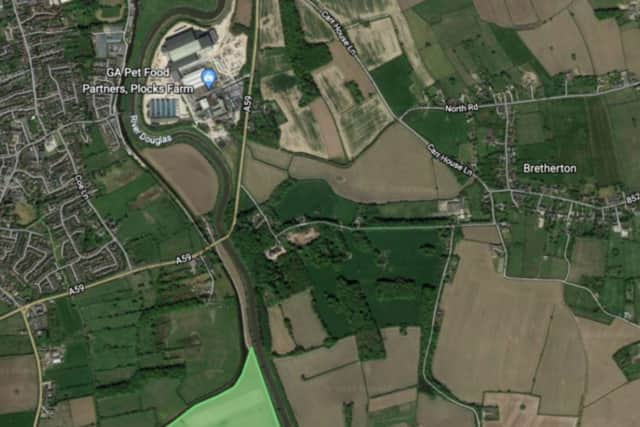
Bretherton Energy Partnership, a collaboration between GA Pet Food Partners and Bretherton Parish Council, is working towards creating an energy park which would generate power for both the factory and the village.
Five per cent of the park’s output will be donated directly to residents, which is around twice what the village currently uses.
For Richard Lucy, company secretary of the newly formed Bretherton Energy Cooperative, the idea of a homegrown energy network is what drew him in.
“When I got involved in the project around 18 months ago, what really enthused me was the concept of local generation, local distribution and local usage,” he said.
“We’re not putting extra constraints on the national grid, we’re going to use the energy generated within our own community.”
Richard believes the benefits won’t stop at cheaper electricity bills. “We might have excess funds to help with things such as electric car charging points, insulation or heat pumps.”
GA Pet Food Partners is the UK’s largest independent pet food manufacturer, it is also the village’s biggest employer and the largest energy user; consuming more electricity than the rest of the parish combined.
The proposed Bretherton Energy Park will include a single wind turbine, solar panels and battery storage. It will generate around 65 per cent of GA’s power needs while cutting thousands of tonnes of CO₂ emissions each year.
The project, first proposed around four years ago, is now moving through feasibility and community consultation stages, with completion expected around 2028. The site will offset 7,000 tonnes of carbon emissions, equivalent to taking 500 petrol cars off the road for a year.
For Karen Wait, Parish Councillor and chair of the Bretherton Energy Working Group, not only is it about energy, but also legacy.
Karen said it is beneficial for the village to be part of something that helps a major local employer become more energy independent, as well as helping the village itself.
“A lot of the land is also being left for wildlife and habitat,” Karen said. “That is something I’m really fond of, it is a great project for the future.”
The community side will be managed by a new cooperative which every villager can join if they wish. It will employ people, possibly volunteers or part-timers, to run it and manage how money from energy sales is reinvested around the village.
John Pigott, vice-chair of the Energy Partnership and a director of the cooperative said the biggest opportunity for savings is within the factory.
“For GA to create their own energy is a major step for the whole of Chorley Borough,” he said.
John, whose home already has solar panels, an electric car and a heat pump, sees the partnership as a model for wider change.
The “5% community share” of electricity could support residents directly, power local facilities and potentially even fund village projects.
Richard said members of the cooperative will decide how that benefit is used, from renewable energy grants to community spaces.
“We’ll have revenue from selling electricity, and the cooperative members will decide how it’s spent,” he said. “We have a vibrant community with lots of projects that could use support.”
The value of electricity is estimated at £129,000 per year based on current prices. This will be delivered via an underground 11,000-volt cable to the village’s two substations.
“Even if you take away the environmental benefits, it’s still a good deal for both the village and GA,” Richard added. “Yes, they’ll benefit - but so will we.”
The proposed site, known locally as Asland Walks, has already become a focal point for walkers. As well as 11,575 trees and shrubs having been planted, the once narrow, muddy footpath has been widened and mowed, with benches added for visitors.
When visiting the site, several walkers said they were pleased with the new layout, it is easier to access with prams and more space for families. Plans for a visitor centre, knowledge boards and a new wetland area are also in place to boost biodiversity and local heritage.
For many involved, Bretherton’s energy ambitions go far beyond a single project; they represent a community taking control of its own future.