
Dave Ryding credits 'northern grit' for Lancashire roots to World Cup success
Dave Ryding, the Preston-based Olympic skier, attributes his success to the 'northern grit' he developed from growing up in Lancashire, where he learned to ski on dry slopes
Preston-based Olympic skier Dave Ryding has reflected on the “northern grit”, relentless pursuit of improvement and decision to have “no Plan B” that took him from Lancashire’s dry ski slopes to the highest level of alpine skiing.
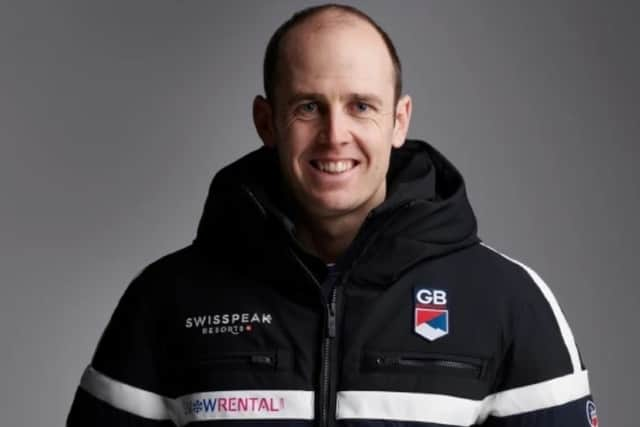

Raised in Bretherton, Ryding learned to ski on the dry slopes of the Ribble Valley before going on to compete at five Winter Olympics.
In 2022, he made British skiing history when he became the first British athlete to win an Alpine Skiing World Cup race, taking victory in the slalom at Kitzbühel.
Speaking exclusively to High Performance Speakers Agency, Ryding said there was no complicated formula behind the journey.
“I think it's a kind of like, where do you start question. I think a relentless pursuit of just trying to get better every single day, just chasing that dream.
“You know, as a kid, I remember sitting in school thinking I would love to go to one Winter Olympics and be ranked amongst the best skiers in the world.
“Once I had that in my mind, I just had this relentless pursuit to do that. And it was about getting up every day, trying my best, and just being almost obsessed with the process and obsessed with just daily trying to get better.
“It's nothing fancy. It was just an obsession with the process, and that's how I ended up making it work.”
For Ryding, his Lancashire roots also became part of the mentality that sustained him through the more difficult periods of his career.
“I love being classed as a northerner and, for sure, things can be harder when you come from the north,” he said.
“Everything is much further away from you and also finances aren't the same as quite often they are in London.
“But I generally do feel like I have a lot of grit in me, and that's just made through throughout my career and, you know, that day-to-day pursuit of getting up when you don't want to, the dealing with setbacks, bouncing back and all that.”
Ryding said repeatedly having to recover from those setbacks strengthened his resilience over time.
“The more you do that, the more sort of fire you walk through, the more grit you naturally get,” he said.
“If you don't have that ability to get back up and you don't have the ability to bounce back, then you're not going to make it in any walk of life.
“It doesn't matter if it's sport, if it's business, if you want to be the best lawyer, doctor, whatever it is. You have to be able to get back up, deal with setbacks, and keep pushing forward.”
Another defining part of Ryding’s career was his decision to pursue skiing without another career waiting in the background.
Looking back, he believes having no Plan B became particularly important when his career reached its most difficult points.
“I think I kind of made, I thought of like the no Plan B and the importance of it to me later in my career,” he said.
“And it wasn't until later in my career that I realised that that no Plan B was actually really important because I never had another option. I never had anything lined up.
“My parents never had any jobs in the pipeline for me. So I was willing to try to become the best alpine skier I could be.
“And if I didn't make it by the time I was, like, 30 years old with no money in the bank, I was willing to do that.”
That commitment was tested in 2015 when Ryding came close to retiring.
“It's when those days are really hard or when you've had, like, the biggest of setback, for instance, in 2015 when I almost retired, I almost decided that enough was enough,” he said.
“If I had a Plan B, then maybe I would have thought, you know what, it's time to try that Plan B and accept that I have given it my all until now.
“But because I didn't have that, I had no choice but to get back out on the slopes, face the adversity, face the disappointment and just get back to the training hills.
“And it was from that very moment that my success started to go into the next level.
“And looking back, it was really a big part of not having any other plans in life other than the pursuit to be a good ski racer.”
Ryding also credits his mindset with helping him maintain his motivation through the demands of elite sport.
“I would say the biggest thing to stay motivated has been definitely my mindset and definitely having that goal,” he said.
“And then once I had that in my targets, in my head, then I was able to just focus in on it. And I think it's important to have two types of mindset.
“One is important to have an open mindset, and that's where you can really learn, really listen to others, and take on information.”
Alongside being open to learning, Ryding said there were times when shutting out distractions was equally important.
“You really have to have the closed mindset to just go about day-to-day with the blinkers on, the discipline, the sacrifice, the work ethic and all those sort of cliche areas,” he said.
“That's where I really feel the closed mindset is massively important.
“And obviously you have support of your team, support of your wife and your family. They're big parts of keeping you going as well as your own individual mindset.”
This exclusive interview with Dave Ryding was conducted by Tabish Ali of Motivational Speakers Agency.