
The Wine-Dark Sea by Victoria Hislop: a heart-wrenching tale of resilience and courage - book review -

This article contains affiliate links. We may earn a small commission on items purchased through this article, but that does not affect our editorial judgement.
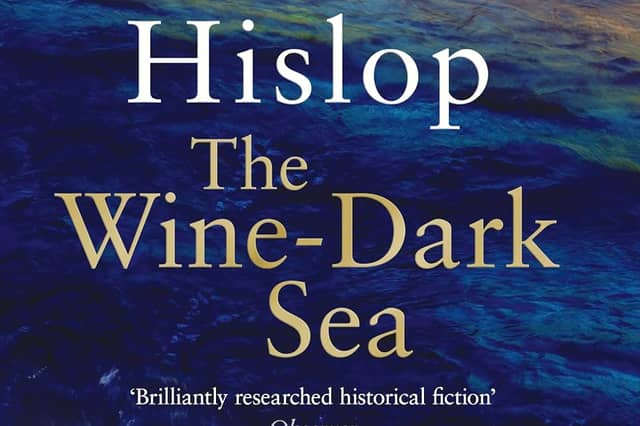
Bestselling author Victoria Hislop draws on her love affair with Greece to explore a little-known chapter of the country's history in her new novel, The Wine-Dark Sea.
The Nazi occupation of the country had left dangerous divisions between the Greek people and with the blame game burgeoning, and accusations of collaboration running rife, the right-wing, Western-backed Hellenic Army and the communist-led Democratic Army were soon embarking on a bitter war of recriminations.
The result was a terrifying and chaotic civil war mercilessly unleashed on Greek families… and now this little-known chapter of history is explored in The Wine-Dark Sea, a heart-wrenching tale of resilience, courage and maternal love from bestselling author Victoria Hislop, whose love affair with Greece began decades ago and who has used the country’s history as the inspiration for her raft of enthralling novels.
During the three years of the ferocious civil war, thousands of children were caught up in the fighting and Hislop’s story unfolds through the lens of a mother who is forcibly separated from her young daughter. And so begins her desperate search for both her own her child, who has been kidnapped and taken behind the Iron Curtain, and the son of a woman she befriended who, unknown to them, has been sold into adoption.
The story opens in the village of Kalopetra high in the mountains of northern Greece, a place which has not changed for decades. Even though the climate is harsh, the people are content because there is a constant supply of mountain water which keeps humans, animals and crops alive.
Even during the privations of the Second World War, Kalopetra has been saved from the worst excesses of the Nazis’ occupation of Greece by its lofty location… but by 1946, with the Germans vanquished, the village is undergoing a sinister change as bitterness and accusations creep into every corner of the villagers’ lives.
The power vacuum has proved to be the spark for nationwide discord and a brutal civil war erupts between rival left and right-wing factions. The conflict spirals while the country pays a bitter price with fighting erupting, even in the mountain areas, turning villages into battlefields and pulling ordinary women and children into the fray.
When the government soldiers eventually come to Kalopetra, mother and housewife Fotini – whose husband Stavros has been recruited into the government’s Hellenic Army – is nursing her newborn son. Fotini immediately urges her precious nine-year-old daughter, Iliana, to hide with the older children as she, her baby and the other women are herded into trucks. Among the last sounds Fotini hears are Iliana’s screams of pain as she tries to climb on to a truck but falls off.
Fotini is transported to a prison on the island of Chios where she befriends Markella, whose little son, Nikos, is clever and wise beyond his years. After months of imprisonment, when Fotini and Markella find themselves separated from one another – and from Nikos – Fotini vows to hunt not only for her own child but for Markella’s too.
What she doesn’t yet know is that a few weeks after she was taken from Kalopetra, left-wing soldiers turned up for the children and dispatched them to countries in Eastern Europe where a wholly different fate awaits them…
Huge numbers of youngsters were orphaned during the Greek Civil War… many found themselves imprisoned alongside their mothers and others were left to fend for themselves. And even when the war ended, tens of thousands of children remained cut off from their roots, with many now living in other countries.
And it is this cruel rupturing of once-settled families that lies at the heart of Hislop’s hard-hitting story which blends authentic history with some unforgettably powerful emotions.
Through the eyes of Fotini – forever haunted by her child’s last despairing cry – we follow the heartache and hardships of her life in the camp, and then her relentless and determined quest to track down the two missing children after the war ends and she is finally released.
It’s a journey in which we witness Fotini once again finding much-needed kindness and generosity amongst her own Greek people and slowly discovering that the quiet rural life in a mountain village that she had once longed to return to is now a lost world for her.
The human cost of war – and especially civil war – is writ large across this beautiful, gritty and thought-provoking novel as from the chaos and carnage springs hope, strength, the breathtaking capacity of a mother’s love, and the ability of a nation to heal and become whole again after such terrible self-inflicted wounds.
(Headline Review, hardback £22)