
Preston mural honours poet inspired by suffragette Edith Rigby
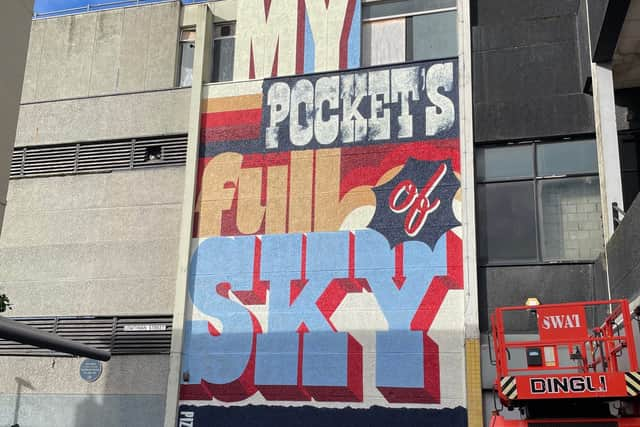
It seems fitting that shortly after graffiti artist Shawn Sharpe created the mural dedicated to suffragette Edith Rigby facing the Covered Market, he has collaborated with Dave ‘Pizza Boy’ Green on another mural. Just yards away, on the side of Limehouse tower block on Lowthian Street, there is now a tribute to Rigby’s niece, the writer Phoebe Hesketh, writes Keith Johnson.
Proud of her roots, Hesketh celebrated her aunt’s life in My Aunt Edith, published in 1966. Unlike Sharpe’s earlier work, the latest mural uses words rather than images to evoke the thoughts and creativity of a remarkable literary figure.

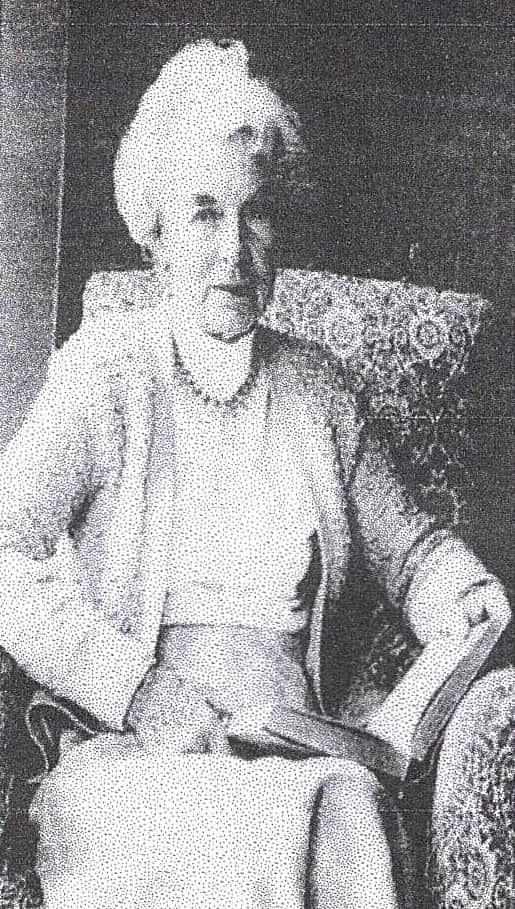
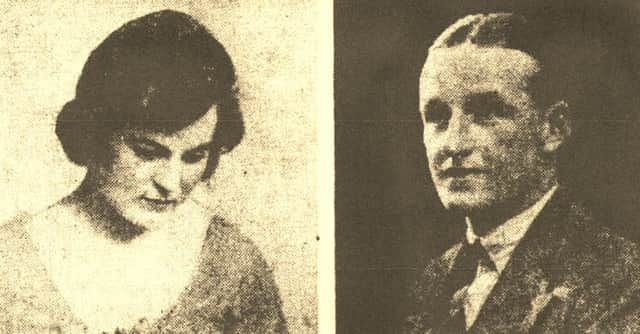
Phoebe Hesketh was the daughter of Preston’s pioneering radiologist Dr Arthur Ernest Rayner, himself the son of eminent Victorian doctor Dr Alexander Clement Rayner, whose sister was Edith Rigby. Her father married Amy Gertrude Fielding in September 1907, and Phoebe was born on January 29, 1909 at No.1 Ribblesdale Place, Preston. Within three years the family had moved to No.9 Ribblesdale Place, in the fashionable district near Winckley Square.

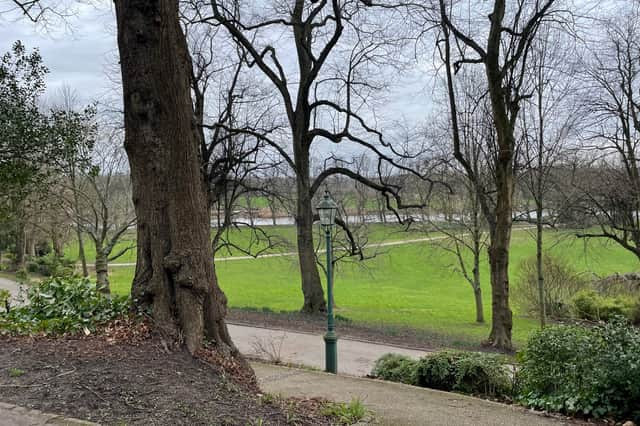
As a child she often heard stories about her Aunt Edith and her campaigning activities, some of which were frowned upon by older relatives. Growing up in a house overlooking the Avenham valley and the River Ribble, she developed a lasting love of nature and wildlife.
She had a close relationship with her mother, who in her younger days was a talented violinist who performed with the Hallé Orchestra. Her father, though strict, was compassionate despite the long hours he devoted to his medical practice. Hesketh later recalled idyllic childhood walks with her younger sister Elaine and their nanny, captured in lines such as: “I see my younger sister in the grass, threading a daisy chain.”
Hesketh attended private school in Southport before moving on to Cheltenham Ladies’ College, where her talent for poetry began to flourish. She left early to care for her ailing mother at the family home, Sullom Holt in Barnacre near Garstang. These were difficult years, marked by her mother’s death in April 1928, but she grew increasingly inspired by the countryside around her.
Within three years she had married William Aubrey Hesketh, a master cotton spinner from Bolton who shared her love of riding. The couple settled at Fisher House in Rivington, raising three children amid horses, dogs and village life.
Her passion for writing led to three years as women’s editor at the Bolton Evening News. Her poems appeared regularly in Country Life, followed by freelance scriptwriting and her first poetry collection, Lean Forward Spring. She later wrote movingly about grief following the tragic death of her 12-year-old son Richard while at boarding school.
She was without doubt a lover of all nature, passionate in her writing and inspired by her surroundings throughout life and the mural may well inspire us all to enjoy nature and life with or without a blue sky above us
Inspired by the place where her children were born, she wrote the autobiographical Rivington: The Story of a Village in 1972. A few years later, Song of Sunlight, her poetry collection for younger readers, demonstrated her versatility.
After her husband Aubrey’s death in 1976 and her children leaving home, she moved from the large family house to a more modest property in Heath Charnock. Over her lifetime she published more than 20 books, including What Can the Matter Be?, Netting the Sun and A Box of Silver Birch, published in 1997.
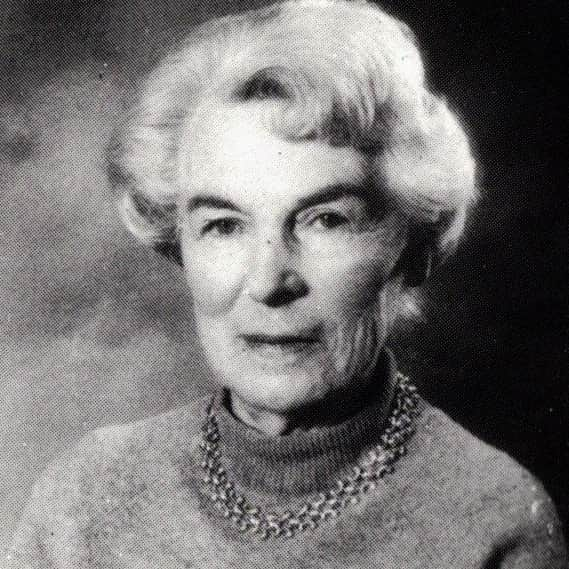
Declining health led her to Euxton Park nursing home, where she lived until her death in February 2005 at the age of 96. Her funeral took place at Rivington Parish Church, with plans for her ashes to be scattered on the moors that had inspired so much of her writing.
The words chosen for the new mural come from her 1939 poem The Truant. The phrase “My pockets full of sky” captures the spirit of a youth who finds wisdom and meaning in nature, reflecting Hesketh’s lifelong themes.
One of her best-known local poems, The Ghost of Ribblesdale Place, recalls her childhood memories:
Where are they gone who lived in the street where I was born? After the vans moved out developers, accountants, insurance brokers moved in with fresh paint and prosperous copper name plates. No flowers or face at the windows.
Her legacy endures. In 2017 her daughter Catherine compiled notes and memories into the biography Sunflowers and Silver Birch: A Memoir. A further collection, Threads of Songs, selected by her son Martin Hesketh and published in 2021, describes poetry as “painting with the mind, without palette and brush”.
The mural is a fitting tribute to a writer deeply inspired by the natural world, and a reminder of how words, like paint, can shape how we see the world around us.