
Walton-le-Dale's Royal Lime Trees: The fascinating history of the village fighting to save them
The trees, planted in 1912 to commemorate the Coronation of King George V, are a cherished landmark in the village, but the Environment Agency says they must be removed to improve flood defences.
Perhaps, like myself, your attention has been drawn to Walton-le-Dale by the dispute over the planned removal of 18 of the 21 historic lime trees planted along Victoria Road beside the River Ribble. Planted in 1912 to commemorate the Coronation of King George V, 18 of them are scheduled to be uprooted as flood defence work gets underway, writes Keith Johnson.
In modern times, many of us have motored through the village along the A6 on our way to the motorways that nowadays lie just beyond, perhaps glancing in admiration at the trees, which are said to represent a 21-gun salute in honour of His Majesty.
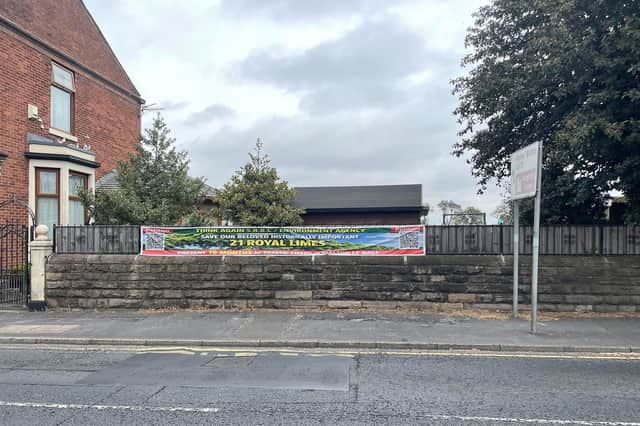

When historian Anthony Hewitson passed through the village in 1870, while compiling his book Our Country Churches and Chapels, he had this to say: "Walton village, which is situated on the south-eastern side of Preston, has, from the neighbouring heights, a very quiet and picturesque appearance. Considering its size, it is a busy village, with for ever of children in it, and plenty of drinking houses."
He had made his way to the village via Swillbrook, from where he made the following observations: "As I sauntered through the narrow way of Swillbrook, I had many pretty views of the valley of the Ribble. From this position, the village of Walton nestling in the valley below, over which the ancient church of St. Leonard's, on a richly wooded height, stood like a sentinel keeping watch over the ancient village.
"In the distance towered the rocky height of Hoghton, clothed in a forest mantle. The graceful windings of the ancient Ribble could be observed for a great distance. Beneath our elevated spot stretched Walton – the site of battles and a Roman station, and a place rich in relics of the past – now covered with kitchen gardens and shrubberies."
At that time, Hewitson observed that the principal commercial establishment was the cotton mill of Messrs Calvert Brothers, while the principal house in the village was Cooper Hill, occupied by Major Wilson. Apparently, Benjamin Franklin, one of the founding fathers of the USA, had been a visitor, fitting a lightning conductor while in residence.
For the purposes of Hewitson's publication, he had visited St Leonard's Church, which dated back some 700 years. From its lofty position, he observed the unequalled natural beauty of the hills, valleys, woodlands and river.
Also attracting his attention was the Catholic Chapel of St Patrick, which he explained was really a school, opened in 1857 but used for divine worship because finances could not yet stretch to a church. Around 1,000 Catholics in the district hoped for one in the near future. Fortunately, a decade later, in October 1880, the Church of Our Lady and St Patrick was opened.
Crucial to the development of the village was the bridge crossing the river, linking Preston with Walton-le-Dale. Until 1755, the only bridge crossing the River Ribble in the neighbourhood of Preston was a five-arched structure leading into Walton-le-Dale, constructed some 130 years earlier.
Eventually, it was deemed unsafe, and in 1779 work started a short distance upriver on the now-familiar three-arched Walton Bridge, which cost £4,200 to construct over two years.
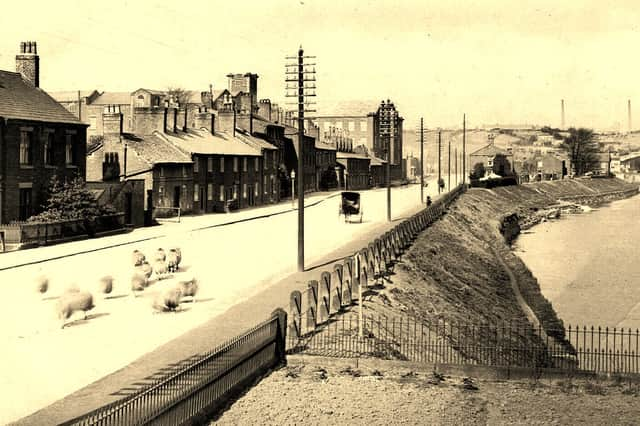
Victoria Road, at the time of the tree planting, was developing into the busy London–Carlisle trunk road of pre-motorway days. The stone-built Walton-le-Dale police station, dating from 1847, stood just beyond the trees, while across the road, just behind the terraced cottages, was the vast Ribble Paper Mills premises, where Calverts Mills had once flourished.
A sign of the times was Rafferty's petrol filling station, situated just beyond the Yew Tree Inn, while further along, past the Sir Robert Peel, was the District Bank.
At the terraced cottage, No 146, famously known as the birthplace of temperance reformer Joseph Livesey, a fruiterer was trading. More recently, it was the base for Garratt Insurance consultants, and nowadays the 17th Barber Club operates from the premises.
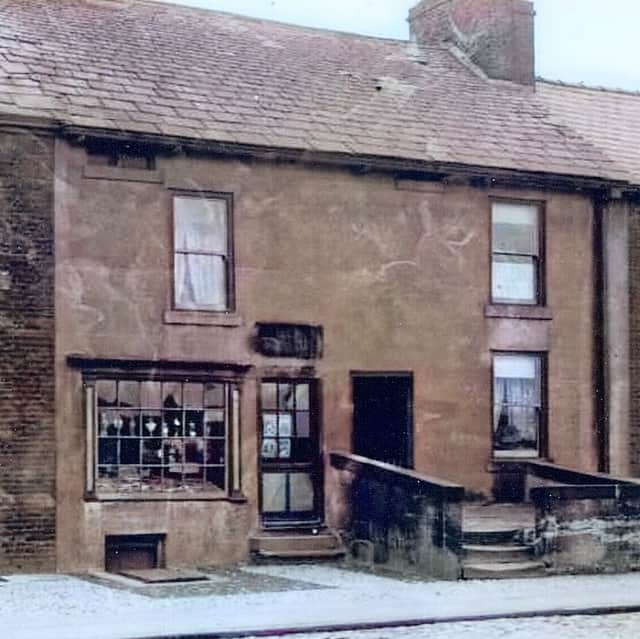
A newsagent, draper, grocer, baker, butcher and confectioner all had shops intermingled among the rows of terraced homes occupied by tradespeople such as joiners, gardeners, labourers, electricians and cobblers, with their families enjoying village life.
The White Bull, on the corner of Church Brow, the Sir Robert Peel, the Yew Tree Inn and the Bridge Inn were all popular public houses along Victoria Road at the time.
The Bridge Inn closed in 2012 and is nowadays the Ashbridge Children's Nursery. The later-named Bobby Peel closed recently after Steven Robertson's 30 years as landlord and is now Bobby Digger Land. The Yew Tree remains popular despite being marooned on a traffic island, while the White Bull still welcomes visitors with live music on a Friday night.
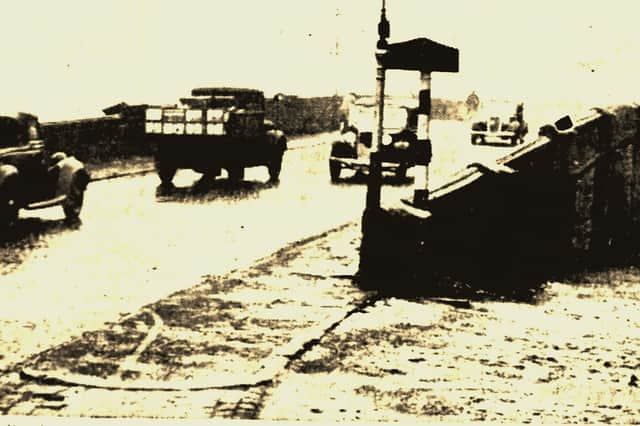
Significantly, as the trees grew towards maturity and traffic on the road increased considerably, Walton Bridge had to be widened. Work started in 1939, increasing its width to 80ft at a cost of more than £50,000, and it remains a vital highway in and out of the city.
Shopping-wise, the area leading from Victoria Road was transformed in 1991 with the building of the Capitol Centre. From the start, it attracted many high street retailers and, along with its multi-screen cinema and leisure facilities, is now well established.
Apparently, the land on which the precious lime trees are planted belongs to the de Hoghton estate. That is according to information gleaned from South Ribble council meetings when the Environment Agency's flood defence application was discussed and granted.
It is clear that there are plenty of campaigners hoping to earn a reprieve for the trees, which certainly are an endearing and enchanting sight on the banks of the River Ribble.
On the recent day when I walked along Victoria Road to view the avenue of lime trees, the River Ribble's level was low. But the need for improved flood defences remains a priority, as the next feature confirms when we take a look at those stormy days of the past which the weather-beaten trees have survived.