
Rare gold skull ring found in Lancashire field could fetch thousands at auction
A gold memorial ring with a skull motif, found in a Lancashire field, could sell for £3,000 at auction. Discovered by metal detectorist Amanda Parker, the ring is linked to Dr Richard Busby, a celebrated schoolmaster.
A gold memorial ring found by a Lancashire metal detectorist in a field near Preston is expected to fetch around £3,000 at auction.
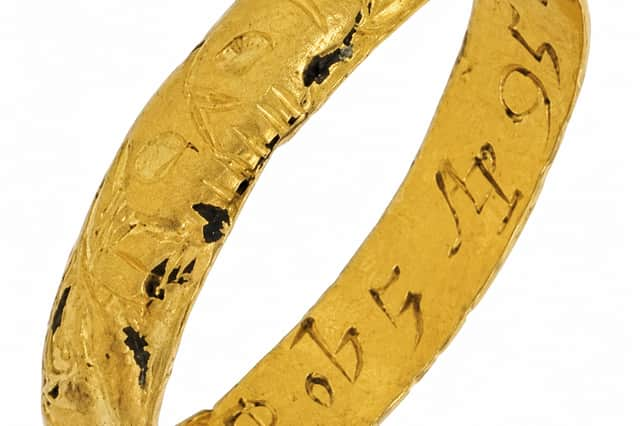

The memento mori ring, decorated with a skull motif and inscribed to Dr Richard Busby, was discovered by Amanda Parker in Catforth.
It will be offered in a jewellery auction at Noonans, in Mayfair, London, on Tuesday, June 23.
Dr Busby, who lived from 1606 to 1695, was headmaster of Westminster School from 1638 until his death and was described as “the most celebrated schoolmaster of his time”.
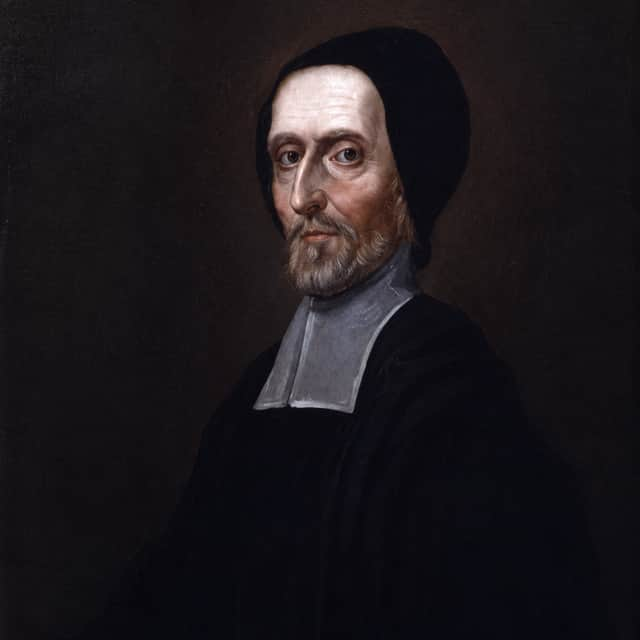
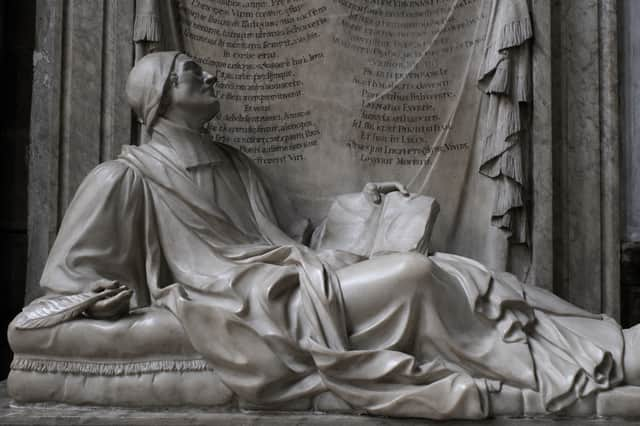
He is buried in Westminster Abbey and his pupils included philosopher John Locke, architect Christopher Wren, playwright John Dryden, diplomat Matthew Prior, composer Henry Purcell and physicist Robert Hooke.
Amanda, a single woman in her 50s with two grown-up daughters, took up metal detecting after being invited to try it by her daughter and her partner.
She enjoyed it so much that she bought her own XP DEUS II detector in 2022, joined detecting groups on Facebook and began attending day and weekend rallies.
After asking local farmers for permission to search their land, she gained access in 2024 to a small farm of just three fields in Catforth, down a single-track road opposite the old Methodist Chapel.
She said: “The day I found the ring it was a lovely sunny August day; the farm is a five-minute drive from my house so I thought I would go out detecting for a couple of hours. I entered the field, switched on my detector and walked what must have been only 20 steps slightly right to the footpath and got a lovely sounding signal with a VDI of 75.
There sitting in the bottom of an 8-inch hole was the glint of gold
“When I turned the clod, there sitting in the bottom of an 8-inch hole was the glint of gold, I initially thought it was a wedding band. However, when I gently removed the ring from the hole, I could see an inscription on the inside in italic script ‘Ri Busby’ and thought it was a posy ring.
“I must have sat in the field next to the hole for a good 10-15 minutes not believing what I had just found and being alone not able to share my excitement with anybody. I deeply regret not taking any photos at that moment but I was not sure what I had found at the time, having filled the hole in I detected all around it to make sure there wasn't anything else near it but simply could not concentrate, I wanted to get home and look more closely at the ring.”
Once home, Amanda searched for Richard Busby online and discovered the likely significance of the find.
Her daughter and her partner also posted a photo of the ring on a detecting forum that evening, where others confirmed it appeared to be a memorial ring for Dr Richard Busby of Westminster School.
The ring went through the treasure process and was disclaimed before being returned to Amanda in December 2025.
She also contacted Westminster School, which was interested to see the ring as it did not have one in its collection.
Amanda later travelled to London, where she visited the school, was shown artefacts relating to Busby and saw his memorial in Westminster Abbey.
She said: “It is now time to sell the ring as I have a 50/50 agreement with the landowner. It is my best find to date and only the second gold piece I have found in the four years of detecting, the first being a small plain wedding band dating from the late 1800s found on a weekend rally in Cumbria.
“I don't do metal detecting for money, and this is the only find that I have put up for sale. I do it because I love being out in the glorious countryside, the anticipation when digging a signal and turning over the clod to reveal a lost artefact, trying to imagine the last person to hold that item and the research.
“I really enjoy trying to find out as much information as I can on any find, I have learnt so much history since starting metal detecting.”
Laura Smith, jewellery specialist at Noonans, said Busby left money in his will for friends and acquaintances “to buy rings in the remembrance of me.”
She said these included bishops, prebendaries, school staff, King’s Scholars, organists, choristers, vergers, sacrists, bell ringers, almsmen, officers and servants of Westminster Abbey.
The sums left for rings ranged from five guineas to 10 shillings each.
Records in the Westminster School archives show 90 foliate rings were bought for distribution, with 20 bearing a skull motif.
Dr Busby was born in Lutton, Lincolnshire, in 1606 and was educated as a King’s Scholar at Westminster School and at Christ Church, Oxford, before returning to Westminster as headmaster in 1638.
An unapologetic Royalist, he is said to have publicly prayed for King Charles I on the day of his execution, but survived the upheaval of the Commonwealth and the Restoration.
He remained headmaster of Westminster School for 55 years and was known both for his strict discipline and his academic rigour.
Former pupils Locke, Hooke and Wren went on to become founding members of the Royal Society.