
How the Horrocks brothers built Preston's cotton empire – from factories to bloody riots
From a quarryman's son to one of Lancashire's greatest industrial dynasties, Keith Johnson explores the fortunes, political battles and extraordinary legacy of the family behind Horrockses.
Having visited the excellent Horrockses Fashions exhibition currently being held at the Harris, it seems a good time to reflect on the extraordinary contribution made by one family to Preston's cotton industry, writes Keith Johnson.
The Horrockses story began in the last decade of the 18th century, when John Horrocks, a young quarryman and the son of a Quaker from Edgworth, near Bolton, arrived in Preston to give the town's cotton trade its first great impetus.
The Preston he encountered had long been a winter home for the gentry, a place where attorneys, proctors and notaries lived comfortably, and where relatively little manufacturing took place.
Born in 1768, Horrocks had already acquired considerable knowledge of the cotton industry and gradually built up a network of handloom weavers in his local community.
He would travel the surrounding area with a packhorse, distributing yarn and collecting finished cloth. His enterprise paid off, and soon he was travelling as far as Preston, where he did business with John Watson, owner of one of the town's earliest cotton mills.
Eventually, however, Horrocks grew dissatisfied with the prices Watson paid him and resolved to establish his own business in Preston, becoming something of a thorn in Watson's side.
By January 1791, Horrocks had acquired premises at the bottom of Turk's Head Court and had begun manufacturing muslin. After convincing local bankers and influential figures of his business potential, he embarked on a series of ambitious projects.
With investments of a few hundred pounds here and there, he was soon able to obtain spinning machinery and erect factories for himself and other interested parties.
His energy and enterprise led to the building of the Yellow Factory at the south-eastern end of Church Street, followed by other hives of industry known as Moss Factory, Frenchwood Factory, Canal Factory and Dale Street Mill, completed in 1802.
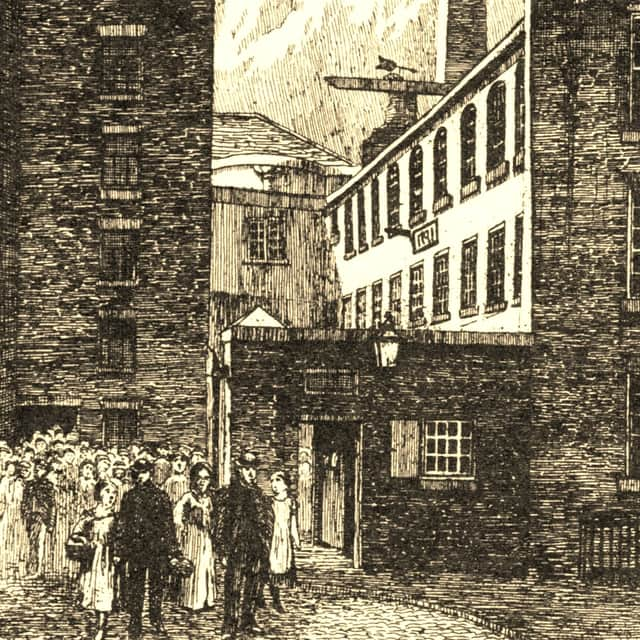

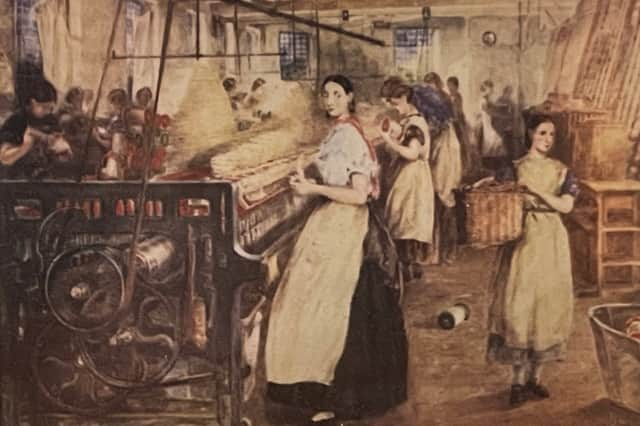
Alongside the factories came handloom sheds and rows of cottages for mill workers. People flocked to take up employment, and the population, which had stood at around 6,000 for many years, soon doubled.
Shops and houses multiplied, while fields and gardens disappeared beneath bricks and mortar. Preston's Industrial Revolution was well underway.
A measure of John Horrocks' success was that, within ten years of his arrival, he was able to commission Penwortham Lodge as his residence, leaving behind his former home in Church Street, on the site of the later King's Arms.
Successful in business and now supported by his elder brother Samuel, Horrocks turned his attention to politics.
With his charming manner, he made no secret of his dislike for the growing influence exerted over the town by Lord Stanley's family.
A narrow defeat in his first parliamentary contest in 1796 was followed by his unopposed election in 1802, alongside his former political rival.
Such was the popularity of the Horrocks brothers that, in November of Guild Year 1802, their proud parents saw John walk down the aisle of the Parish Church as Preston's representative in Parliament, while Samuel walked forward as the town's Mayor.
By this time, John had also entered into partnership with John Whitehead and Thomas Miller, establishing the firm of Horrockses, Miller & Co in 1801.
Not surprisingly, Preston was stunned in March 1804 when news arrived from London of the sudden death of its MP, aged just 35.
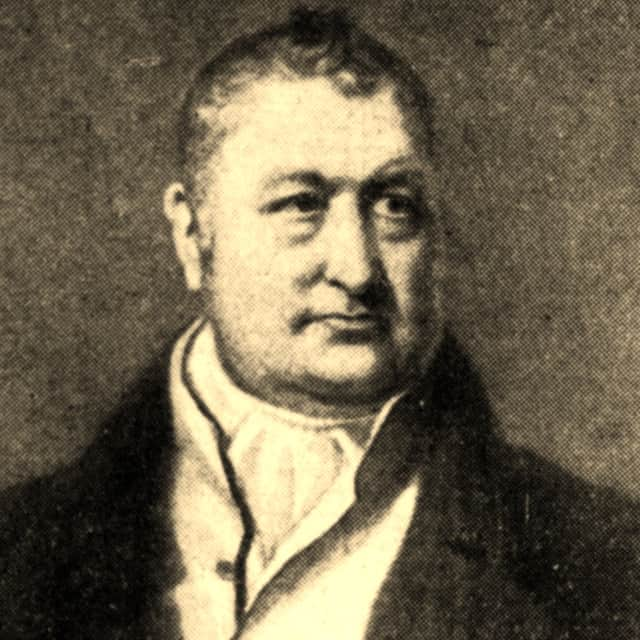
A tall, well-built man with a ruddy complexion, Horrocks had seemed a picture of health. His death was entirely unexpected.
His development of Preston's cotton trade had been astonishing, and his premature passing came as a tremendous shock.
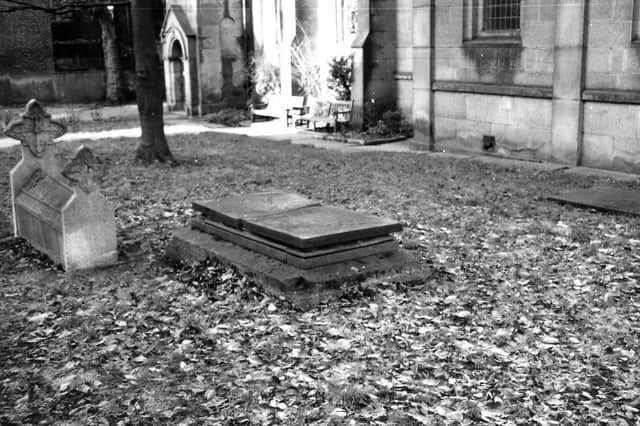
He was buried in Penwortham churchyard, beneath a massive flat stone slab surrounded by strong iron railings. Among the mourners were his two sons, Peter and John, aged 13 and ten respectively.
Horrocks left a fortune estimated at £150,000, an enormous sum for the period.
His brother Samuel inherited much of the responsibility for the family's business and political interests, ensuring that the Horrockses name would eventually become known throughout the world.
Following John's death, Samuel succeeded him as MP for Preston.
Samuel Horrocks was something of a rough diamond and made little pretence of being either a scholar or a gentleman.
Like his brother, he had received a limited education, something reflected in the coarseness of his manner. He was frequently mocked for his inability to express his political opinions, either in speeches or in writing.
Despite being a shrewd businessman and a master cotton spinner, he was often criticised for his performance in Parliament.
He rarely spoke in the House of Commons and became known as Preston's 'silent member'.
Nevertheless, he remained an MP until 1826, winning a succession of elections. He also served for 30 years as a borough magistrate and was a member of Preston Corporation.
In July 1823, Samuel survived an attempt on his life by a 22-year-old cotton operative named Andrew Ryding.
After attending the Parish Church, Samuel was making a Sunday morning visit to his business partner, Thomas Miller, when he was attacked from behind and struck twice on the head with an iron cleaver.
At his trial, Ryding, a member of the Preston Union, claimed he had been driven to anger by the cotton baron's oppressive attitude.
He accused Horrocks of responsibility for falling wages in Preston and the victimisation of strike leaders after they returned to work.
Ryding was found not guilty on grounds of insanity and detained at Lancaster Castle at His Majesty's Pleasure. He died there in June 1825 following a troubled incarceration.
In 1833, Alderman Horrocks retired from public life, receiving considerable praise from the town council for his years of service.
A father of eight children, seven daughters and a son, he lived at Lark Hill House, which he had built in the early 19th century.
The mansion later became Lark Hill Convent and today forms part of Cardinal Newman College.
His wife, Alice, had died in 1820, and Samuel himself passed away at his Lark Hill home in March 1842, aged 76.
He was buried in St George's churchyard, in the same grave as his wife.
At the time of his death, his only son, Samuel Horrocks Junior, was Mayor of Preston, having followed his father into both business and public life.
Educated at Eton, the younger Samuel had been groomed to take an active role in the great cotton firm founded by his uncle.
In 1827, he had married the second daughter of Thomas Miller, who had been associated with Horrockses from its earliest days, having been brought from Bolton to assist John Horrocks.
The 1842 Preston Guild took place at a particularly difficult time for the town, which had become densely populated and heavily dependent upon cotton manufacturing.
Only weeks earlier, the Lune Street riot had brought confrontation between cotton workers and the authorities.
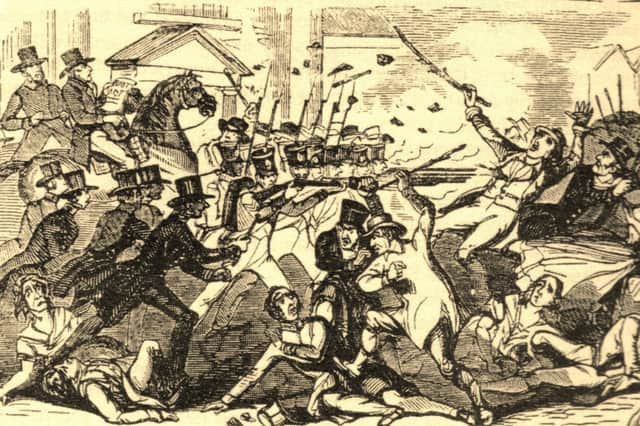
As Mayor, Samuel Junior had been forced to read the Riot Act as protesters clashed with soldiers. Troops subsequently opened fire, killing four people and leaving others injured.
The tragedy deepened the bitterness between the cotton masters and their workers, casting a shadow over the celebrations.
Less than four years after the Guild, Samuel Junior was dead, passing away in February 1846 at the age of 49.
His funeral procession was a solemn affair, with the cotton empire falling silent. Almost 200 attendants walked two abreast behind the cortège as it made its way to St Paul's Church, where he was laid to rest.
His passing, in many ways, signalled the end of an era.
Yet the extraordinary industrial empire created by his uncle, John Horrocks, would continue to flourish, its name eventually becoming synonymous with cotton and, generations later, fashionable clothing worn around the world.
The next feature will explore what life had in store for the great cotton firm in the decades that followed.