
When Preston’s Whit Monday processions filled the streets
Rediscover the vibrant traditions of Preston's Whit Monday celebrations, filled with processions and community spirit.
The feast of Pentecost — commonly referred to as Whitsuntide — is a moveable feast, and Whit Sunday falls this year on May 24, writes Keith Johnson.
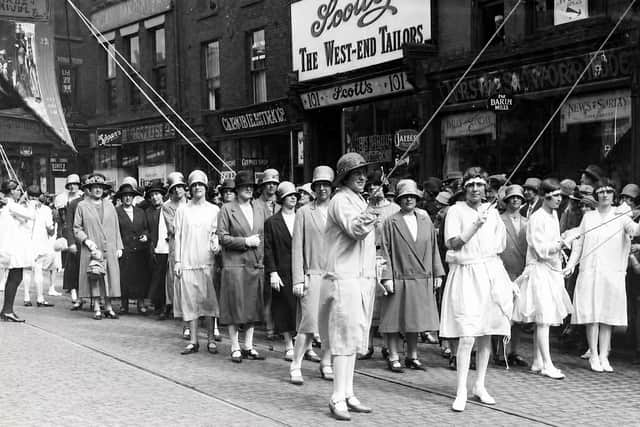

However, since 1971, instead of celebrating Whitsuntide with a holiday, it has been replaced by the Spring Bank Holiday at the end of May.
A century ago, in 1926, Whit Sunday fell on May 23 and the festival was seen as an opportunity to forget the troubles and strife of the time, coming while the coal miners were still on strike and the General Strike was only just over.
After weeks of confusion on the railway, with limited services due to strike action, those who did go away chose road transport to ferry them to their holiday destinations. Indeed, Preston railway station was eerily quiet over the holiday weekend and it was the motor charabanc owners who seemed to profit most from the occasion.
The reality of money being tight, with many cotton mill employees on short time, meant a stay-at-home Whitsuntide for many. Preston, with its processions and fairground, proved a big attraction for local folk. Consequently, the streets were crowded and the Market Place became a hub of activity.
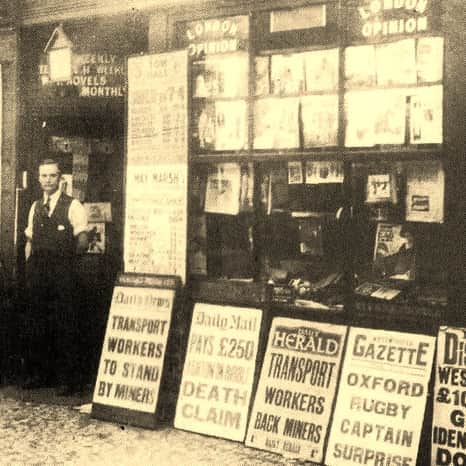
On Whit Monday, large crowds gathered from an early hour to get the best positions along the processional route. The weather could not have been more favourable, with the sun’s rays bathing the pavements as the local Orange Lodges began the day’s parades at nine o’clock.
It was 90 years since they had first begun the tradition, and more than 2,000 walkers, headed by a large Union flag and a character depicting Prince William of Orange mounted on a white charger, led the way.
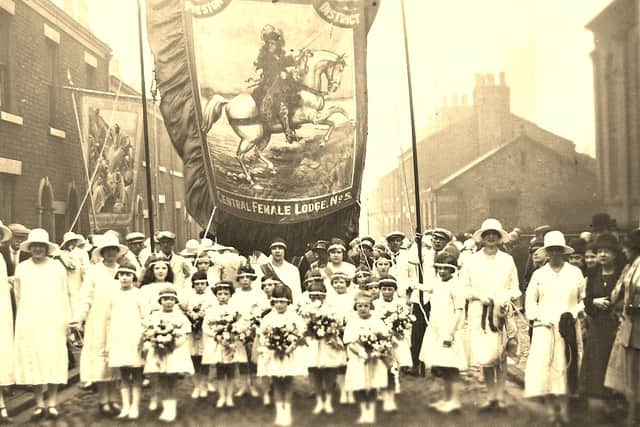
The procession was steeped in history, with the long line of banners recalling the history of the Protestant faith. One highlight was an elaborate new silk banner of the Wycliffe Lodge, featuring a portrait of John Wycliffe, the 14th century Protestant reformer.
Adults and children alike walked proudly along, accompanied by nine bands bringing musical delight all the way to North Road, where the procession ended as the bands combined to play the National Anthem.
No sooner had the cheering and clapping ended than the next procession was on its way. It was the turn of the Roman Catholics of the town, with English Martyrs leading the procession.
Monsignor Canon Pyke of that parish found himself sharing the spotlight with the Bishop of Lancaster and the Archbishop of Bombay, who was on a timely visit to Preston.
The costumes were a sight to behold, none more so than those of the Knights of the Blessed Sacrament who, in their shining armour, escorted a statue of the Sacred Heart.
Upwards of 10,000 took part in the walk, including Joseph Holden, aged 81, of St Walburge’s, who proudly walked for the 66th time.
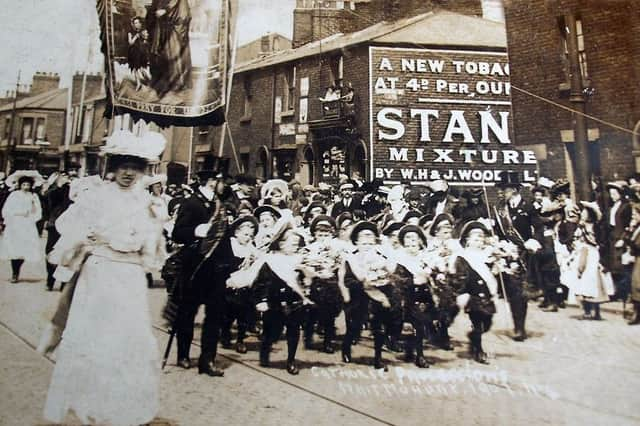
In mid-afternoon, it was the turn of the Church of England Sunday Schools to parade through the streets. The bells of Preston Parish Church rang out to herald the start of their march, in which almost 15,000 took part.
They generally walked four abreast, with innumerable bands and banners. It was a pageant in all its traditional magnificence, and the biggest cheers were reserved for the walkers from St Michael and All Angels Church in Ashton, who carried newly embroidered banners replacing those destroyed in a school fire months earlier.
It was close to three hours before the spectacle came to its close. As it ended, a sudden shower of rain saw those clad in summer garb hurriedly seeking shelter.
Kathlyn Davenport, in her book My Preston Yesterdays, recalled walking as a child in those processions of the 1920s with the church of St James, remarking:
“The procession of the Orangemen would be early in the day, led by a man riding a borrowed horse. With true Christian thoughts, we didn’t mind if it rained for them, so long as it was fine in the afternoon for us.
“After the walk we would go back to the school room where members of the church had prepared scalding hot tea and buttered buns. Exhausted after the long trek we would subside on the wooden forms and after a final hymn, we would depart, happy in the thought that together, young and old, we had, as the vicar remarked, borne witness.”
In fact, the rain continued almost throughout the evening, putting a dampener on many of the outdoor entertainments, including the town centre fair.
A century ago, Preston’s Whitsuntide was more than a holiday. It was a day of processions, bands, banners, Sunday school children, church pride and fairground noise — a moment when, despite strikes, short time and money worries, the town came out to watch itself pass by.
It was the time when the Mitchells and Greens were established fairground families, their connection sealed when Bob Green wed Eleanor Mitchell.
The Greens expanded their business in the 1920s, despite suffering a tragic blow in 1921 when, after arriving in town to begin installing the Green fairground rides, John Green, aged 33, collapsed in Jacson Street and died within minutes.
By 1926 they had spectacular fairground rides in operation, including the Golden Dragon Scenic Railway, Electric Flying Chairs and the American Caterpillar Ride, with its revolving carriages. The ride always raised shrieks of delight — or cries of fear — as the canvas hood suddenly enclosed the carriages.
The other fairground family present at every Whitsuntide fair from the 1870s was the Dewhursts, whose base was on Ripon Street in Preston, from where they toured the towns and villages throughout the summer.
A big steam-powered roundabout, with leaping, prancing horses, was their star attraction. Hobby horses, swing boats, coconut shies and a shooting gallery were among the other attractions they provided.
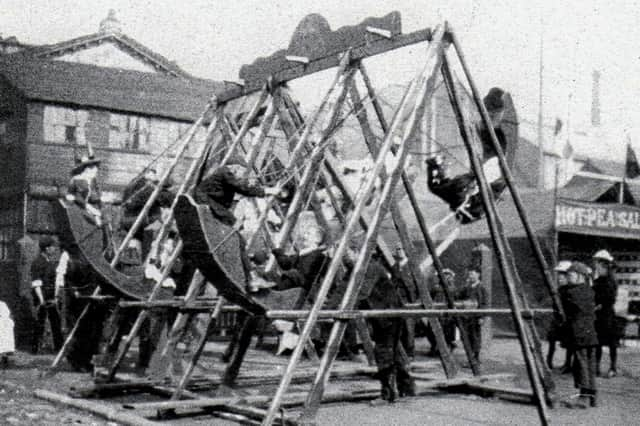
Despite the downturn in business that year, the fairground operators still gave free rides on the roundabouts on Tuesday morning for children connected to the town’s charitable institutions.
Unfortunately, those Whit Walks, full of religious and community enthusiasm, did fade with the war years, although attempts were made to re-establish them in later years, with church, youth and faith processions taking place sporadically in post-war Preston.
The Church of England procession had begun in 1842, the Roman Catholics had paraded since early Victorian times, and the Loyal Orange Parade, which first took place in 1837, became the great survivor, continuing into the 1960s.
One regrettable consequence of the new Market Hall opening in February 2018 beneath the Victorian canopy was the loss of the Whitsuntide Fair, which could no longer be accommodated in the city centre.
Those days of a multitude of roundabouts and sideshows — from the waltzer to the wheel of fortune, and the chance to win a cuddly toy or a goldfish by sticking three darts in a playing card — were over as the fairground moved to Moor Park.
When it was all over a century ago, it was generally agreed that Preston folk had enjoyed a Whitsuntide break true to all its long-standing traditions, and the saying “there is no place like home” rang true.