
The rise and survival of Preston's iconic Tulketh Mill
This month marks 121 years since the foundation stone was laid for Preston’s landmark Tulketh Mill — a building whose story runs from cotton king to call centre.
One hundred and twenty-one years ago, in mid-May 1905, the foundation stone of Tulketh Spinning Mill, facing on to Balcarres Road, Ashton, was laid, writes Keith Johnson.
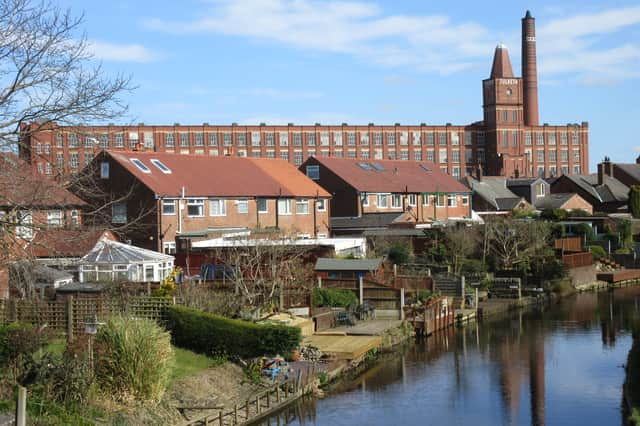

It was built by local building contractors Thomas Croft & Sons, a business founded in 1874, and was in production by early July 1906.
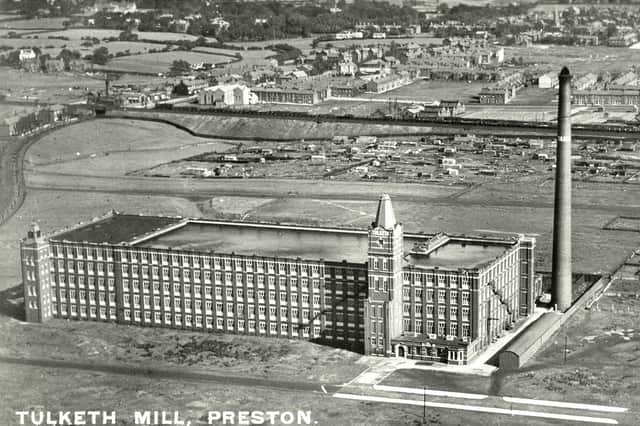
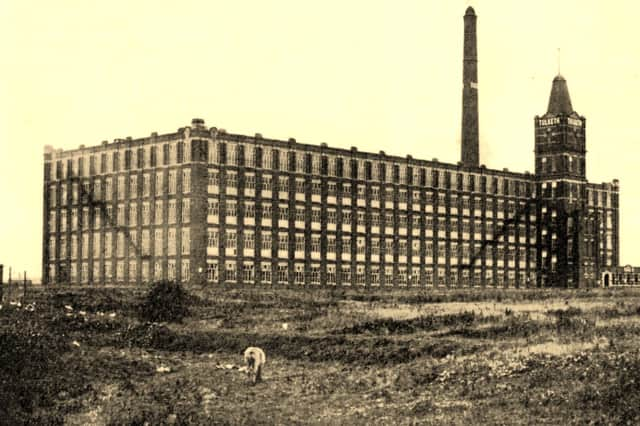
The five-storey building had been constructed around cast-iron columns and steel beams, with concrete floors, and was clad in red and yellow brick. With a tower, an office block, a stair turret and an engine house with a 24ft flywheel, it was an impressive structure.
Two lodges, with a water capacity of 1.75m gallons, were also excavated.
Unmissable, too, was the tall brick chimney: cylindrical, tapering slightly, and bearing the word “TULKETH” in white brick near the top. Around its upper section were steel bands, and at the top was a short, tile-clad spire. The chimney would rise to 220ft.
Among the structures credited to the pioneering Thomas Croft were numerous cotton mills and more than 20 tall chimneys, including those at Horrockses Centenary Mill and Tulketh Mill.
In January 1908, with the mill in full production, chairman W L Holland told the annual meeting of shareholders that £170,000 — more than £17.5m in today’s money — had so far been spent on land, buildings and machinery, making it one of the best-equipped mills in the country.
The mill, surrounded by fields in those early days, survived the challenges of the First World War and expanded its operation by extending the premises on the northern side, enabling a spindle mule capacity of more than 127,000.
At the top of the landmark Tulketh chimney was a cast-iron anti-draught cap which did not work satisfactorily. In 1925, local steeplejacks the Reed brothers, by then operating from Corporation Street, were engaged to remove the draught excluder and reduce the height of the chimney.
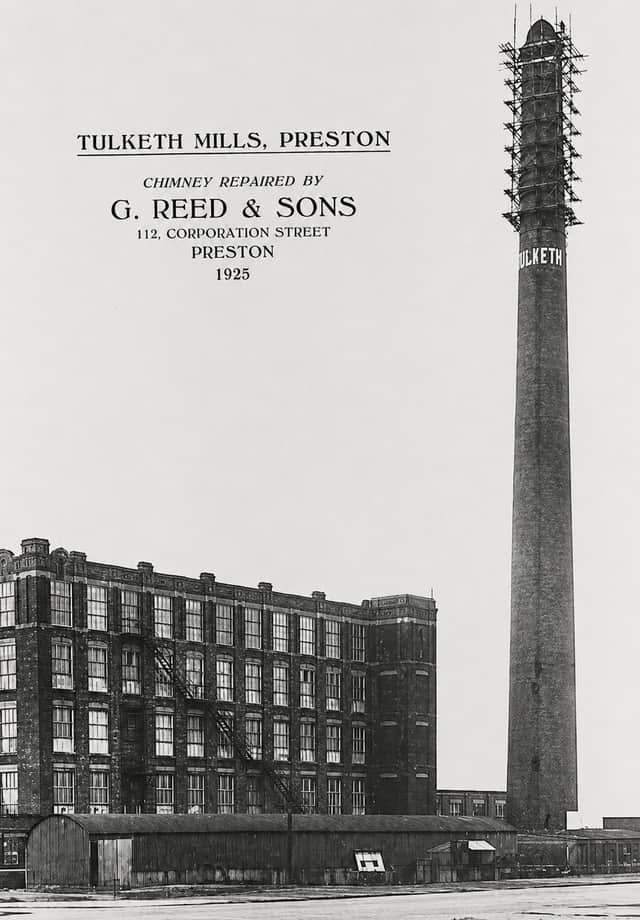
The painstaking work was successful and the chimney was left at a height of 202ft, just above the distinctive “TULKETH” lettering — and just 5ft shorter than the spire of Preston Parish Church, which the Reed brothers also renovated in 1925, fixing the weather vane on top.
In 1939, shortly before the Second World War broke out, a review of the progress of Tulketh Mill was presented to shareholders. It was reported that more than six times the capital outlay of shareholders had been paid back to them in bonuses.
The value of the mill to the local community and economy was reflected in the fact that more than £1.1m had been paid in wages and salaries since the mill opened.
By this time, the decline in the local cotton trade was all too apparent, with demand for goods abroad having fallen sharply as the industry faced competition from countries such as India and China, which exported cheaper products.
Year by year, cotton mills and weaving sheds were closing into the 1960s, but Tulketh Mill appeared to be bucking the trend, with more than £1m spent in 1963 on modernising the building.
However, the mill’s cotton days were numbered and, in January 1968, a Lancashire Post headline stated “Imports Doom Super Mill” as it was announced Tulketh Mill was about to close.
A shortage of labour was one of the reasons for the closure, with the loss of 500 jobs despite an order book stretching for six months.
One departing worker commented: “The lasses don’t want cotton in their hair, headscarves and hard work. They want clean hands and to work in dress shops or in offices, while the men are more interested in working in engineering, building aeroplanes, printing presses and trucks.”
Fears for the future of the building quickly surfaced but, fortunately, Peter Craig, part of the Littlewoods Mail Order Stores group, came to the rescue. There was much work to do, with the old spinning machines removed and conveyor belt equipment installed.
More than 2,000 staff were then recruited, with both clerical and warehouse posts plentiful. What followed was almost 30 years of employment and mail order catalogue business for local people.
With the building’s future once more in doubt, the Carphone Warehouse Company stepped in and officially opened its call centre in 2006.
The company completely refurbished the old mill and included a restaurant and gym for employees. By 2008, the number of employees had reached 1,200 and plans were unveiled for a development of the site fronting Blackpool Road.
Those ambitions later came to fruition, with a parade of shops and eateries fronting the complex for staff and the public to enjoy.
As for the landmark chimney, lowered most recently in the 1960s to a height of 184ft, it underwent emergency repair work in 2023, including the replacement of tension bands and essential pointing of brickwork.
In 2023, local artist Shawn Sharpe created a mural on Blanche Street, to the rear of the Wheatsheaf public house on Water Lane, in tribute to Preston’s cotton mills.

The mural, titled Betsy Leigh, portrays a striking image of a factory girl, and among the threads of cotton can be seen Tulketh Mill and its tall, iconic chimney.
Betsy Leigh was one of those Tulketh mill lasses: a mother of four who died at her Ripon Street home in August 1956, aged 77.
When women were expecting, we would carry on working right up to the last week as we needed the wages. The older women claimed that they would go into labour at work and have their baby at the side of the loom on cotton waste, but they liked to exaggerate.
She left behind her recollections of those early days in the mill, remarking: “Tulketh Mill was the most modern mill, but a devil of a place to get to. I walked there six days a week from Ribbleton.
“The heat was unbearable in the summer with the sun shining through all those windows. We used to get a week off for Preston holidays without pay, so we joined the holiday club to save money.
“When women were expecting, we would carry on working right up to the last week as we needed the wages.
“The older women claimed that they would go into labour at work and have their baby at the side of the loom on cotton waste, but they liked to exaggerate.”
Happily, Tulketh Mill remains an iconic landmark on Preston’s skyline, reminding us of the days when cotton was king and of the mighty mills that once stood throughout Lancashire.