
How Preston’s Tram Bridge linked the canal, coalfields and River Ribble
The reopening of Preston's iconic Tram Bridge rekindles the link between the Lancaster Canal, coalfields, and River Ribble, marking a new chapter in its history.
News that the new £8.2m Tram Bridge spanning the River Ribble at Avenham is due to open this week will no doubt bring memories flooding back of the old Tram Bridge, which closed in February 2019, writes Keith Johnson.
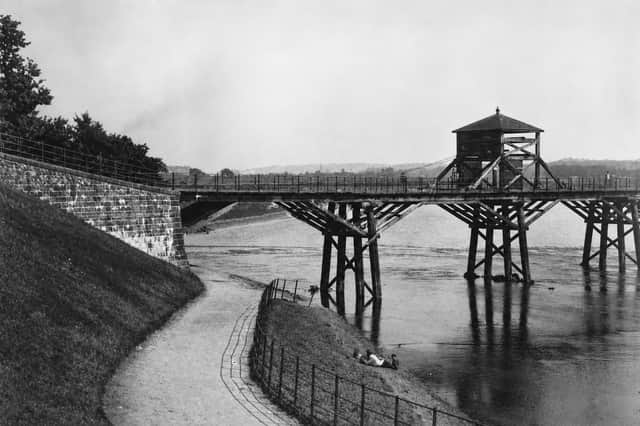

Seven years on from the closure, the new structure will be more than welcome. The old bridge was a vital link along the old tram road, which connected the Lancaster Canal from Wharf Street, behind the Corn Exchange, through a tunnel under Fishergate and onwards to Walton Summit.
Back in November 1797, the Tewitfield to Preston section of the Lancaster Canal was completed, and a small flotilla of boats journeyed to Tewitfield and back as praise was heaped upon John Rennie and William Jessop, the celebrated civil engineers.
It was quite an engineering feat in its day, with 114 road and occupation bridges and two road aqueducts along its length.
Plans to extend the canal towards Wigan and the coalfields were seen as too complicated and expensive, and the alternative of building a tram road was agreed.
William Cartwright, who had been involved in the canal building, became the leading engineer in the tram road’s construction. He observed the methods of Benjamin Outram, a pioneer in the building of horse-drawn tram roads, before submitting his own plans for a two-track, double “L”-shaped rail system.
Work began at the dawn of the 19th century and was sufficiently complete by late 1803 to allow coal wagons to traverse it, although work was still going on at the Preston and Walton Summit wharves.
The tram road was about five miles in length, and only wagons ran on it, with eight or nine making up a train.
Beginning at the wharf, the tramway passed under the Fishergate tunnel, skirted the back of Chapel Street, crossed a wooden bridge at the bottom of Garden Street, and ran along the back walls of the gardens to Ribblesdale Place. From there it continued to the summit of Avenham Park, where the Belvedere now stands.
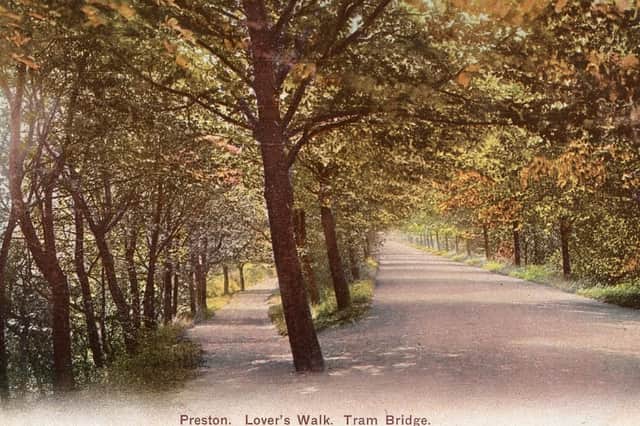
There, the horses were detached from the wagons, which were hooked on to a very strong endless chain. This chain passed over a grooved wheel on an upright shaft, which revolved by steam-engine power in the adjoining building.
Each train was drawn by two or three horses along the entire way, except for the portion crossing the Avenham incline.
For almost 60 years this method of transporting coal and limestone along the canal route continued. The last driver of the horses on the tramway was John Proctor, who carried out the task for more than 30 years.
Twice a day, he went from Preston to Walton Summit, partly walking and partly riding. He did so much walking that records reveal it was necessary for him to have his clogs resoled weekly.
The original rickety wooden structure, with its familiar engine house, was given a structural overhaul in 1902, and in 1936 needed running repairs after floodwater debris damaged its supports.
During the Second World War, the timber decking was removed to thwart any potential German invasion advance.
By 1966, the original wooden structure was in a dilapidated condition. Fortunately, repairs were undertaken by Preston Corporation, and concrete supports and structures rescued the bridge, once more making it a vital thoroughfare for pedestrians and cyclists alike.
.jpeg?trim=0,20,0,19&width=640&quality=65)
Quite naturally, for a structure that has stood the test of time for more than 200 years, the bridge has seen many memorable moments.
In October 1826, a tragic accident occurred when the chain used to drag the wagons up the Avenham incline broke. John Roberts had just disengaged his horses from the wagons and was standing at the bottom of the hill when a wagon hurtled down the slope at great speed. Two of his startled horses plunged into the river and received injuries so severe they had to be put down.
In late July 1837, curious onlookers on the bridge watched as six men and three women were baptised in the waters below, becoming the first British Mormon converts of the Church of Jesus Christ of Latter-day Saints. It was a movement that began in Preston and led to many converts to its cause.
Old Prestonians often recalled an afternoon in mid-January 1838, following a severe winter during which 15 days of frost had caused a great deal of ice to accumulate in the Ribble.
Masses of ice from Walton Bridge to the Tram Bridge, thickened by sheets floating up the river’s rapids, crashed their way past the rickety structure. Borne on the current, the ice was raised eight to 10 feet above the water and swept towards the temporary wooden structure being used for the construction of the North Union Railway Bridge, which was swept away, leaving great timbers floating on the water.
In January 1875, during a severe frost, a number of locals took to the frozen River Ribble to skate and slide the afternoon away. Unfortunately, a rapid thaw was under way, and suddenly a large floe detached from the ice, carrying several people towards the bridge, where it struck the supports and sent them into the freezing water. Despite their ducking, all managed to reach the river bank.
All too common have been the occasions when lives have been lost in the vicinity of the Tram Bridge.
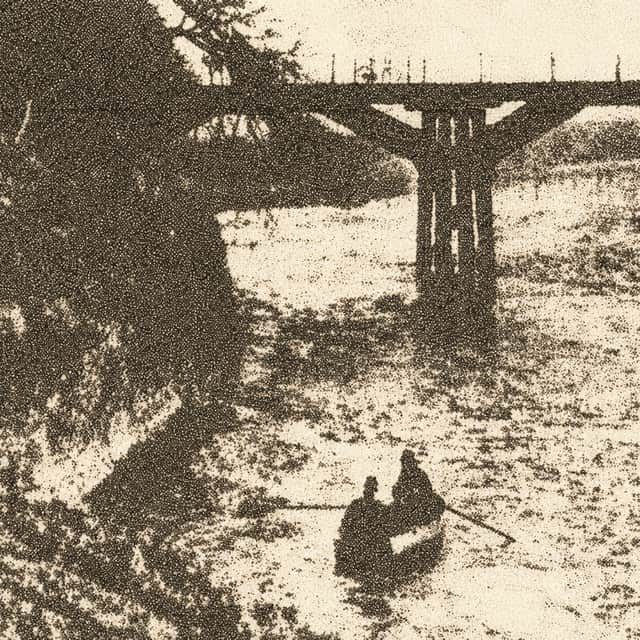
In November 1888, dragging operations were carried out on the Avenham side of the bridge after John Clayton, aged seven, was believed to have slipped into the river in the whirlpool area. The Preston Corporation diver made five dives to 20 feet, but all he discovered were a number of wagon wheels from the old coal wagons.
In mid-March 1907, during a period of gales and flooding, a schoolboy named John Barton, aged 12, was blown into the River Ribble while playing with his pals on the Tram Bridge. He was quickly carried seawards along the swollen waters.
Despite a vigilant search, no trace was found of his body until late April, when the machinery of a Preston Corporation dredger, working outside Lytham, was stopped after the body was drawn up into the chains.
For more than 200 years, the Tram Bridge has been more than a way across the River Ribble. It has carried coal wagons, horses, walkers and cyclists — and witnessed floods, rescues, tragedies and memories that still belong to old Preston.
There was more tragedy in June 1907, when Cornelius O’Brien was busy cutting bark on the bank above the whirlpool and apparently slipped into the culvert. His workmates discovered his hat floating on the water and his tools abandoned on the bank.
The waters had been particularly high that day and, despite an immediate search, he was feared drowned. Even the later use of grappling irons failed to locate his body.
There was also the occasion in August 1914 when a young barmaid named Gladys Maud Stewart perished in the waters beneath the bridge. That day, the boat she had hired was driven against a wooden pillar by the fast-flowing current and overturned. Attempts were made to rescue her, including a lifeline that she gripped for a while, before she was claimed by the swollen waters.
There have also been plenty of times when the bridge itself has been in peril through floods and windswept waters, with mid-December 1936 being one particularly memorable example.
As the River Ribble overflowed, one of the eight supporting buttresses was carried away, causing a portion of the bridge to sink. It had been struck by a hen cabin more than 30 feet long, and Preston Corporation had to close it until running repairs could be carried out.
It seems no generation has been safe from the perils of the whirlpool.
In December 1937, Alfred Scott, who had a refreshment hut on the Penwortham side of the bridge, was having a cigarette break beside his hut when he saw a man standing on the ledge of the bridge looking down into the icy water.
In a moment, the man fell into the river and seemed to swim towards the notorious whirlpool. Despite Mr Scott’s shouts of warning, the man was soon enveloped by the whirlpool and disappeared. Operations the next day to recover the body were unsuccessful, adding to the mystery of this treacherous spot.
Clearly, the Tram Bridge is a place where many an accident or incident has taken place.
It was the custom from the early days for Preston Corporation to close the bridge for 24 hours annually, usually in early May. A public notice would be placed in the Lancashire Daily Post each year stating the forthcoming closure, in order to preserve the “Rights of the Corporation”.
As for William Cartwright, he never got the chance to see his efforts come to full fruition. He died in January 1804, in only his 39th year, after a short illness.
He was described as having a happy, cheerful nature, which gained him the esteem of all who knew him, including the workmen who toiled for long hours, happy to execute his commands.
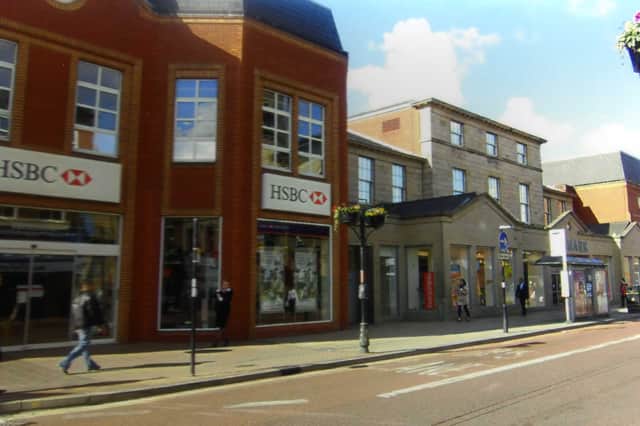
He had hoped to linger a while in Preston, having a house built on fashionable Fishergate in 1802. In fact, the frontage of that building can still be seen today in the facade of the Primark store.
Let us hope that those who have toiled to create the new structure live long and take pride in their achievements, as once more we can cross the River Ribble and take the path that once led to the coalfields of old.