
Preston North End’s England World Cup links recalled
Preston North End’s proud links with England are revisited ahead of World Cup 2026, from the Invincibles and Tom Finney to David Nugent and Jordan Pickford.
As England prepare for the 2026 World Cup in the USA, Mexico and Canada, there are no Preston North End players in their ranks. But that has not always been the case, writes Keith Johnson.
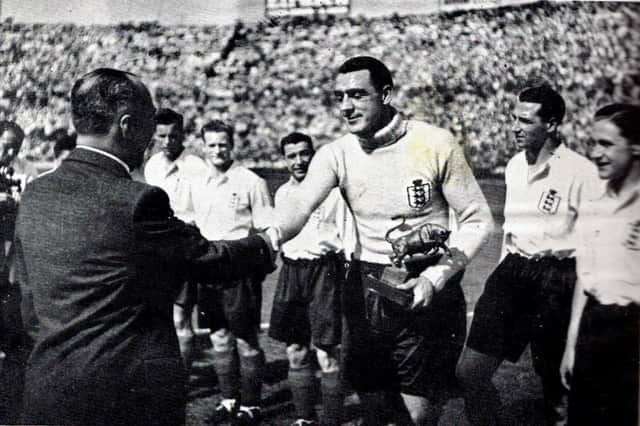

Not surprisingly for a club whose early team became known as The Invincibles, North End soon had players called up for international duty while contracted to Deepdale.
From the all-conquering league and cup-winning side, Fred Dewhurst, John Goodall, Bob Howarth and Bob Holmes all received the call.
In February 1885, before the Football League era, PNE recruited England goalkeeper William Crisp Rose. He added to his three existing caps while at Deepdale, playing against Ireland in a 6-1 victory in Belfast in March 1886, before departing for Wolverhampton Wanderers, where he gained his fifth and final cap.
Making his England debut in that Belfast fixture was Fred Dewhurst, who scored in a 3-1 win in Wales a fortnight later and went on to earn nine England caps, the last in 1889.
Prolific striker John Goodall made a scoring debut for England in February 1888 and earned four caps before leaving for Derby County, where he won another 10.
Preston-born full-backs Bob Howarth and Bob Holmes were both called up for England duty. Howarth won the first of four caps in 1887 against Ireland, while Holmes made his debut a year later and went on to gain seven caps.
Inside forward Frank Becton, who had two spells at Deepdale, played for England in 1895 before joining Liverpool, where he gained his second and final cap in 1897.
Kirkham-born Joe McCall, a robust centre-half and captain, was the next North Ender to represent England. He scored on his debut and earned three caps just before the First World War, adding two more in 1920 and 1921.
Right winger Archibald Rawlings, recruited from Dundee in 1919, earned a solitary England cap in 1921 against Belgium.
Tommy Roberts, a prolific goalscorer, was twice capped by England in the 1923-24 season. Despite scoring on both occasions, he was never called up again.
It was the end of Tom Finney’s World Cup dream after three campaigns spent with the Deepdale fans cheering him on.
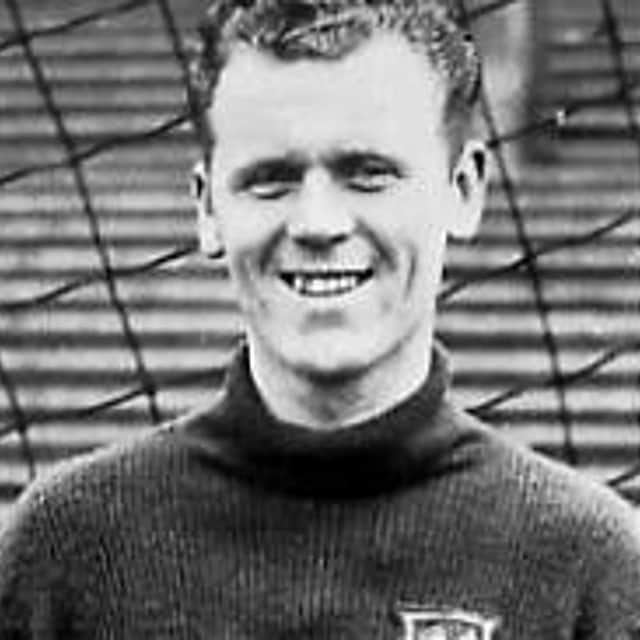
In 1936, goalkeeper Harry Holdcroft, a bargain buy from Everton in 1932, played 172 consecutive matches for PNE before breaking that sequence by making his England debut against Wales in October 1936, in a 2-1 defeat in Cardiff. His second and final cap came a month later in a 3-1 win over Ireland at Stoke.
After the Second World War, Tom Finney made a scoring debut for England in a 7-2 win over Ireland in Belfast and then embarked on a lengthy run of international fixtures.
Bobby Langton, who had also made his England debut in that match while a Blackburn Rovers player, earned a call-up from PNE in September 1948 for a 0-0 draw in Copenhagen against Denmark.
Left winger Langton would gain another England cap in May 1949 as England lost 3-1 in Sweden, with goalscorer Finney also in the attack. After leaving North End for a record £20,000 transfer fee, Langton enjoyed success with Bolton Wanderers and Blackburn, ending with 11 England caps.
British interest in the World Cup began with the 1950 tournament in Brazil, with qualification decided by success in the 1949-50 Home International Championship. The top two sides were invited.
Scotland beat Ireland 8-2 and Wales 2-0, while England won 4-1 away to Wales and outplayed Ireland at Maine Road, Manchester, winning 9-2. Finney, although not on the scoresheet, created chances galore.
England clinched top spot with a 1-0 victory over Scotland, who had declared before the Hampden Park clash that they would only go to Rio if they topped the qualifying group. True to their word, the SFA declined the invitation.
At the World Cup, England started reasonably well, beating Chile 2-0, with Finney setting up Wilf Mannion for the first goal.
.jpeg?trim=174,0,53,0&width=640&quality=65)
Unfortunately, England’s second match produced the upset of the tournament as the USA won 1-0, with England wasting their chances. That left England needing to beat Spain in their final group game.
England produced an excellent performance, but Spain’s robust tackling disrupted their rhythm. Finney, playing with a bandaged wrist, was subjected to rough treatment and fouled constantly. A goal early in the second half earned Spain a 1-0 victory and a battered England came home.
The 1950 final saw hosts Brazil lose 2-1 to Uruguay.
For the 1954 World Cup in Switzerland, the Home Internationals were again used as the qualifying tournament. England topped the group, winning all three matches, with Scotland second after losing 4-2 to England at Hampden Park.
That victory earned Finney the newspaper headline “Finney The Magician” as he tormented the Scotland defence and set up three goals.
There was a hectic World Cup opener for Finney as England drew 4-4 with Belgium after extra time, having squandered a 3-1 lead.
England’s second match was against hosts Switzerland. Despite being forced into changes because of injuries, England produced a solid display to win 2-0, although Finney was described as having a quiet game after being man-marked throughout.
A tough quarter-final followed against Uruguay, who had thrashed Scotland 7-0. England were back to full strength, with Finney on the left wing and Stanley Matthews on the right.
It was a hard-fought match and England played attractive football, but a couple of goalkeeping errors by Gil Merrick contributed to a 4-2 defeat. Finney and Nat Lofthouse scored for England.
The eventual winners were West Germany, who surprised favourites Hungary with a 3-2 victory.
Before the 1958 World Cup in Sweden, there was a brief hope that, alongside Finney, North End striker Tommy Thompson might make the squad. His goalscoring exploits earned him consideration and, in April 1957, he was chosen to play for England against Scotland.
Unfortunately, England failed to impress that day. The forward line, led by Finney, misfired and it took a scorching late drive from Duncan Edwards to clinch a 2-1 win. Thompson’s England hopes ended there.
For the 1958 qualifiers, the British sides were split into European groups. England were paired with Denmark, who they beat twice, and the Republic of Ireland, who they beat 5-1 at Wembley before drawing 1-1 in Dublin to clinch qualification in May 1957.
England began their World Cup campaign against the USSR in Gothenburg and found themselves 2-0 down at half-time. They rallied in the second half of a bruising encounter, with Derek Kevan equalising and Finney scoring from the penalty spot in a 2-2 draw.
Unfortunately, Finney was injured against Russia and missed the next match with Brazil, as Alan A’Court deputised on the left wing. Despite the brilliance of the Brazilians, they failed to break down England’s defence and the match ended 0-0.
An unchanged side faced Austria in the final group game and twice came from behind to draw 2-2, leaving England to play off against the USSR for a quarter-final place.
Once again, Finney failed a late fitness test and, with a reshuffled forward line, England drew a blank as Russia progressed with a 1-0 win.
It was the end of Tom Finney’s World Cup dream after three campaigns spent with the Deepdale fans cheering him on.
Finney made his final England appearance in a 5-0 win over Russia at Wembley in October 1958, bringing to an end a magnificent international career of 76 matches and a then-record haul of 30 goals.
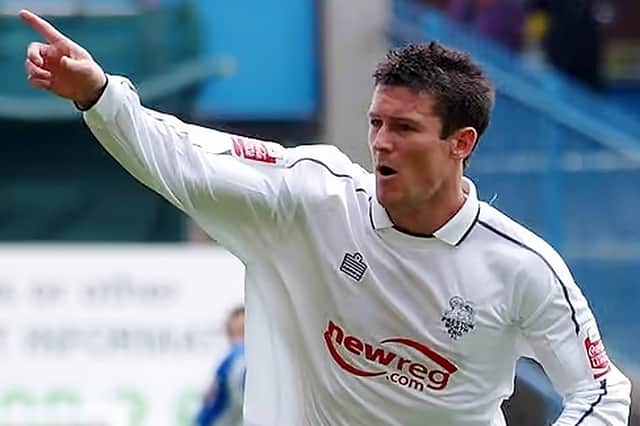
Since those heydays of the 1950s for Finney and North End, nobody at Deepdale has followed in his England footsteps, with the exception of David Nugent in March 2007 against Andorra in Barcelona. Coming on as a late substitute, he scored the final goal in stoppage time in a 3-0 victory.
Down the years, before or after their World Cup outings, a number of England internationals have worn the North End shirt.
The 1966 World Cup winners Bobby Charlton and Nobby Stiles both played for and managed North End, while David Beckham, Danny Welbeck and Andy Carroll all enjoyed spells in the international limelight after loan spells at Deepdale.
Current England goalkeeper Jordan Pickford will no doubt be cheered on again as one of our own, following his Deepdale loan spell in 2015.