
The people, pubs and shops that shaped a Preston street
Explore the rich history of Lovat Road, from its humble beginnings to a vibrant community hub akin to the BBC's Coronation Street.
Lovat Road may look like an everyday terraced street, but it would eventually become the BBC’s real-life alternative to Coronation Street. In its formative years, however, it did little to stand out from the crowd. Keith Johnson looks back at its early history.
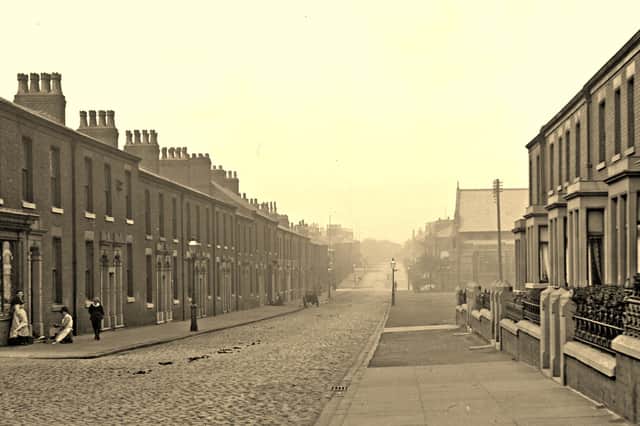

The road had its own equivalent of the Rovers Return from 1878. Its first landlord was James Blackledge, a brickmaker by trade who had premises on Miller Road.
His tenancy was short-lived, as he died within a year, with his stock of 250,000 bricks being put up for auction in August 1879.
The running of the pub was taken over by his widow, Ann Blackledge, for a couple of years before William Hesketh Heald took on the tenancy. He moved in with his wife Ellen and their sons and daughters.
Heald had been instrumental in applying for the original licence in 1875, when it was estimated that construction of the hotel would cost £1,700 – around £175,000 in today’s money.
From the earliest days, a number of shops and businesses could be found among the terraced houses.
At No. 57, on the corner of Arkwright Road, James Bowcock was offering choice mutton for sale. At No. 14, shopkeeper Joseph Derome had obtained a licence to sell beer for consumption off the premises.
From No. 28, Mr Holdsworth was running a branch of the Liverpool Legal Friendly Society, while Nos. 18 and 20 were about to be converted into a bakery and shop.
At No. 17, on the corner of Shuttleworth Road, the occupier was busy wheeling and dealing, while Miss Walmsley was seeking an apprentice for her dress and bonnet-making business at No. 61a.
Such was the everyday life of the street in its early years.
One of the property builders working on Lovat Road was Lawrence Titterington, of Moor Lane, who found himself in trouble in November 1878 after allowing houses he had erected to be occupied before they had been inspected and certified by the Borough Surveyor.
A glance at a street directory from 40 years later, in 1918, shows a firmly established neighbourhood, with Moor Park Wesleyan Chapel on one corner and Mr Williamson’s chemist shop on the other when viewed from Garstang Road.
The houses were home to people with a wide variety of occupations. Cobblers, weavers, joiners, painters, fitters, drapers, carters, a reed maker, a plate layer, a tailor, a sawyer, a firefighter and a chauffeur were among the residents.
At No. 14 lived Jeremiah Woolley JP, a leading figure in the Preston Weavers’ Association who would go on to become Mayor of Preston in 1925.
Neighbourhood shops were also well established by then. They included Catterall’s grocery store on the corner of St James Road, Miss Forrest’s confectioners on the corner of Albert Road and Anderson the fishmonger on the corner of Shuttleworth Road.
There was also a butcher’s, a baker’s and a couple of provisions and hardware stores along the way.
Like the Rovers Return, with its snug frequented by Minnie Caldwell, Martha Longhurst and Ena Sharples, the Lovat Road Hotel was a place where gossip circulated and there were plenty of incidents to set tongues wagging.
The chaos surrounding a fishing club trip on the River Wyre in September 1897 was no doubt often recalled. A fisherman named Catterall fell into the water and was almost swept away by the current before being rescued by two fellow anglers.
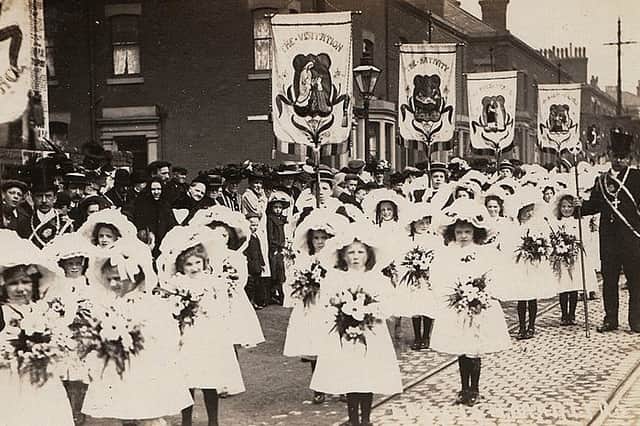
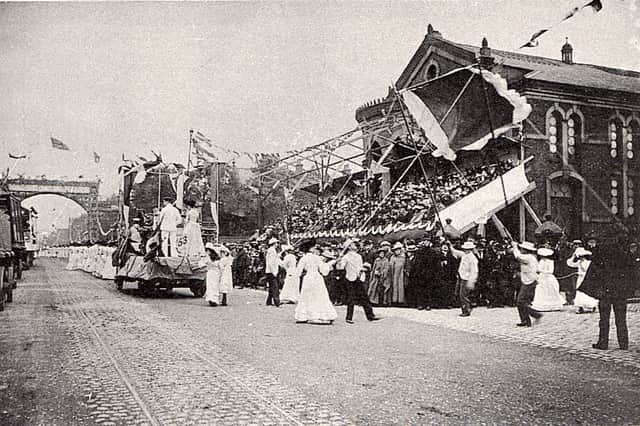
The Preston Guild of 1902 was also certain to have been a hot topic, with residents able to secure a grandstand view of the processions thanks to a structure erected outside the Methodist chapel.
There was also the annual dog show held at the inn from late Victorian times, where breeds including Great Danes, Yorkshire terriers and retrievers competed for the best in show award.
There would have been more chatter in August 1910, when Lovat Road properties were put up for auction by Messrs Jabez B Jones.
No. 53, then a hardware and clogger’s shop and later a fruiterer’s, was withdrawn after an offer of £235 was considered unsuitable.
However, two dwelling houses at Nos. 69 and 71 were sold for a combined hammer price of £560 – around £59,000 in today’s money.
The latest sporting activity was always worthy of bar-room banter. With darts, dominoes and billiards teams competing in local brewery leagues, and table tennis being played on the first floor from the 1950s, there was always something to discuss.
Local cricket was also followed keenly in the neighbourhood, with Moor Park Methodists competing in the Preston Cricket League. Church members also played at the highest level of the Preston and District Table Tennis League.
A few eyebrows were no doubt raised in March 1937 when landlord Herbert Brown, aged 45, was fined at Preston Borough Police Court for supplying intoxicating liquor outside permitted hours.
Police claimed that, when they entered the premises after 11pm, they saw freshly drawn beer being consumed.
The landlord and three regulars were each fined £1 and warned about their future conduct.
It was an unwelcome predicament for Brown, who spent more than 20 years pulling pints between the wars.
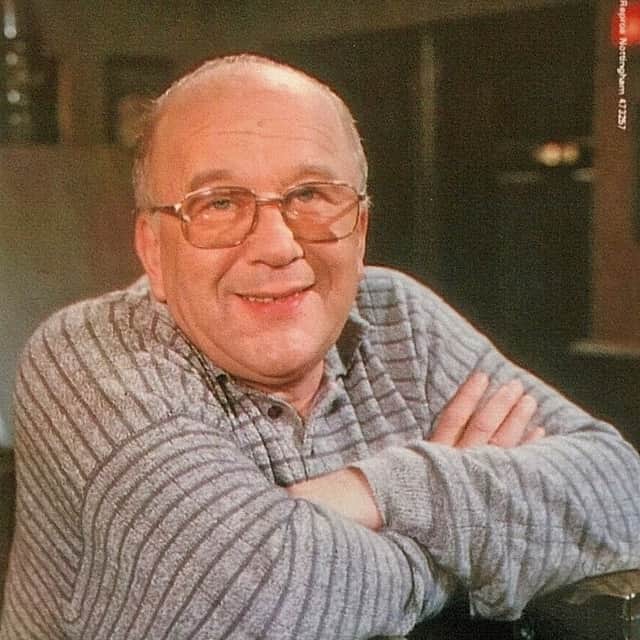
No wonder Rovers Return landlords Jack Walker and, later, Alec Gilroy – played by Preston-born actor Roy Barraclough – were always clearly heard shouting: “Time, gentlemen, please!” at closing time.
Moor Park Methodist chapel and school were also very much part of community life.
The Moor Park Methodists cricket team enjoyed some success during the 1930s in both the league and Turner Cup, including memorable matches against near-neighbours English Martyrs.
However, in August 1957, the players returned to their Lovat Road headquarters red-faced after being set a target of 102 runs by St Mary’s and being bowled out for just two. The result continued their winless season.
Neighbourhood shops remained a crucial part of life on the terraced street for decades, as a directory from 1963 demonstrates.
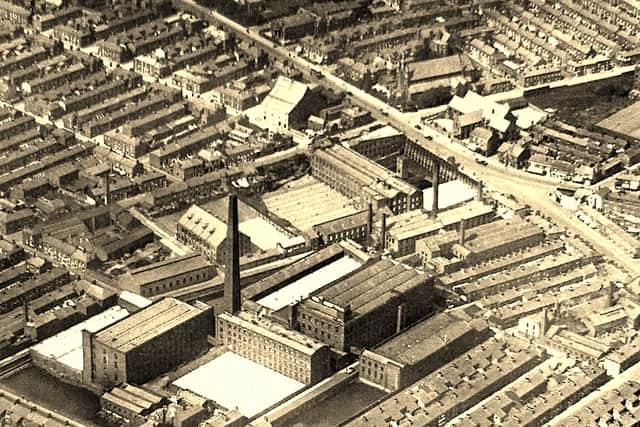
Harold Travis’s newsagents, Fred Dickinson’s barbers, fruiterers Jack Hornby and Harold Bilsborough, Fred Dean the butcher, Ward the draper and Oldham’s grocery store were all open and prospering, while Wilson the fish fryer had the chips cooking.
By then, the similarities with Coronation Street were clearly developing – as we will see in the follow-up feature.