
How Preston residents became stars of a BBC television show
Discover how residents of Preston's Lovat Road became stars in a BBC television series that showcased their vibrant community life.
So it came to pass that Lovat Road, an everyday terraced street built in the 1870s, would become the BBC’s real-life alternative to Coronation Street. Yet in its formative years, it did not particularly stand out from the crowd, writes Keith Johnson.
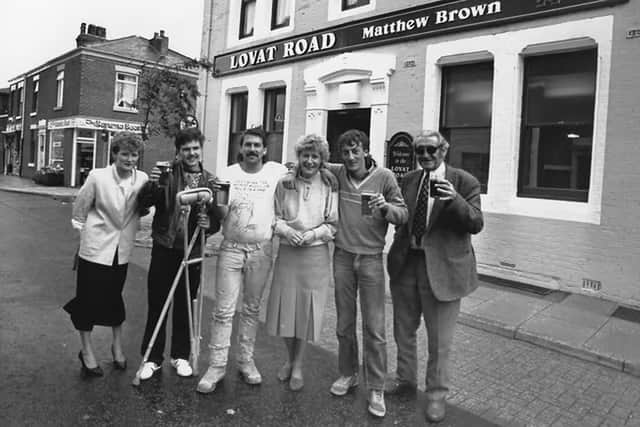

The Lancashire Post was quick to announce the arrival of television crews in early September 1988 for a BBC North West series which promised to make the ordinary folk of Lovat Road as well known as the Duckworths, Barlows and Tilsleys.
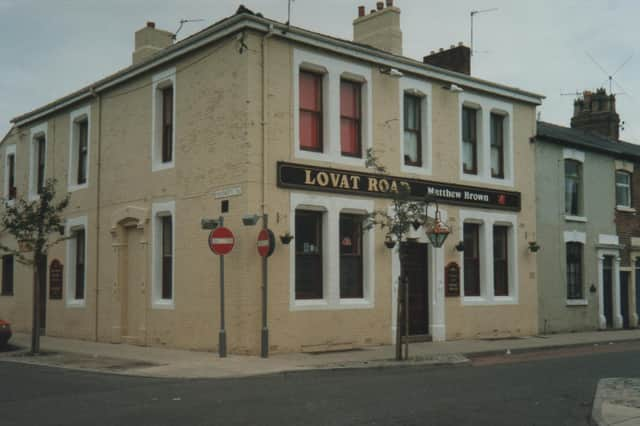
BBC producer Tony Wilkie-Millar arranged a gathering of residents at the Lovat Road Hotel to explain why they had been chosen.
He said he regarded Preston people as outgoing and good communicators, while the town itself was at the centre of a great deal of activity.
Lovat Road, meanwhile, was a go-ahead place with plenty of shops and interesting people living in its terraced houses.
He concluded by reminding residents that he was not there to snoop, but to discover what made a road like theirs tick in everyday life.
Fortunately, the wider Lovat Road area had just undergone a six-year, £800,000 improvement programme. Footpaths and roads had been upgraded, parking bays and one-way systems introduced, and trees and new street lighting had brightened the scene.
Initial reactions to the filming were mixed.
Pat Fidler, landlady of the Lovat Road inn, said she did not particularly mind what the television crews did, although she was pleased about the prospect of extra custom.
Her view was echoed by some shopkeepers and residents who were reluctant to face the cameras.
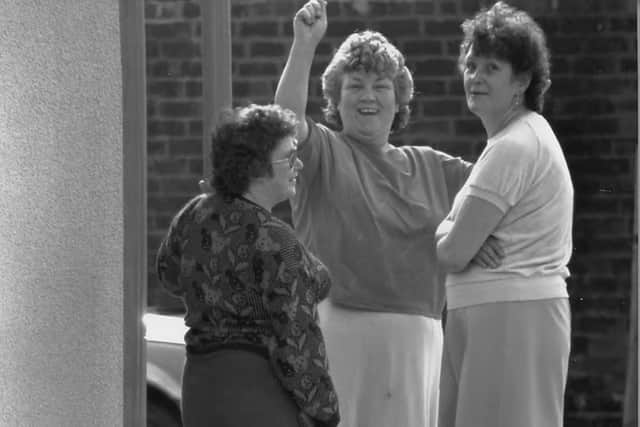
Standing chatting on a street corner were Lyn Atherton, Ann Heaps and Gwen Newton, who all agreed they would embrace the filming — and looked forward to free ale when meetings were held at the Lovat.
Lyn declared herself Lovat Road’s answer to Elsie Tanner and said she was looking forward to appearing on camera.
She told the Post reporter that she had lived on the road for 47 years, recalling days when children played in the street and people left their front doors open. Her neighbour May Yates shared those memories.
Hosted by popular former Red Rose Radio DJ Allan Beswick, the four-part series was shown on consecutive Friday nights on BBC Two from late September 1988.
The real-life soap introduced viewers to characters ranging from the street sweeper — conveniently equipped with a new uniform, broom, shovel and cart — to the footballers of Lovat FC.
The team provided its own version of Match of the Day with a 2-1 victory over AC Sporting in a Post Sunday League fixture.
The proprietors of the corner shops certainly added much to the success of the series.
The already popular Real Ale Off Licence, with the Barrel of Laughs fancy dress shop above it, provided plenty of conversation and colour.
Lynn and Adrian Eastham, who ran the two businesses, found instant stardom. The cameras even followed the pregnant Lynn to an antenatal clinic.
Across the street was the Linda Leigh Salon, where hairdresser Linda was busy with customers in Lovat Road’s answer to Audrey Roberts’ salon in Weatherfield.
Another resident to find himself in the limelight was Dave Wadeson, who lived above the hardware store he had inherited from his father.
It was a business which had survived from the days of paraffin lamps, when housewives would visit to buy donkey stones for scrubbing their doorsteps.
A cheerful and talkative character, Dave was filmed chatting to the window cleaner as he worked to make the shop windows gleam.
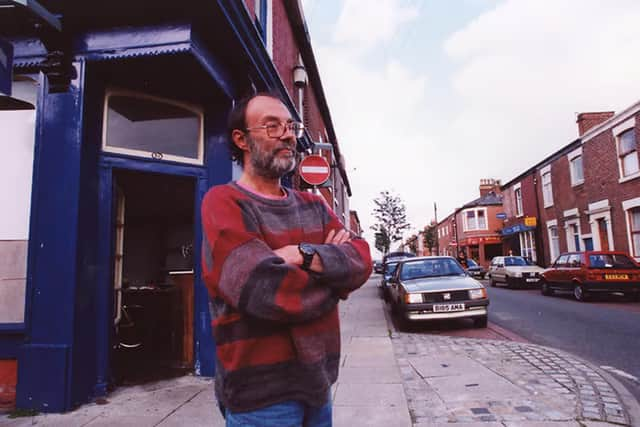
At No. 49, Croasdale’s Newsagents was the road’s answer to the Kabin. It was not run by a Mavis or a Norris, however, but by the enthusiastic Stuart and Beverly.
A confectionery shop offered a penny tray of treats for young children, while Mark the butcher — a far cry from the boisterous Fred Elliott of Coronation Street — cut choice joints of meat and organised a children’s art competition.
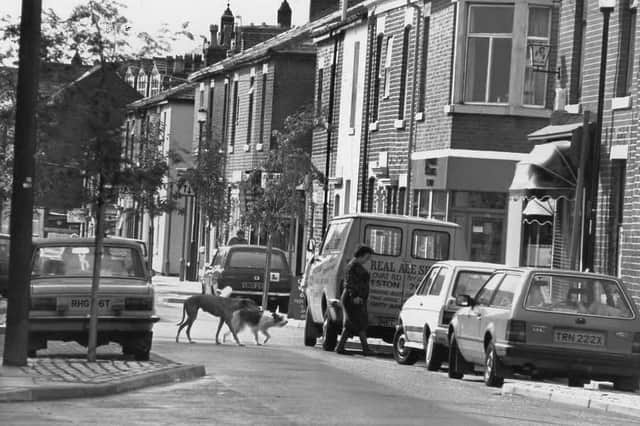
It all added to the community atmosphere.
By this time, there were also several mini-markets, including Budget Buys and a popular Spar on the corner of Kent Street.
The era of fast-food outlets had not yet reached Lovat Road, although residents could buy a hot potato pie from the baker’s, a ready-made sandwich from the grocer’s and, of course, fish and chips.
Various sporting activities were linked to the Lovat.
There were keen anglers filmed casting their lines into the river, while pigeon fanciers — like Coronation Street character Jack Duckworth — kept lofts in their backyards and were shown clocking their birds after a race.
The women’s darts team took over the oche each Wednesday night, keeping the arrows flying.
Regulars also supported Tom Benson, the “Non-Stop Walking World Champion”, who was filmed completing circuits of Moor Park while training for his next long-distance challenge.
Residents of the old people’s home around the corner enjoyed a late-September coach trip to see the Morecambe illuminations.
Their usual bingo session was abandoned for the day, and a meal in a smart café added to the treat.
Inevitably, viewers were also reminded that life does not go on for ever when a hearse arrived to take an elderly resident on her final journey.
Much loved by the community, her departure was filmed as her coffin was carried into English Martyrs Church.
The new real-life soap was clearly a success because, 12 months later, a second series was being filmed.
Lynn and Adrian Eastham were still having a Barrel of Laughs and had another reason to be cheerful: their nine-month-old son Jack became the latest television star when the cameras followed him on a visit to the doctor on Havelock Terrace.
The civic authorities were also keen to join the celebrations surrounding the second series.
The Barton Grange hot-air balloon was seen hovering above Lovat Road before landing on Moor Park, while Mayor Coun Ron Ball arrived, clearly delighted to see Preston in the spotlight.
Stuart at the newsagent’s was heavily involved, displaying his Lancashire Post signs.
The newspaper provided colourful balloons, goodie bags and fancy hats, adding to the sense of fun surrounding the return of Allan Beswick and the television crew.
Elsewhere, roof repairs were taking place at the top of scaffolding outside one terraced house, while a gas leak brought another team of workmen to dig up the road.
Preston Council rat catcher Gareth Bruce, an accomplished singer and songwriter, was called to check for vermin. He would later write the song Lovat Road for the 1992 Preston Guild.
It was all routine activity on this busy terraced street.
Although Mark the butcher had left his premises and set up in a Kwik Save store in Wigan, Pamela was full of enthusiasm after opening her Banana Boat shop at No. 53.
The premises had previously been occupied by fruiterer Jack Hornby, who had sold fruit and vegetables there.
At No. 45, KG Domestic Services appeared to be doing a roaring trade, with fridges, freezers and cookers all in high demand.
Students from Lancashire Polytechnic, now the University of Lancashire, had also begun moving into the area.
They were filmed doing their weekly laundry at the Auto Washing laundrette, apparently revising while their clothes spun around in the machines.
The second series ended by focusing on the approach of Christmas 1989.
Viewers were treated to tinsel and trees, children singing carols and pupils from Moor Park High School taking gifts to elderly residents.
The proprietor of the Spar announced that the shop would even open for a few hours on Christmas Day.
The women’s darts team were still throwing their arrows at the Lovat, even though a Post headline suggested that the future of the Matthew Brown pub was uncertain.
What happened when Allan Beswick and others returned to Lovat Road in the years which followed will be explored in the final feature.