
How disease, stench and overcrowded graveyards led to the opening of Preston Cemetery
Explore the Victorian challenges of disease, stench, and overcrowding that necessitated the establishment of Preston Cemetery in 1855.
The second day of July will mark the 170th anniversary of the opening of Preston Cemetery in 1855, and a glimpse at Victorian life at that time explains why it became necessary, writes Keith Johnson.
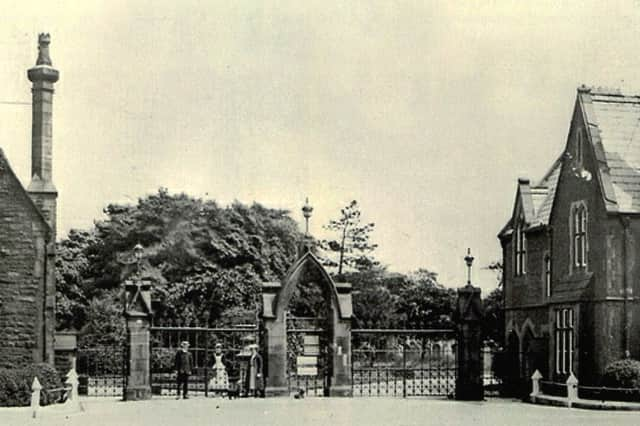

In the middle of the 19th century, residents of Preston — and indeed of towns and cities across the country — were becoming increasingly concerned about the number of graveyards that had developed in their midst. Many a church or chapel had thought it pleasing to bury loved ones close to where they had worshipped, but concern often grew, especially in times of fever or pestilence.
In Preston, the spotlight fell on St Paul’s burial ground, which was used to bury the poor in open graves designed to take some 25 coffins. One campaigner who lived close by wrote to the Preston Guardian in 1849 voicing his concerns. By his calculation, more than 40 coffins had been crammed into one of the open graves, with the final coffins barely beneath the surface.
He claimed the stench was so great that, when the wind was in a westerly direction, he had been compelled to keep the doors and windows of his nearby dwelling closed. His hope was that soon the remains of rich and poor alike would be deposited together in an open cemetery at a distance from the town.
Similar complaints were expressed by those who lived close to St Wilfrid’s graveyard, with one correspondent remarking: “A strong noxious smell often arises and I am consequently obliged to breathe in the poisonous air, which has been known to leave me feeling unwell.”
The matter finally came to the attention of the Home Secretary, Lord Palmerston, who decreed that the situation in Preston was intolerable. He ordered all existing graveyards in the town to close in 1855, with the exception of St Augustine’s and St Ignatius, which were given a couple of years’ grace before closure.
The new Preston Cemetery, on the outskirts of town, was on its way. In the previous decade, no fewer than 17 graveyards had been in use within the old borough boundaries.
No longer, unless exceptional dispensation was granted, would anybody be buried at the Parish Church of St John’s — nowadays Preston Minster — where the oldest flat gravestone dates back to 1670 and where upwards of 50 victims of typhus fever were laid to rest in December 1813.
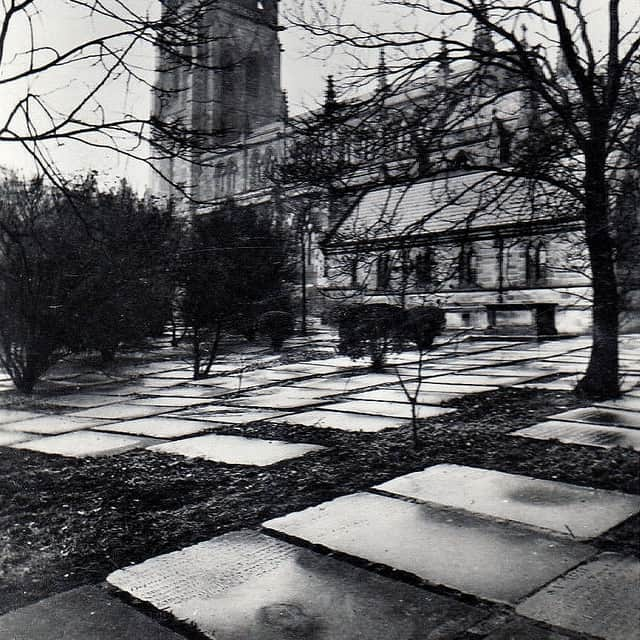
These days the graveyard is much altered. Cars park on the rear portion, while the gravestones which encroached onto Church Street have been removed and a path around the church building is lined with original gravestones.
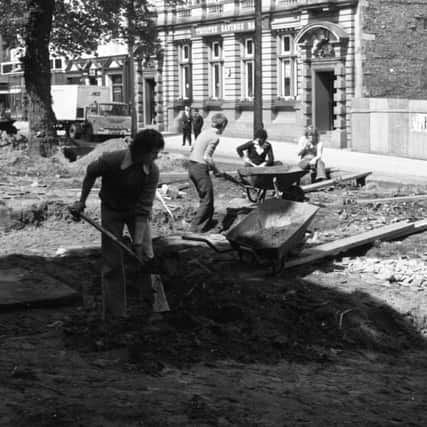
Nor would burials occur at the other eight Anglican burial grounds of St James, St George, St Peter, St Paul, St Thomas, St Mary, Christ Church and Trinity, which had been in recent use.
Neither would any more Catholic souls be interred at the Roman Catholic burial ground of St Wilfrid’s, off Fox Street, behind the former St Wilfrid’s School, which had accommodated the town’s deceased Catholics along with St Augustine’s and St Ignatius.
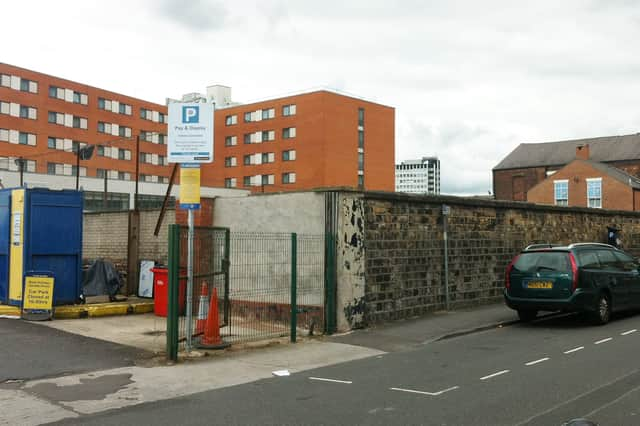
This enclosed plot of land, with its high wall, was the last resting place of many notable Catholics and a mysterious place, with only a few having the privilege to enter it.
Among those laid to rest there was lifelong bachelor Peter Newby, an early Catholic printer, bookseller and poet, who died in 1829 aged 82. His gravestone carried the following epitaph:
Here lies Peter Newby, A stranger to fame, Obscure was his life, Less known was his name, A sailor, a farmer, a poet, a teacher, His friends would gladly have made him a preacher.
Up to the middle of the 19th century, members of the dissenting chapels had buried their dead at five burial grounds, adjacent to chapels in Vauxhall Road, Grimshaw Street and Leeming Street, as well as the old Quakers Meeting House off Market Street and the Unitarian Chapel off Pole Street.
Down the years, we have seen drastic changes to some of these former places of rest. The former St Wilfrid’s burial ground is now a well-established car park, with only a partial stone wall boundary offering a clue to its former use.
The former Holy Trinity Church and graveyard stood on the area known in early days as Patten Field and had a walled burial ground. In 1960, almost a decade after the church was demolished, it was reported that the graveyard had been turned into a scrapyard, with tin cans and any old iron strewn among the neglected monuments and graves.
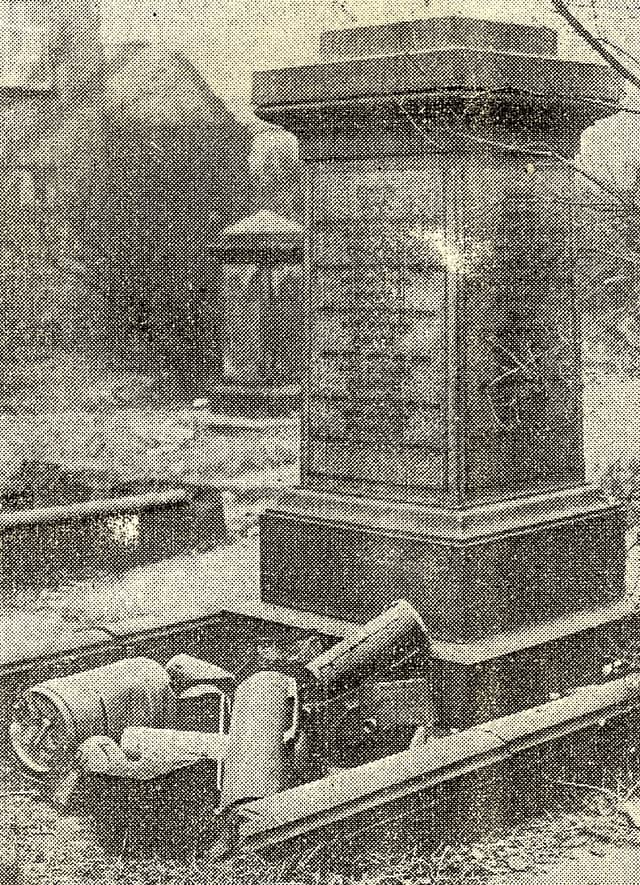
The car park created circa 1967 now occupies the site of that Gothic Georgian church and gives few clues to its graveyard days, with only a partial stone wall, a couple of stone pillars and a flight of stone steps remaining as reminders.
In 1971, the remains of more than 150 bodies were excavated from the churchyard of Christ Church, off Bow Lane, for reburial at Preston Cemetery when the site became part of the County Hall redevelopment.
In 1982, as Red Rose Radio settled into the former St Paul’s church facing Ringway, many of the gravestones were removed or relocated, although the human remains stayed put.
The graveyard of St George’s, at the bottom of Lune Street, has been much altered in recent times, and the flat cracked gravestone of cotton master Samuel Horrocks, who was buried there in 1842, is no longer in prominent view.
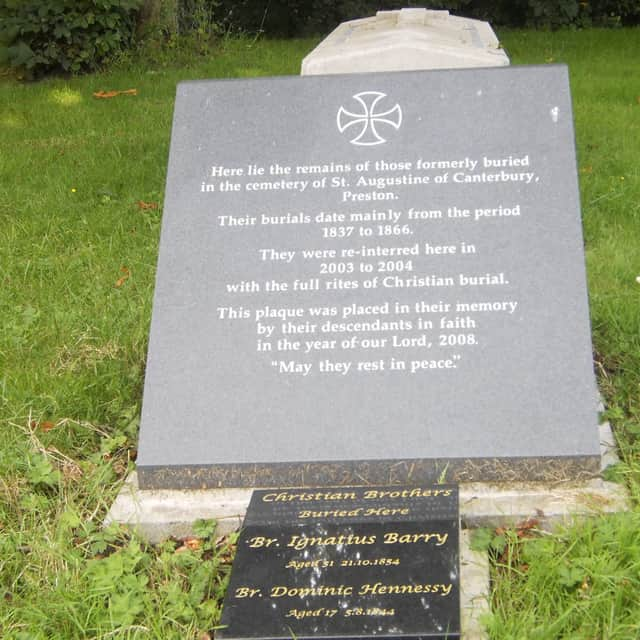
In 2003, as progress was made in creating a new sports centre at the former St Augustine’s church in Avenham, almost 2,000 bodies were removed in a mass exhumation and transferred to a plot in Preston Cemetery.
The graveyard of St Peter’s on Fylde Road also underwent changes as UCLan expanded with its Arts Centre and Library. Nonetheless, there still remains, in the southern corner of the old churchyard, a grave containing several teetotallers. It carries an inscription relating to Richard “Dicky” Turner, author of the word “teetotal”, whose remains are buried within.
There is another flat gravestone close by which records the death of gravedigger William Calderbank, who was buried alive in August 1853 when the sides of a grave he was digging fell in upon him.
Within 30 years of opening, Preston Cemetery had become the last resting place of more than 70,000 people, following the first burial of Elizabeth Frances Christian, aged five, the daughter of brick setter John Christian, in July 1855.
Wherever you may wander within the old borough boundaries, you are likely to come upon a reminder of where folk were buried in the days before Preston Cemetery — and before the opening of Preston Crematorium by Mayor Fred Irvine in January 1962.