
From Preston to Hollywood: The remarkable life of adventurer Trader Horn
Aloysius Smith, born in Preston, had his life's journey turned into books by novelist Ethelreda Lewis, which were later adapted into a Hollywood film, starring Harry Carey as 'Trader Horn', and released in 1931.
Just over a century ago, on a Tuesday morning in 1925, the elderly Aloysius Smith, who was living in squalor in South Africa, was hawking his kitchen goods on the streets of Johannesburg when he knocked on the door of Ethelreda Lewis. What followed changed his life, writes Keith Johnson.

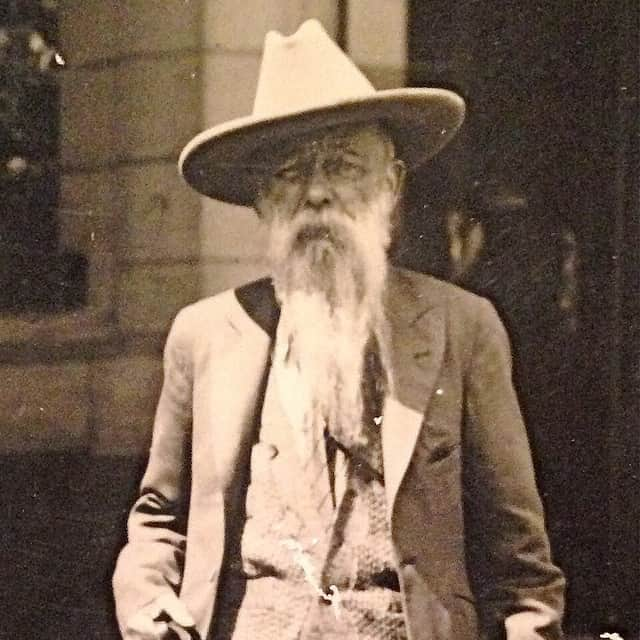
Unbeknown to him, she was a celebrated novelist about to settle down to a morning's work. Interrupted by the knock on the door, she answered it with notebook and pencil in hand. There on the verandah, standing on the mat at the top of the eight steps leading up from the garden, was an old man, white-bearded, with waxen skin and a high, wide skull covered with a few grey hairs.
In his hand, the man held a cluster of wire kitchen goods, neatly made and shining coppery in the morning sun. As soon as she appeared, he began the business of selling to someone who had no wish to buy. The battle was short, as the novelist displayed her eagerness to return to her writing and pleaded that her kitchen was already replete with toast fork and gridiron.
Commenting that writing was a good habit, the aged traveller turned on his heels, shouldered his bundle and began to descend the steps. However, before he reached the bottom, something had stirred inside the novelist and she called him back, saying she could, after all, do with a new gridiron.
Turning back and unloading the wire goods at her feet, he replied: “Why, certainly, Ma'am. It is only natural you experience a change of mind, over little things as over great. And after all we both are no more than children of nature.”
The next chapter of the novelist's book went unwritten that morning. With the transaction complete, the old man offered to educate her in the only way of making oatcakes using her newly purchased gridiron. It didn't take long for him to captivate her, as she soon realised that her new acquaintance had lived a long and enthralling life.
The conversation began with his place of birth and name, and before long he was recalling his days in the African interior. His birthplace, just outside Glasgow, had been followed by an upbringing in Lancashire. His name was Aloysius Smith – one of eight children born to Mr and Mrs Robert Smith, who had settled in St Ignatius Square, Preston.
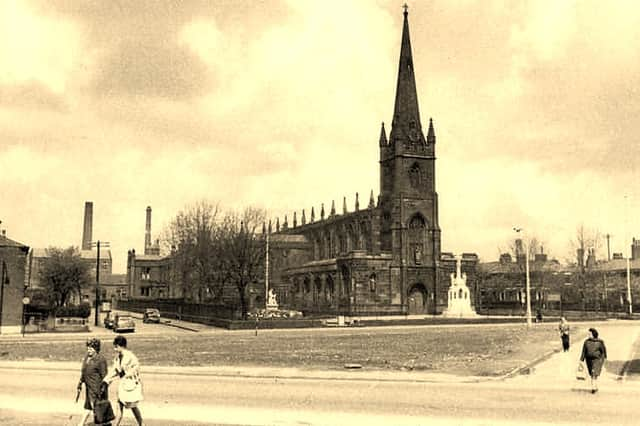
His adventures had begun, aged 17, when he had gone to Africa's Ivory Coast as an agent for a shipping firm. For a young trader in the 1860s, it was an exciting life. A few years later, his youthful days behind him, he returned to Preston and obtained a position as a reporter for a local newspaper. Before long, he was married to Amy Knowles, who, like him, lived in St Ignatius Square, and soon they were off to Colorado in America.
Sadly, Amy died there when only 27, and Aloysius was forced to return to Preston with their two small children. By now, all five of his sisters were teachers and his two brothers had become Catholic priests.
A restless soul, he arranged for one of his sisters to take care of his children and returned to Africa as an ivory and gold trader. He quickly learned local languages and ventured deep into the African interior, reaching communities that had rarely, if ever, encountered Europeans. When he contracted yellow fever, a traditional healer nursed him back to health, and the local people christened him 'White Eagle'.
Gold and copper prospector, big-game hunter and campaigner against slavery, his memoirs of Africa were enthralling. In 1896, he took an active part in the Matabele uprising and later fought with Kitchener's army in the Boer War.
Life was not particularly kind to him after that, and he spent considerable time among the down-and-outs in Johannesburg. Then, while hawking goods in the streets to make a living, he came upon the home of Ethelreda Lewis. Soon he was paying weekly visits to the novelist, bringing with him scribbled notes written in pencil, recalling his life's journey.
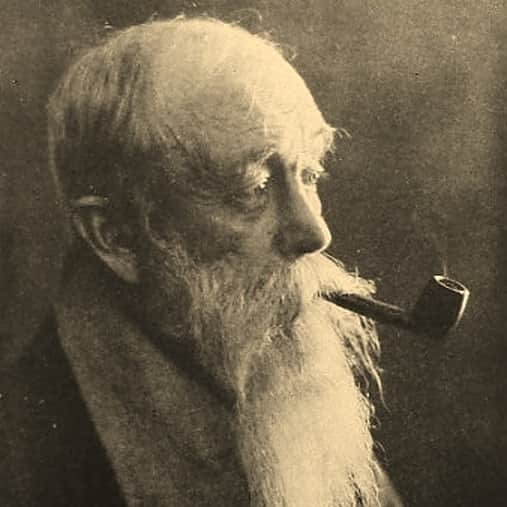
The notes and conversations between the pair were soon turned into books by the novelist, published under the name Alfred Aloysius 'Trader' Horn. His enthralling adventures made the books bestsellers. The first appeared in 1927, each subsequent volume building on its predecessor, and Ethelreda Lewis was highly praised for discovering this refreshing literary character.
America clamoured to see the aged adventurer, and his publisher soon had him in New York. With his long cape and five-gallon hat, he was instantly recognisable, and whenever he appeared on the streets he drew large crowds. A lecture tour followed, with venues sold out.
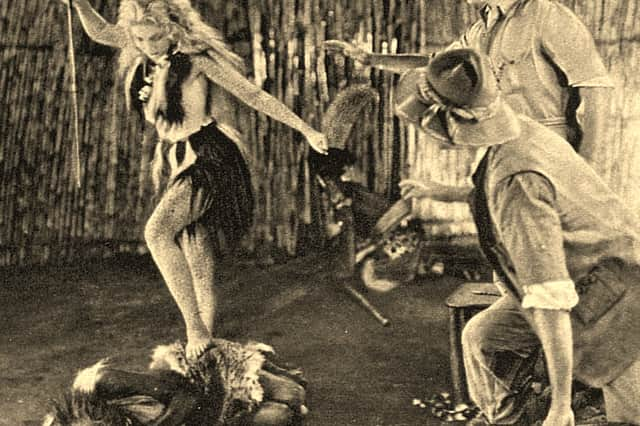
One of his stories, which recalled Aloysius's discovery in the African bush of a young white woman who ruled an African tribe, was purchased by Hollywood. The subsequent box-office hit, released in 1931, starred the rugged Harry Carey as 'Trader Horn'.
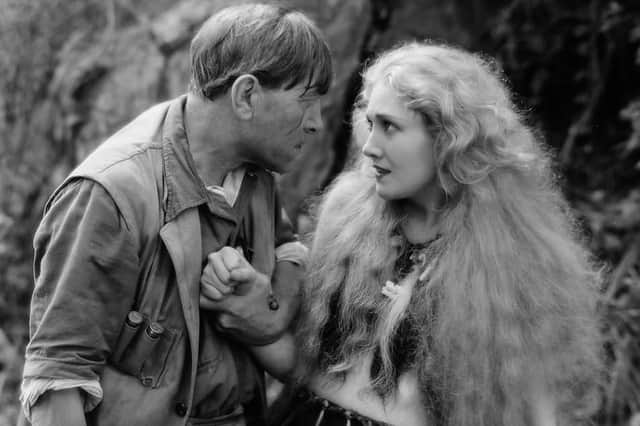
A tragic sequel was that the actress Edwina Booth, who had featured as Nina, the 'White Queen', contracted tropical fever while on location in Africa. It was long rumoured that she had died from the illness, which left her bedridden for six years. With her film career brought to an end, she sued MGM, the film's producers, for more than $1 million, with the case being settled out of court. Married three times, she died in Los Angeles in May 1991, aged 86.
Aloysius Smith clearly enjoyed the fame and fortune that came to him so late in life. In between his trips to America, he settled in Whitstable, Kent, living with his daughter Marie Louise Scales and her husband. It was there that he died in June 1931 after a brief illness, and he was buried in Whitstable Cemetery.
His will, published the following year, recorded his age as 82, although he always claimed he did not know when he was born. The net value of his estate, bequeathed entirely to his daughter, was less than £1,000, although it was reckoned that when outstanding royalty payments were received, she would receive upwards of £50,000.
Within weeks of his death, it was announced that the Harris Library committee had approved the purchase of an oil painting portrait of the famous explorer by John Park, a local artist. The cost was £15 – at a time when the average weekly wage was £2 – a bargain buy indeed.
In November 1931, Miss Frances Smith, sister of the explorer, was honoured upon her retirement after teaching for 50 years at St Ignatius School, where she and her brothers and sisters had themselves been taught. Rector Father Roberts led the praise for the magnificent service she and her family had given to the parish.
The books had been the final chapter in an adventurer's life. His full name was Alfred Aloysius Smith, and he described it thus in one of the books: “Aloysius it is a saint's name. It is our custom to give a lad two names. One to make his way through life with, the other to be bugled out when he knocks on heaven's gate. That will be the end of my travels, unless there is room for roamers there too.”