
Lovat Road Preston: the story of a terraced street, churches, Jacobites and TV memories

The BBC series delves into the history of Lovat Road, a terraced street in Preston, exploring its connections to churches and Jacobite history.
Belonging to a generation brought up on the terraced streets of Preston, in my case Higford Street, off New Hall Lane, I have always been fascinated by the places we dwelt, writes Keith Johnson.
Back in those days of black and white television, the twice-weekly episodes of Coronation Street were compulsive viewing, portraying life in a northern town.
Growing up, characters such as Ena Sharples, Elsie Tanner, Albert Tatlock, Jack Walker and Rita Fairclough were larger than life figures on Granada Television. They were the days when only the BBC and ITV stations were available on our black and white television screens.
In 1985, the BBC launched EastEnders to compete with the ever popular Coronation Street and, three years later, went on to produce a couple of series filming real life characters from a typical Lancashire terraced street.
The street they chose was Lovat Road, which stretches from Garstang Road to Kent Street in Deepdale, with Alan Beswick, a star of Red Rose Radio, as the host.
Having recently been reminded of those Lovat Road television stars, I was curious enough to visit the street, which I often walked along in years gone by, and to research its history.
The development of terraced rows in that area began in the early 1870s and was fuelled by the increase in population nearby as the cotton industry boomed.
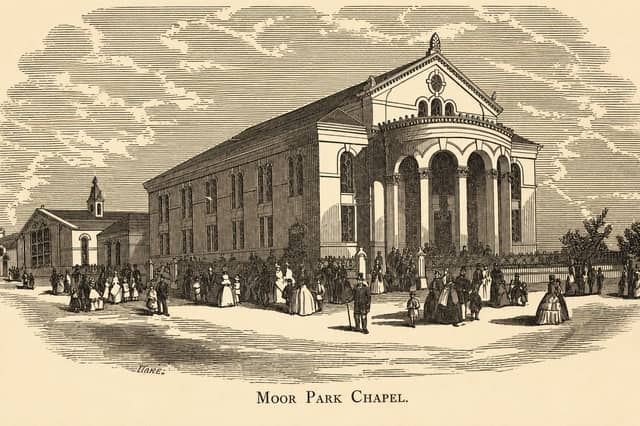
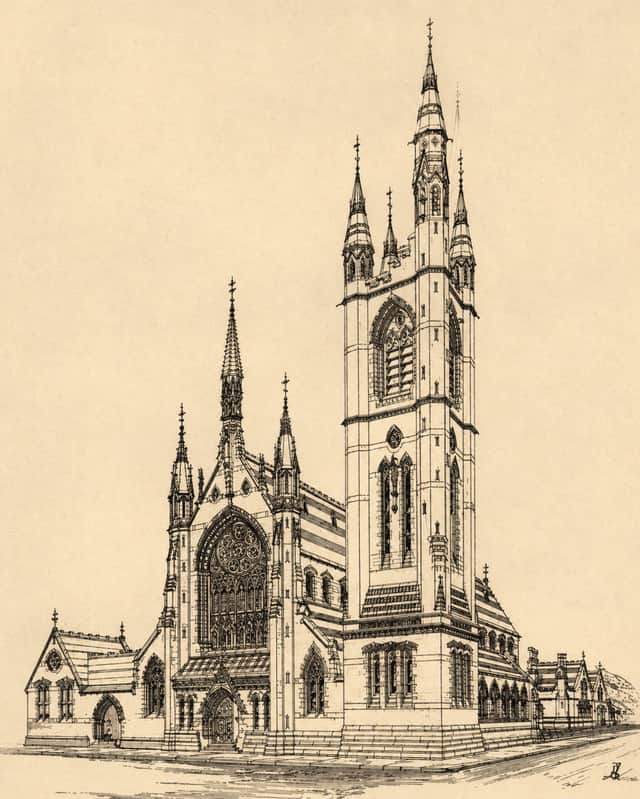
Before this house building development got under way, we already had the Moor Park Methodist Chapel and the English Martyrs church standing their ground and facing onto Garstang Road.
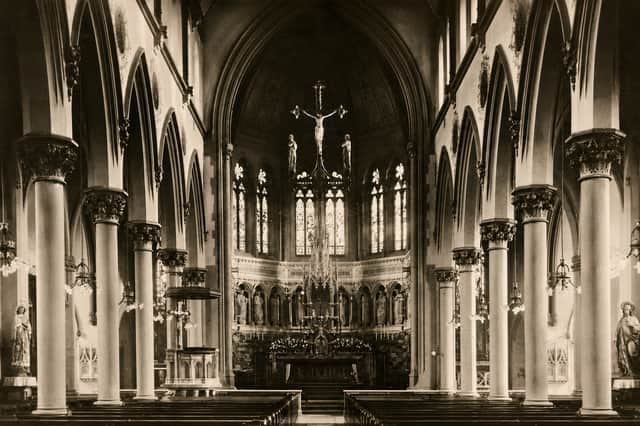
Both had been visited by Anthony Hewitson of the Preston Chronicle while compiling his book Our Churches & Chapels, published in 1869, when empty fields stood behind them.
With regards to the Moor Park Methodist Chapel, which opened in June 1862, and its school buildings stretching along the northern side of what would become Lovat Road, he remarked thus: “It is a new and somewhat genteel-looking building—has a rather impressive exterior, and is inclined to be smart within. Its patrons are supposed to be of a somewhat richer class. It will accommodate about 900 people; but generally there are more sittings than sitters, the members here numbering about 280. Immediately adjoining the chapel there is good school and the attendance appears to be very creditable. On week days the average is two hundred; and on Sundays it reaches about four hundred. At the Moor Park Wesleyan Chapel there are also week-night services and class meetings. Like many a town mission environed by smoke its congregation besides its devotees has its share of screaming children and thin-skinned Christians.”
After his visit to English Martyrs, he gave us a glimpse of the area at that period, writing: “The land known as Gallows Hill was purchased as a site for it involving the removal of an immense quantity of earth—for the place was nothing more than a high, rough, sandy hillock and on the 12th of December, 1867, the church costing £15,000 to construct was opened. The church is a high double-roofed edifice—looks like two buildings, one placed above the other; and, owing to the absence of a steeple, it seems very tall and bald. It has a pretty western gable. The church has an imposing, and noble interior. It is wide, lofty, has a fine calm majestic look, and is excellently arranged. There are sittings in the church for 850 persons. On Sundays there are four masses and over 1,350 parishioners attend on the day. The general congregation consists nearly altogether of working class people, and it includes some of the best sleepers we have seen. The members of the choir sit in a gallery at the western end. Their performances are curious, sometimes they sing very well and decidedly harmonious; at other times they torture the music somewhat. In the district there are about 3,000 Catholics, including 700 children under 10 years of age; so that the priests in charge have quite enough on their hands to deal with.”
When work commenced on the building of the terraced houses, the properties had to be constructed in accordance with the bye-laws of the town.
The development of homes between Garstang Road and Deepdale Road, bounded by St George’s Road and St Thomas’s Road, was an example of the latest building regulation conformity.
Those to the west of St Paul’s Road were built in the early 1870s and consequently had very small back yards, with access through a lobby between each pair.
Those to the east of St Paul’s Road, generally in accordance with building regulations from 1876, had back yards that led to an alleyway.
We can get an idea of the size of the development in the vicinity of Lovat Road by the comments of auctioneer Jabez B. Jones, who was backing the claim for the granting of a licence for the Lovat Road Hotel in 1875, originally proposed to be the St George’s Hotel in its location at the corner of Muncaster Road.
Mr Jones pointed out that the nearest public house was the Moor Park Inn, a quarter of a mile away facing English Martyrs church, and that, within the previous three years, more than 300 houses had been erected.
He also had in his possession a petition signed by more than 100 householders who lived within 300 yards of the proposed inn.
The licence was eventually granted at the fourth attempt, after objections from teetotallers and the governors of the Moor Park schools were overruled.
When it came to the naming of the streets in the area, there were obviously still strong feelings associated with the 18th century days when the pro-Catholic Jacobite rebels surrendered in the Market Square.
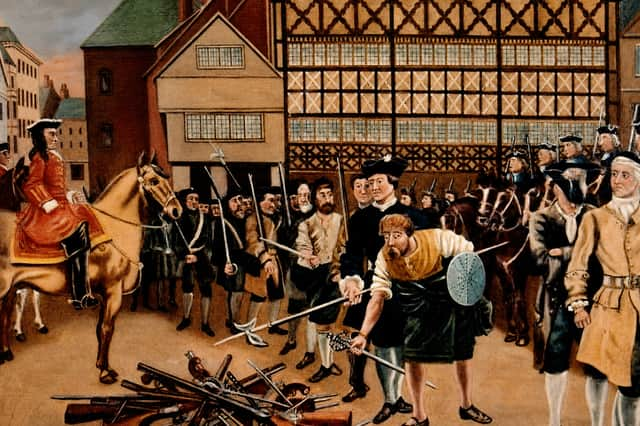
Many of their lives were cut short, but their names lived on in the terraced streets spreading out from the church of the English Martyrs, standing on Gallows Hill where some were beheaded.
Kenmure Place and Derwentwater Place remind us of two young soldiers beheaded at Tower Hill in London in 1716.
Butler Place and Muncaster Road are named in remembrance of William Butler, conspicuous Papist, and Roger Muncaster, attorney, both hanged on Gallows Hill in 1716.
Likewise, Richard Shuttleworth and William Arkwright, both hanged and decapitated, give their names to Shuttleworth Road and Arkwright Road to remind us of those cruel days.
Lockhart Road honours Captain Philip Lockhart, of Carnforth, who was shot in Preston in December 1715 along with three others.
Other streets that get their names from the 1745 conflict include Elcho Street and Elcho Terrace, a reminder of Lord Elcho, while Elgin Street is named after the Burgh of Elgin, where Bonnie Prince Charlie prepared for the bloody battle of Culloden in April 1746.
As for Lovat Road, its name recognises the exploits of Simon Fraser, 11th Lord Lovat, who was connected with the first rebellion in 1715 before deserting to the opposite side and being pardoned.
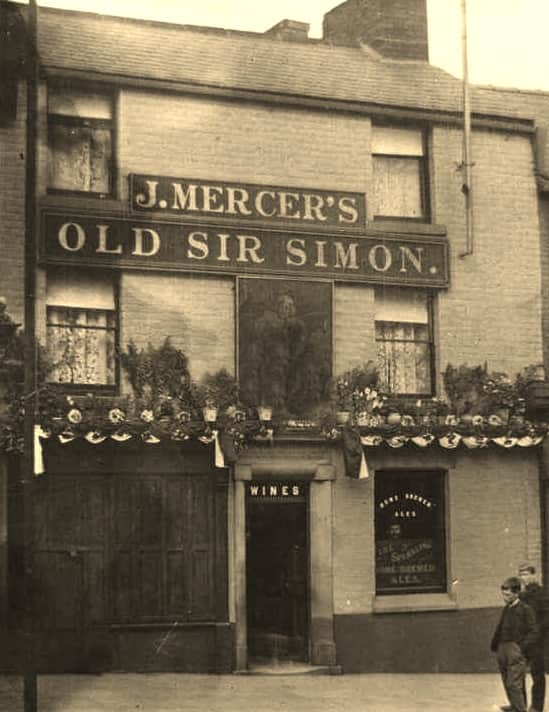
By 1745, he was back with the Jacobites and, following imprisonment, was beheaded on Tower Hill in April 1747, reputedly being the last man in Britain to be executed in that manner.
The Moor Park Methodist Chapel, which closed in 1984, is a Grade II listed building. It became the Preston Antique Centre of the 1990s and nowadays is the Abrar Academy, an Islamic school for boys.
As for English Martyrs RC Church, it still stands proudly on Gallows Hill and, since 2017, has been entrusted to the care of the Institute of Christ the King, who also administer St Walburge’s.
Just how this street beyond the churches developed into the BBC’s real life version of Coronation Street is revealed in the next feature.