
Vet issues warning to dog owner's over Preston's giant hogweed hazard
A Preston vet cautions dog owners on the dangers of giant hogweed along the River Darwen, advising on identification and prevention.
A vet has offered Preston dog owners advice on how to recognise a dangerous plant and what to do if their pet comes into contact with it.
This week there were calls for action over the spread of giant hogwood alongside the River Darwen in Walton-le-Dale.
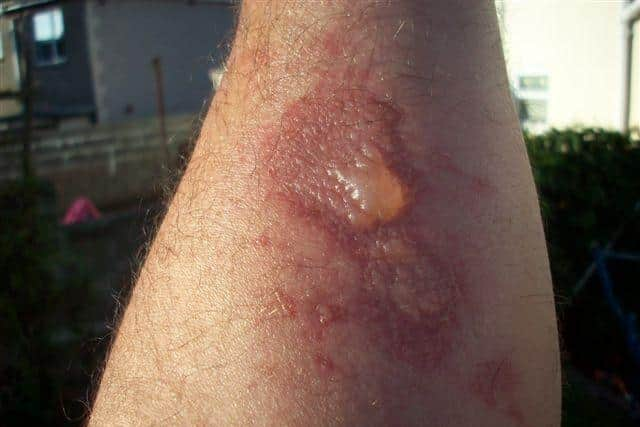
The threat from the invasive species is posed by its toxic sap, a liquid that can cause severe burns - and hideous blistering - if it gets onto skin that is then exposed to sunlight.
Dogs and other pets are partially protected by their fur, but if the substance goes directly into their eyes - as a result of them burying their faces in hogweed foliage - it can blind them, according to the Woodland Trust. The same fate could befall a human who was similarly exposed.

Hogweed sap can leak into the open when stems, leaves and flower heads are broken or because of the activity of insects that feed on it. Just brushing past it is enough to contaminate a person’s skin, which immediately becomes ultra-sensitive to the sun.
The resultant ‘phytotoxicity’ can even cause blistering to recur in sunlight for many months after the initial incident.
Following the Post’s revelations, vet Dr Sean McCormack said: “Giant hogweed can understandably cause concern when it is discovered locally, but this isn’t a new or isolated problem.
“The plant is found across the UK, with some areas managing it effectively and others continuing to deal with established populations.
“Dog owners don’t need to panic, but they should know what giant hogweed looks like, where they’re likely to encounter it and what to do if their dog comes into contact with it.
“It’s also worth remembering that giant hogweed can look similar to other members of the same plant family, including our native common hogweed. Being able to tell the difference can help people avoid unnecessary alarm while still treating suspected giant hogweed with the caution it deserves.
“Giant hogweed is an invasive plant that can grow to several metres tall, so mature specimens are usually much larger than the plants they can be mistaken for.
“Look out for very large, deeply divided or jagged leaves, a thick, bristly stem which can have distinctive purple blotches, and large umbrella-shaped clusters of white flowers.
“Common hogweed is much smaller, generally reaching around 1-2 metres, and its stems don’t have the characteristic purple blotching associated with giant hogweed.
“It also tends to have a blue-green colour to its foliage, which is matte or downy/hairy on the surface, whereas giant hogweed is more of a bright or lime green colour with a shiny appearance
“Giant hogweed contains compounds called furocoumarins which can make skin extremely sensitive to sunlight. If sap gets onto a dog’s skin and is exposed to sunlight, it can result in painful inflammation, burns and blistering.
“Dogs can have some protection from their coats, but areas such as the nose, mouth, ears, belly and other areas with less fur can be especially vulnerable. If sap gets into the eyes, the consequences can be much more serious, with the potential for significant eye damage and loss of vision.
“Don’t allow your dog to sniff, chew, brush against or walk through suspected giant hogweed, and take extra care around riverbanks, streams, wasteland and other areas where the plant can grow.” juries to both dogs and their owners.”
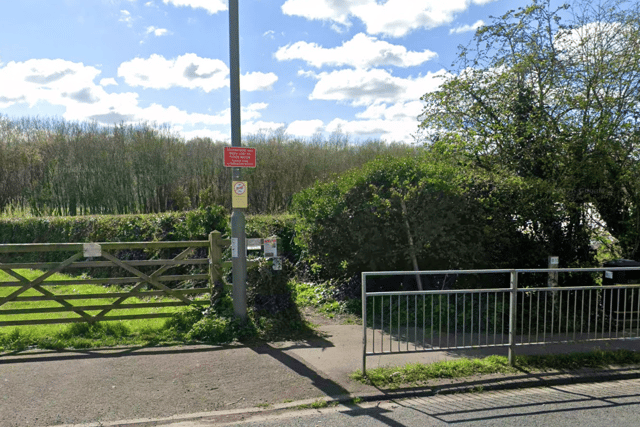
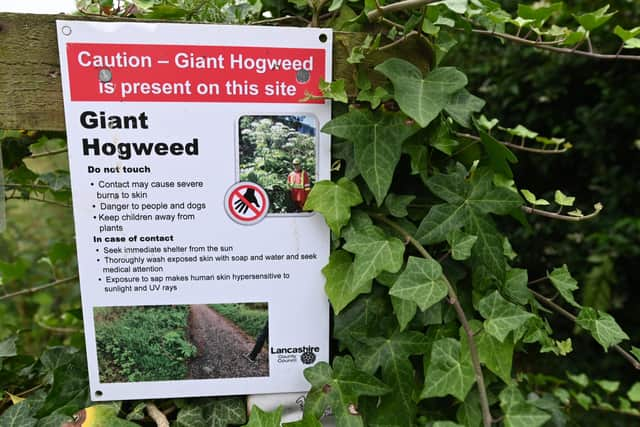
The affected location - off Higher Walton Road - is privately owned, but publicly accessible. It lies just a few steps from a public footpath - and Lancashire County Council has erected signage warning of the presence of the perilous plant in the area.
However, the authority says it has no duty to clear hogweed from private land, while the landowner said the problem is “very difficult…to control” without the co-operation of the Environment Agency, in its role as the body responsible for rivers.
Some of the giant hogweed growing in the spot is around six feet tall - and the plant is known to grow to almost three times that size if left unchecked.
The footpath - diagonally opposite St. Patrick’s Roman Catholic Primary School - used to lead to a bridge over the river, but that was washed away in a storm at the turn of 2025.
Nevertheless, the route down to the river remains in use and there is no physical barrier or notice to stop walkers then strolling alongside its banks.