
'A clear indication of global warming' says university professor as hottest Preston June day confirmed

A professor at the University of Lancashire has issued a warning on global warming after Preston experienced its hottest June day on record.
The University of Lancashire has confirmed that its weather station recorded the hottest ever June day in Preston last week.
Preston, and indeed most of the UK, was hit with soaring temperatures at the latter end of June.
At nearby Lancaster University, their Hazelrigg weather station saw temperature record break on back-to-back days - hitting first 30.3°C on Thursday, June 25 and 30.7°C on Friday, June 26.
On Thursday of this week, the University of Lancashire also confirmed that their weather station too registered record breaking temperatures that week.
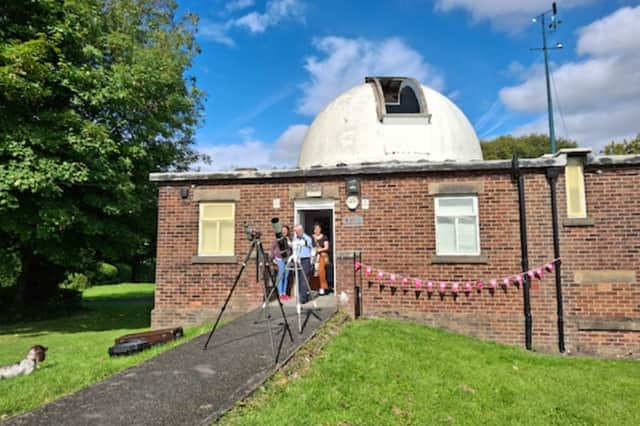

Preston has had its own Met Office weather station since 1951 which has now been recording the local weather for 75 years.
It is based at the Jeremiah Horrocks Observatory (JHO) on Moor Park and is is run by the University of Lancashire, through its Jeremiah Horrocks Institute.
The station records details such as maximum daytime temperature and minimum night-time temperature every day, as well as total rainfall each day, and other details such as wind speed and direction.
In a statement on Thursday, Jeremiah Horrocks Director Professor Derek Ward-Thompson, who also teaches Physics at the university, revealed the Jeremiah Horrocks Observatory had recorded its hottest ever June day that Friday as well, as he issued a stark reminder of the perils of global warming.
Professor Ward-Thompson said: “On June 26th this year it recorded a maximum daytime temperature of 32.6 degrees Centigrade. This is a new record. The previous record was set in June 1976, and was 30.6 degrees Centigrade. This might not seem like a lot, but it is a clear indication of global warming, and that this even affects mild climates such as we experience in Preston.
“It was also extremely dry in June, with half of the days registering less than 1mm of rain, and 10 days recording no rain at all. Total rainfall amounted to only 14mm in the entire month – that is about half an inch of rain in a month – and half of that fell in one day. In June 1976 we had 17mm, the previous driest June.”