
Lancaster based father and son firm design ventilation monitor that can reduce airborne Covid-19 transmission
The company - based at Lancaster University's Environment Centre - is looking to run trials in workplaces as back to work initiatives begin.
NAQTS - run by Douglas Booker and his father David - has developed a product that monitors air conditioning systems to make sure they are changing and filtering the air in line with recommendations.
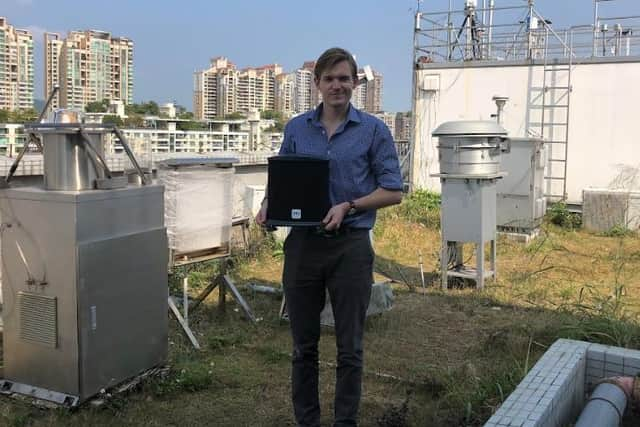

The system can count the number of particles in the size range which includes both virus particles and small respiratory droplets, and can check how well the system is working.
Studies based on SARS, flu and measles suggests that proper ventilation and filtration can reduce transmission risk indoors by 80 per cent or more, and the company says that initial indications are this may well apply to Covid-19.
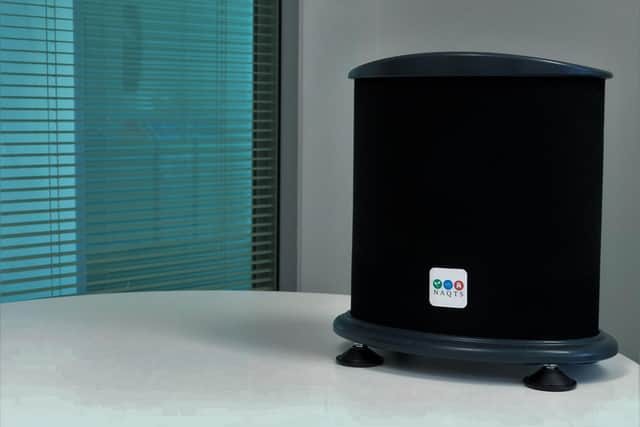
But they say many air conditioning systems don’t meet those standards either because they are inadequate or have been switched to inappropriate settings.
Douglas Booker, co-founder and CEO of NAQTS, said: “The risk of potential transmission is increased in indoor environments as we spend more than 80 per cent of our time indoors, and there is less room for dilution compared to outdoors.
"It is clear that ventilation and filtration will play a key role in reducing the amount of time that particulates are airborne in indoor environments.”
The company now wants to run trials of the system in as many different environments as possible and is looking to talk to healthcare providers, shops, bus, building and transport operators, makers of HVAC (heating, ventilation, air conditioning) kit and government.
The technology includes a regulatory grade particle counter (the same technology that is used for testing vehicle exhaust emissions) together with measuring devices for all common indoor and outdoor pollutants.
The device is connected to the NAQTS Cloud, NAQTS’s analytics server which produces real-time feedback on air quality and ventilation rates.
The kit can tell if the HVAC system is working to reduce virus load or not.
It can be used for a one-off exercise or for continuous monitoring, and the company can also build it into systems to manage HVAC dynamically, to improve indoor air quality, reduce airborne Covid transmission, and save energy.
David Booker, co-founder and CTO of NAQTS and Adjunct Professor at West Virginia University in the US, said: "We are not aware of any other monitoring system of this standard available anywhere else.
"The size of the particle affects how long they stay airborne.
"The latest research is suggesting that the smallest particles (ultrafine particles) will stay airborne for hours posing an increased risk for the potential transmission of viruses.”
Douglas added: “We have sponsored PhD projects at Lancaster University to investigate how to remove ultrafine particles in indoor environments using different ventilation strategies.
"Measuring the number of ultrafine particles does not form part of standard air quality measurements and is unregulated in air quality standards worldwide.
"NAQTS’s technology does count ultrafine particles so we can check directly if ventilation and filtration air systems are removing particles, using continuous monitoring with real-time reporting.”
Visit the website HERE.