
Call for review of '19th century' rail crossings after tragic deaths including Hoghton and Burscough
‘It is time for a fresh approach to this problem, for the sake of crossing users, train passengers and railway staff, who are all at risk.’ A call has been made for a review of rail crossings following a series of tragedies, including the loss of two lives in Lancashire.
Investigators examining the death of an Amazon delivery driver at a level crossing in Kent have referenced a tragedy in Lancashire and described level crossings as ‘‘19th century concept operating in a 21st century world of more dense, faster rail services.’

A call has been made for a review after it’s revealed green stop lights “almost certainly” led an Amazon delivery driver to believe it was safe to enter a level crossing before their death, investigators have said.
Brandon Hatcher’s delivery van was stationary on a user worked crossing near Teynham in Kent when it was struck by a passenger train travelling from Ramsgate to London Victoria at around 12.42pm on July 13 last year. The train had been travelling at approximately 71mph when the incident occurred and the van driver was fatally injured, the Rail Accident Investigation Branch (RAIB) said.
There have been two fatal accidents at rail crossings in Lancashire this year.
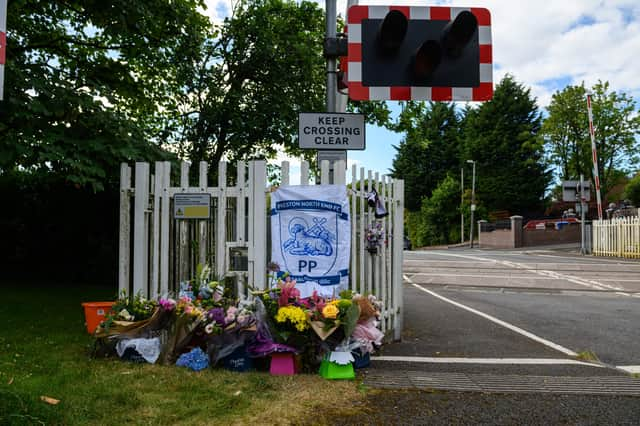
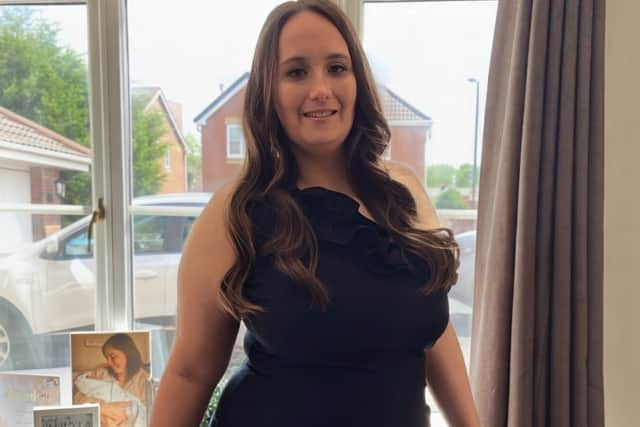
On June 25, 33-year-old Kerry Coombes, 33, died after when her car collided with a Preston-bound train on Station Road in Hoghton, near Preston. Her eight-year-old daughter Ava was also left fighting for her life. No rail passengers were injured.

There was an outpouring of grief following the loss of social worker and football coach Kerry, who was described as ‘ beautiful inside and out’. Kerry coached at Lostock Hall Junior Football Club and was described by Lancashire County Council as "highly respected and dedicated" social worker who "cared deeply about the children she supported".
The Rail Accident Investigation Branch said preliminary evidence suggested warning systems did not activate as the train approached. A statement on it’s website said: “The evidence available to RAIB shows that the train had passed a green (proceed) signal as it approached the crossing. RAIB’s preliminary examination also found that the road traffic lights and audible alarm at the crossing had not been activated, and that the half-barriers were raised.”
Following the incident, local residents launched a petition for the closure of the crossing. The RAIB investigation remains underway.
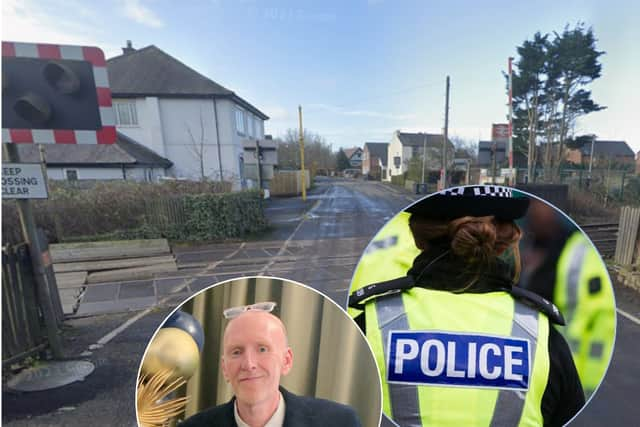
In a second Lancashire tragedy, British Transport Police officers were called to a level crossing in Burscough, West Lancashire, following reports at 3.18pm on Saturday, August 29, that a train had struck a van. Paramedics and the fire service also attended.
The driver of the van , 55-year-old Simon Gettings, was pronounced dead at the scene. His family paid a touching tribute to him calling him a ‘ devoted husband, a loving father of two’ and a hugely accomplished and respected teacher in Southport, Liverpool and Blackpool.
The RAIB said it had made four recommendations as a result of the latest report including that Network Rail reviews the design of user worked crossings to reduce risk to users and for the Department for Transport (DfT), along with the Office of Rail and Road and other rail industry bodies, to update the framework of legal requirements and guidance to road users for user worked level crossings.
Investigators have also written to the Health and Safety Executive to review guidance for organisations employing people to drive or ride for work or using self-employed people to do so on the safe use of this type of crossing.
Andrew Hall, chief inspector of rail accidents, said: “In August 2026, another delivery van driver was killed at a user worked crossing in Lancashire.
“These deaths are a tragedy, but as a train can be derailed by striking a delivery van, both accidents could also have had serious consequences for the people on board. Private user worked crossings are a 19th century concept operating in a 21st century world of more dense, faster rail services, more rural housing and abundant home deliveries. Most road users are unfamiliar with this type of crossing and with how to use them safely.”
Mr Hall continued: “I urge the rail industry duty holders, the domestic delivery industry, the Office of Rail and Road, and the Department for Transport to find effective ways to mitigate this obvious risk before there is further tragedy.”
An ORR spokesperson said: “Our thoughts are with the families and friends of those who have lost their lives in these incidents. User-worked level crossings present particular safety risks, especially when people may be unfamiliar with how to use them.
“We expect Network Rail to assess and manage these risks effectively, taking account of changes in how crossings are used, and to consider closure or additional safety measures where appropriate. We welcome RAIB’s report and will carefully consider its findings and recommendations.
“We will continue to work with Network Rail and other relevant organisations to ensure lessons are learned and improvements made to protect crossing users, passengers and railway staff.”