
Iconic Lancashire 'ugly duckling' phone kiosk unveiled by Sir Ranulph Fiennes gets special status

This Lancashire public phone box at ‘Heart of Great Britain’ was country’s 100,00th in 1992 and unveiled by Sir Ranulph Fiennes who made the first phone call. It’s now been given listed status, despite once being called an ‘ugly duckling’.
It looks like a pretty ordinary phone kiosk with its steel and aluminium construction, placed in the Lancashire countryside - at what is considered the geographic centre of Great Britain.
But this the KX100 kiosk at Dunsop Bridge, in the Ribble Valley in Lancashire, was the not just 100,000th telephone kiosk to be installed in the country but It was unveiled by celebrity explorer Sir Ranulph Fiennes, who made the first call from the kiosk to the Ordnance Survey.
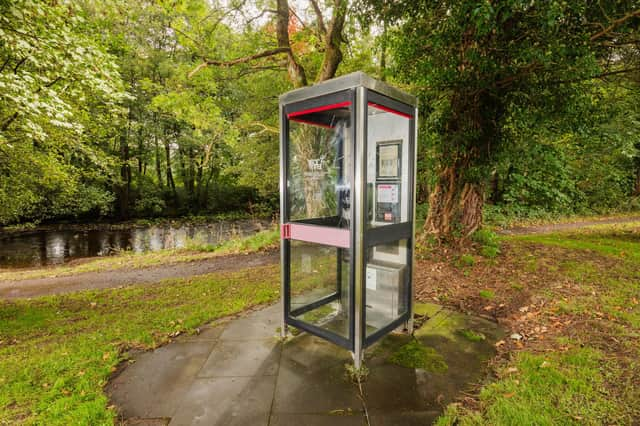

Now the kiosk has been listed at Grade II by the Department for Digital, Culture, Media and Sport on the advice of Historic England - the first KX100 to get this status.
Grade II listing recognises buildings of special interest. It ensures that any future changes to the property are carefully considered to protect the building’s historic character.
Its location was defined by the Ordnance Survey as the centre of Great Britain and it was officially opened in June 1992 by explorer Sir Ranulph Fiennes, who made the first call from the kiosk. Children from nearby Thornleyholme RC Primary School, who had helped to erect it, also attended.
While widely unloved and underappreciated in comparison to the classic red telephone boxes, the ‘ugly duckling’ KX100 model has developed a cult following in recent years
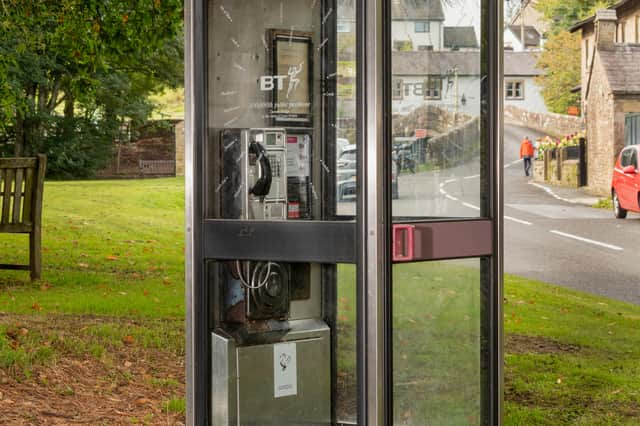
The kiosk is described as the last generation of ‘public telephone box’ and received a bespoke site-specific design by Wolff Olins featuring key places in Britain radiating from the BT logo and Dunsop Bridge to reflect its landmark status.
With its steel and aluminium frame, and distinctive branding, this KX100 is a good example of the newly introduced telephone design. It was a successor to the iconic K2 and K6 boxes and aimed to be wheelchair friendly and robust. This is the first KX100 telephone kiosk to be listed.
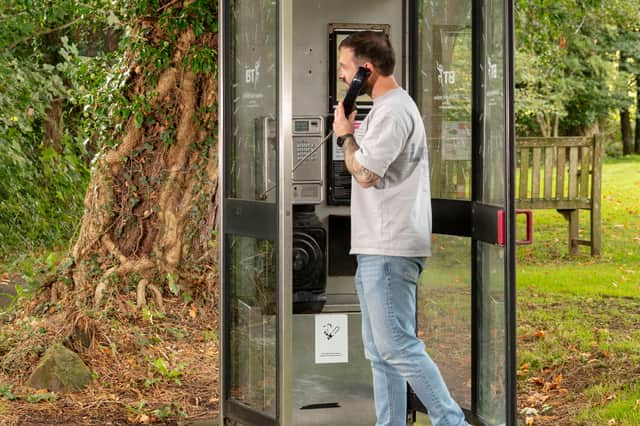
It was designed by leading industrial designer Ronald David Carter who produced products included telephones, tube trains, and the stainless steel Le Shuttle train.
Jayne Rimmer, Historic England’s North Region Listing Team Leader, said: “This KX100 is historically significant as it was installed as a landmark on account of its location and being the 100,000th kiosk to be opened in the country with some unique design features.
“It also makes an important contribution to our understanding of the historic development of the telecommunications industry in England before the introduction, and subsequent widespread use, of mobile phones.
“As part of the last generation of the public telephone boxes, it is a nationally significant kiosk, and we are delighted it has been given Grade II listed status and protection.”
Oli Marshall, Campaigns Director of Twentieth Century Society, said: “We’re absolutely delighted that the KX100 kiosk at Dunsop Bridge has been designated Grade II, as Twentieth Century Society’s famous telephone boxes campaign comes full circle.
“There’s no small irony that it was the arrival of the KX100 that first spurred the Society into action back in 1985: once the slayer of traditional red telephone boxes that we fought vigorously to repel, now itself being given heritage protection. What goes around comes around!
“While widely unloved and underappreciated in comparison to the classic red telephone boxes, the ‘ugly duckling’ KX100 model has developed a cult following in recent years.
“The unique example at Dunsop Bridge is not only pub quiz trivia as the dead centre of Great Britain, it’s the final flourish of telecoms design in the public realm and a small part of our national story.”
Councillor Simon Hore, leader of Ribble Valley Borough Council, said: “This is just another reason to visit the small but wonderful Dunsop Bridge, which is at the geographic centre of Britain and on part of the King’s Duchy of Lancaster estate.
“Local residents, as well as the ducks that are regular ‘visitors’ to the village green where the kiosk is located, will be very proud to hear it’s been granted this elevated status as a landmark with a difference. The phone box has a special place in local people’s hearts.”
About the KX100 telephone box
- In 1979 British Telecom (BT) identified the need for a new telephone kiosk which was wheelchair friendly, vandalism proof, robust and easy to clean and maintain to meet modern needs.
- Between 1979 and 1980 the leading Industrial designer David Carter Associates (DCA) of Warwick designed a range of six payphone kiosks and booths, which after a pause were abandoned in 1982. The project was revived in May 1983 with DCA’s‘Warwick’ prototype range. From these designs the core KX range was developed by DCA’s designer Digby Redshaw and Engineer Tony Hume under Carter’s direction.
- Described in his obituary as a “skilled industrial designer” ‘Ronald’ David Carter (1927-2020) having designed the Stanley knife in 1960, set up his own company in 1963 and went on to produce products such as telephones, tube trains, and the stainless steel Le Shuttle train.
- BT was privatised in 1984 and the KX range of kiosks was officially launched on 20th June 1985 in London. The range was manufactured by GKN Sankey in Telford, who produced and partially assembled components like the K8 modular build method, meaning it could be built in different arrangements depending on the specific requirements of the site and its users. The KX kiosk had a frame of steel and aluminium and toughened glass panels, with corporate branding that changed overtime.
- New branding was introduced in 1991 which included the new ‘BT’ wordmark and the ‘Piper’ logo (in blue and burgundy and/or frosted glass), and a burgundy red door handle and modesty panel.
- GKN manufactured at least 80,000 outdoor KX housings between 1985 and 1995 (comprising the KX100, KX200, KX300). The KX100 was the most installed of the wider KX range.