
Raft of safety and consent concerns unearthed at Blackburn circumcision clinic by CQC inspectors
Inspectors have found a catalogue of problems at a Blackburn circumcision clinic.
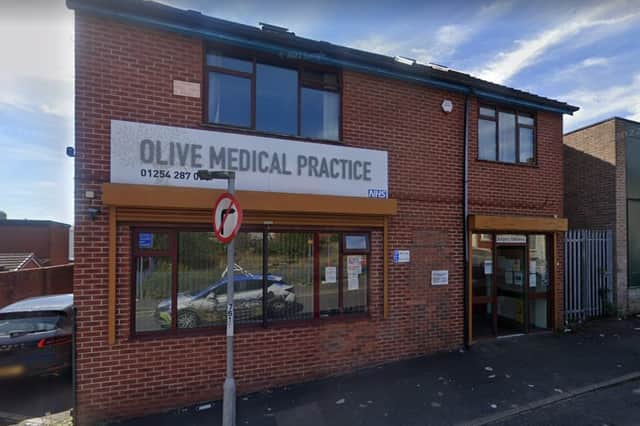
The Care Quality Commission (CQC) visited the clinic, run at Olive Medical Practice in Lime Street, on January 16 and 17, A report was published last week.
The GP practice delivers services to approximately 7,672 patients under a contract held with NHS England. The National General Practice Profiles states that 68 per cent of patients are Asian, 27 per cent White, and 5 per cent Black, Mixed or Other.
Inspectors found that the clinic was in breach of legal regulation in relation to safe care and treatment as well as good governance, and a new breach of regulation in relation to the need for consent. The practice overall remains in special measures - a category it was placed in in September 2025.
What was found?
Only two people ever worked at the circumcision clinic, a GP partner and a nurse and they always worked together. The nurse was a practice nurse at a different GP practice and only attended this practice for the circumcision clinic.
Although employment history for the nurse was found, there was no evidence of the practice having sight of a Disclosure and Barring Service (DBS) check, and the last disclaimer to say there had been no legal changes to their status was signed in 2022.
The practice also confirmed there was no contract for the nurse to work at the practice - there was a verbal agreement only. The nurse stated they had worked at the circumcision clinic since 2019 and the practice or GP had never carried out an appraisal or formal assessment of competency for the nurse working at the circumcision clinic. The GP had been trained in circumcision in August 2009 and had never had any updated training.
Needs and safety
The GP and nurse told inspectors that where only one parent brought their infant to the circumcision clinic, social services attended with them. A report states: “There was no evidence of social services involvement for any of the records we checked where only one parent had been present. This meant the practice could not be assured the needs and safety of the infant had been fully considered.”
Cleanliness
The circumcision procedures were always carried out in the same room at Olive Medical Practice and inspectors said it was “visually clean and free from dirt and dust”, sterole single-use packs were used for each patient and a clean restraint board was use.
However, the clinic gave each patient a pack on discharge, and this contained a bottle of disinfectant. Instructions on how to use this during bathing were provided. The disinfectant was labelled “Not suitable for babies under 9 months old”, and “Never use on broken skin”. The GP told inspectors they supplied this as it had been used during their training, and they said they would ask for advice about this. The report said: “We informed them that they should not supply this as it was against the directions stated on the bottle.”

Anaesthesia concerns
Inspectors also found problems with the recorded use of Lidocaine, which was given to the infants as an anaesthesia prior to carrying out the procedure. They said: “Although there was a prompt to record the dose, it had not been recorded in 21 of the 22 records we examined. In addition, the weight of the infant was not recorded in any of the 22 records we examined. This meant there was no evidence a safe and appropriate dose was administered. The GP and nurse who ran the clinic told us they took the infant’s weight from the ‘red book’ (a personal child health record given shortly after birth to parents of babies, containing important health and developmental information). They did not confirm this by weighing infants and did not record the weight taken from the red book.”
There were also concerns that the time the procedure commenced was not always recorded, and it meant there was no evidence there had been time for the Lidocaine to take effect. In addition, records included a space to record two separate pain scores. These had never been completed in any of the 22 records so there was no evidence that levels of pain had been assessed.
Medicine issues
The medicine store contained two unopened boxes and one opened box of Lidocaine. The opened box was for 5ml ampoules of the medicine. However, it contained 3 x 2ml ampoules, and these were a different batch number and expiry date than the box indicated.
Consent
The practice had a consent policy, but this did not give sufficient information and guidance. It mentioned a patient giving consent, but it did not mention the need for two parents to give their consent. This is required under UK law and British Medical Association guidance. There was no guidance regarding what action to take if only one parent was present, if two parents disagreed about providing their consent for the procedure to be carried out, or if someone other than the parent attended.
The practice had a circumcision clinic introduction document stating, “Both parents need to be present to sign the consent form”. Inspectors saud this was not happening consistently. They added: “The GP and nurse who ran the clinic told us verbally that social services were involved if there was only one parent, but they had no documentary evidence of this. None of the records we examined mentioned any social services involvement.”
Support your Lancashire Post and become a subscriber today. Enjoy unlimited access to local news, the latest football stories and new puzzles every day. With a digital subscription, you can see fewer ads, enjoy faster load times, and get access to exclusive newsletters and content. Click here to subscribe.