
Books, bombs, and beheadings: A rare look in the depths of the Lancashire Archives
The Lancashire Archives in Preston holds millions of records, including first-hand accounts of the capture of Guy Fawkes and the beheading of Mary Queen of Scots, which were made accessible to the public for Preston's Heritage Week.
Royal crests, gunpowder plots, and a first person review of a queen’s beheading are just a few trinkets of history the public rarely get the chance to see.
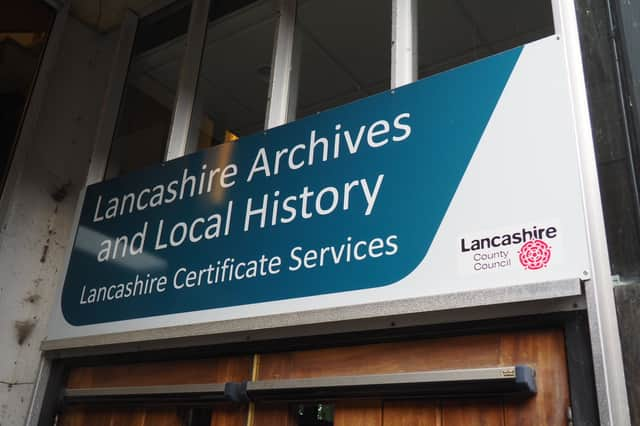

But far from being stowed in display cases in London’s finest museums, these treasures can instead be found much closer to home - right behind the scaffolding at Lancashire Archives.
“We have millions of records inside,” said archivist Lee Sanderson. “Some of our oldest records come from family estates and their archives from over the years.
“We have a really good system where we’re able to to find an individual item within a box on a shelf within a certain stack, and we’re able to locate every single sheet within every single box within every single strongroom.”
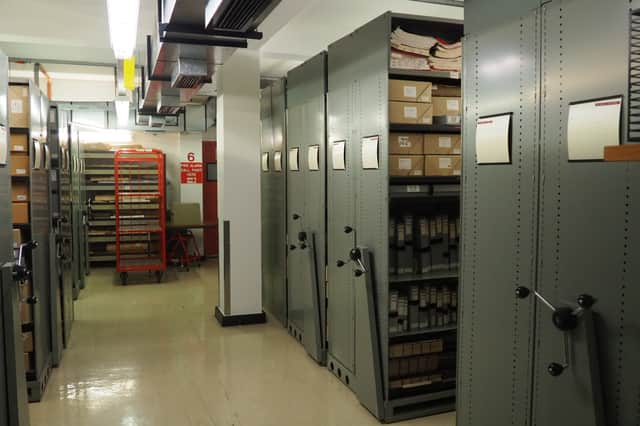
Though Lancashire Archives is currently undergoing extensive roof repairs, that hasn’t stopped the archives team from soldiering through their many duties in keeping the county’s history safe - or from opening their doors to the public for Preston’s Heritage Week.
The team have been taking care of the county’s most prized documents since 1940, and contain everything from royal letters and monk writings all the way to the first-ever map of Lancashire.
“The temperature also changes when you’re in here. We have to keep our rooms not just at a controlled temperature, but at controlled humidity levels as well, just to keep each item protected.”
Among some of the archive’s most prized possessions are their first-hand accounts of both the capture of Guy Fawkes and the beheading of Mary Queen of Scots.
“We have an amazing record written on the 6 November 1605,” Lee said. “It was sent to William Farrington, a Catholic lord in Leyland, and written by William Sumner to warn his friend about what happened the day before - the Gunpowder Plot.
“The letter states that a vault was found filled with 36 full barrels, two firkins, and two hogsheads of gunpowder. They intended to blow up the king, queen, prince, and nobility. It also mentions that on November 6, they had fireworks for the very first time.
“It’s incredible to see hard evidence from the day after the event which confirms specific details that we learned about in school.”
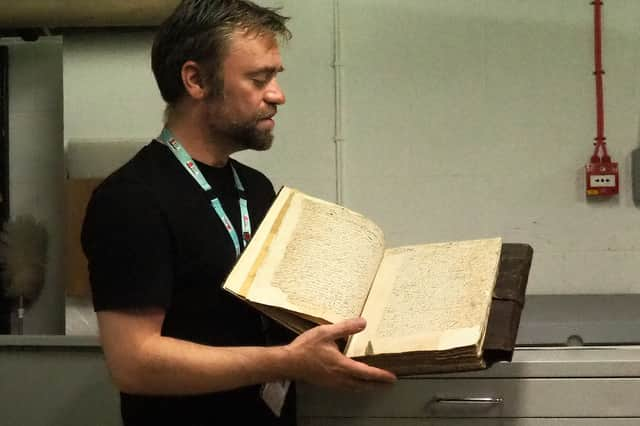
Another favourite for Lee’s was the book detailing the last moments of Mary Queen of Scots.
“It’s an eyewitness account of her last moments on Earth, written by the Bishop of Rochester. He talked about Mary being really stoic, and almost determined and confident - even at the moment of her death, being as cool as a cucumber, basically.
“’Very boldly and without all dear, she knelt down towards the block, and one of her women put a napkin brought all with gold about her face.’
“’One of the executioners holding her down struck her hard, and yet cut not half off. Yet did she move neither body, hand, nor foot. So he struck again, and yet it hung by the skin.’ Quite gruesome!”
Alongside paper documents, the Lancashire Archives also boasts and impressive sound collections which spans back decades.
“We obviously have millions of records, but we also have lots of audio files which have been collected over the last 50 or 60 years. Our oldest ones are on reel-to-reel, but we also have Betamax, cassettes, mini discs, and stuff like that. It’s an enormous amount of work.
“We have to digitise them as quickly as possible because we’re actually on borrowed time. As time goes on, the files deteriorate faster and faster, and there is the issue with digital content.
“Even when you’ve made digital content, will that be saved in the future? Will it last forever? Who knows?”
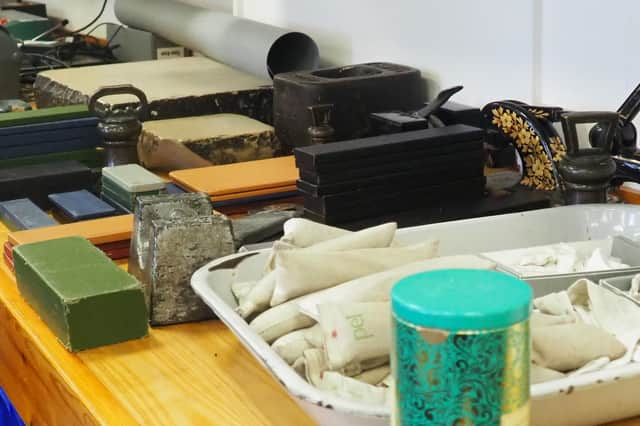
Alongside organising their extensive collection of historical documents and artefacts, it’s also up to the archives team to ensure they are properly maintained.
And while the methods used in their extensive conservation room may have modernised and adapted, their end goal to see Lancashire’s history properly preserved still hasn’t changed.
“Most archives, not all, have got conservation rooms. It’s where people can look at records, mend records, and kind of pre-empt records with various chemicals that they need to continue surviving over hundreds of years from now.
“We still have some of the old machinery, which actually doesn’t get used as much anymore, but we like to keep it to show people because this is how the old methods worked,” Lee said.
“Over the last 15 years, we’ve also had access to some really goo equipment for digitising, so we have one or two staff members that come in here and digitise all of our records.
“Lots of people who live in different countries who perhaps want access to these records can now see them for themselves. It’s a really good service we provide.”
The Lancashire Archives is run by Lancashire County Council, and while their back areas may be staff-only, their main floor remains accessible to the public year-round.
The archives team hold regular exhibitions relating to Lancashire’s history, as well as a variety of services for those who need to see documents themselves.
Further information is available on their website.