
Uncertain future for Lancashire County Council's 'progressive opposition' to Reform as parties squabble
A question mark hangs over the newly-formed official opposition at Lancashire County Council, with the alliance arrangement set to be considered as part of a review of the authority’s constitution.
‘Progressive Lancashire’ – a partnership forged between the seven independent and four Green Party candidates who won seats at this month’s local elections – has drawn the ire of the Conservatives, who are narrowly the largest single opposition group at County Hall with eight members.
As the Local Democracy Reporting Service (LDRS) reported earlier this week, the Tory group’s new leader, Aidy Riggott, branded the tie-up “undemocratic”, while the Progressive Lancashire leader, Azhar Ali, said the previously ruling Conservatives had to accept they had been trounced at the polls.
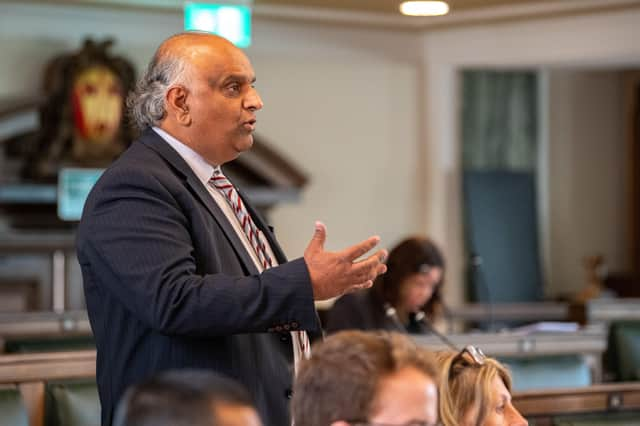

That spat continued at the first meeting of the now Reform UK-controlled authority since the election vote. The row came during a debate on the county council’s constitution, which was fully revised and rewritten only last year, but which is now set to be looked at afresh by the cross-party political governance working group.
According to a report presented to county councillors, the group will be convened “to consider any proposals that may come forward for changes to the constitution following the election” – and to make recommendations to a future meeting of the full council.
Deputy Conservative group leader Peter Buckley called for the group to gather as soon as possible to undertake an “urgent review” of the council’s rules – and ensure “full democratic accountability is re-established here in Lancashire at the earliest opportunity”.

He described Progressive Lancashire as a “disingenuous” creation, while County Cllr Riggott noted the Greens had finished sixth at the election.
However, County Cllr Ali called the Tory group leader “a very sore loser”.
“I think what he should have done is said to the opposition groups…let’s work together and provide a strong, robust opposition – and scrutinise the decisions that the administration puts forward”.
Green group leader – and Progressive Lancashire’s deputy leader – Gina Dowding said the alliance “may not agree” with everything that is ultimately suggested by the political governance group when it meets, but defended the legitimacy of the set-up in the meantime.
“We do have a mandate until [any] changes take place, as the largest opposition group for now,” she explained.
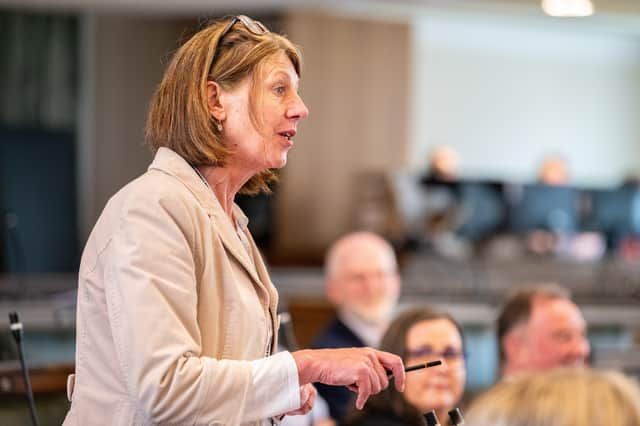
Meanwhile, Liberal Democrat member David Howarth said it was “abject nonsense” even to have an official opposition leader in what was now so clearly a “multi-party council”, with six political groupings and an assortment of independents.
His veteran Lib Dem colleague, David Whipp – first elected to County Hall back in 1981 and this month re-elected after a four-year hiatus – also called for broader changes to address what he claimed had become the “watered down” process of democratic scrutiny at the authority.
That sentiment was echoed by Labour group leader Mark Clifford, who made a point of keeping out of the row over Progressive Lancashire’s official opposition status.

Adrian Owens – one of two Our West Lancashire members to secure seats on the county council for the first time this month – criticised the fact public money was being spent to give an allowance to the party political whips and secretaries of the ruling and main opposition groups.
The total amount set aside to cover all four posts comes to just over £21,000 a year and County Cllr Owens suggested those entitled to it should refrain from accepting the cash.
The authority’s new Reform UK leader, Stephen Atkinson, said the ruling group would be happy to consider any changes to the constitution “if they make Lancashire County Council work better” – but added they should not be done “in haste”.
‘I believe everybody is welcome’
With the opposition disagreeing amongst themselves, the main critique of Reform at the first meeting since the party swept to victory at the local elections actually came from outside the chamber – in the form of a trade-union led protest against the party at both a national and local level.
Hannah Ledgerwood – one of those who took part – later told the Local Democracy Reporting Service she had been prompted to do so by her “humanity”.
Alighting upon Reform’s stance on immigration, the Lancaster University student said: “I believe that everybody is welcome here and I believe that having…opposition to any group of people is wrong.
“Just as [Reform] had a right to be democratically elected, I have a right to stand here and protest [against] their beliefs.”
Asked how he would defend Reform against the charge of racism levelled by several of the demonstrators outside the meeting, County Cllr Atkinson cited the fact that the party’s chair, Zia Yusuf, is a Muslim – and that it has Muslim and Jewish candidates.
“What we do have in common is that we love this country, we’re worried about the future of this country [and] we want this country to succeed – so I think it’s wrong to call us racist,” he said.
“Reform councillors have put their head up above the parapet, they have faced this abuse – [and] they’ve done it out of a sense of duty to the future of the country.”