
The parts of Lancashire that would 'probably prefer to leave the county', according to one council leader
Big changes are coming to Lancashire’s local authority set-up - but one leader believes they could have been bigger.
The government has missed an opportunity to enable parts of Lancashire that are more closely aligned with neighbouring areas to officially leave the county.
That was the verdict of West Lancashire Borough Council leader David Whittington after the government announced last week that Lancashire will be split into four new council areas from April 2028 as part of the biggest change to the local authority landscape in the area for more than 50 years.
The county’s 15 main councils will disappear and be replaced with standalone ‘unitary’ authorities – including one provisionally named ‘South Lancashire’. That option – that will bind West Lancashire together with Chorley and South Ribble - had been backed by the trio of current district councils that cover the places it will incorporate. It was one of five that had been put forward by Lancashire as part of the the government-ordered overhaul.
Cllr Whittington, the recently-installed Conservative leader in West Lancashire, welcomed the decision.. However, he said the revamp could have been a chance to redraw Lancashire’s external borders to better reflect areas that have more of an affinity with nearby Sefton and Greater Manchester.
Speaking to the Lancashire Post, he said: “Personally, I have thought for a long time that West Lancashire’s boundaries are… not [in the] right format.
“If you look at places like Halsall and Aughton, they’re aligned to Merseyside, whereas there are other areas, like Up Holland, Appley Bridge and Wrightington, that are more Wigan [oriented]. Banks [gravitates more] towards Southport.
“So I think it was a mistake not doing a comprehensive review of everything.”
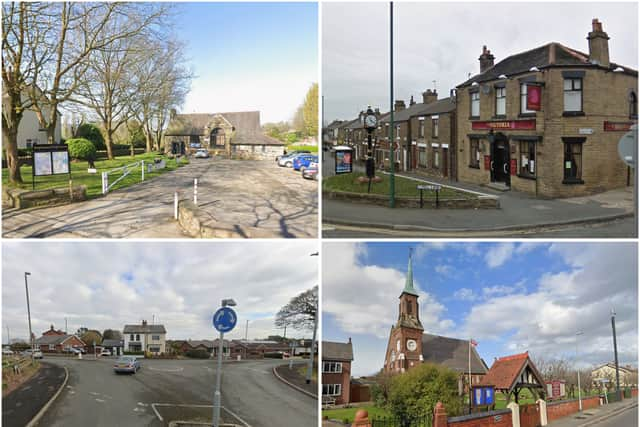

However, ministers – no doubt mindful of the complexity even of an internal overhaul for Lancashire – had ruled out any such cross-boundary changes between the county and its neighbours.
Nevertheless, Cllr Whittington said he was pleased that of the five reorganisation options on the table, the government had chosen the one that merged West Lancashire only with Chorley and South Ribble.
“If Preston had been included, I think it would have become Preston-centric,” he said. “Probably all the council offices would have been based there and I think certain parts of West Lancashire would have been very much on the periphery – but now that won’t happen to the same extent.”
Cllr Whittington said he had already had “constructive” discussions with his counterparts at Chorley and South Ribble – and hoped the authorities could all learn from one another to varying degrees, even before their official merger in just under two years.
West Lancashire Borough Council, Chorley Council, South Ribble Borough Council and Lancashire County Council will all continue to operate until 31st March, 2028.
The replacement unitary – serving 359,000 residents – will come into being in so-called ‘shadow’ form from May 2027 when the first set of elections will be held for it.
The three other new councils that will be created by the redrawing of the local, government map in Lancashire will bind together: Preston, Lancaster and Ribble Valley; Blackpool, Fylde and Wyre; and Blackburn with Darwen, Burnley, Hyndburn, Rossendale and Pendle.