
'Sometimes outstanding, nearly always good': Lancashire children's services impress inspectors
The department got the top rating in two out of four areas.
Services for vulnerable children in Lancashire have had praise heaped on them following an inspection.
The regulator Ofsted judged Lancashire County Council to be ‘outstanding’ in two out of four assessment categories and ‘good’ in the others . That was an improvement from the ‘good’ standard that was achieved across the board the last time children’s services were inspected in 2022.
The authority - whose patch excludes the standalone Blackpool and Blackburn with Darwen council areas - was lauded for helping more children “to remain safely at home or within their wider family networks” rather than going into care.
That achievement was attributed to a “child-centred, family focused approach” where interventions are made and the appropriate type of support provided “at the right time and...the earliest opportunity for children and their families”.
Figures obtained separately by the Local Democracy Reporting Service (LDRS) reveal that there were 123 fewer children in care in the county council area in April this year than the same month in 2023 - down from a total of 1,810 to 1,687.
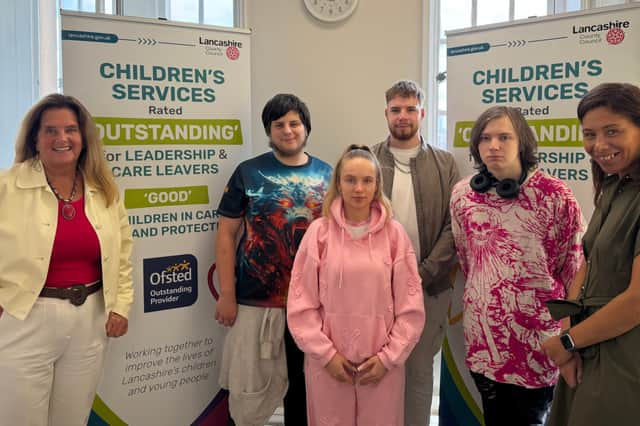

The “multi-disciplinary” approach taken to protecting the county’s children draws in professionals who work with adults with mental health and substance misuse issues, along with those who are victims of - or perpetrate - domestic abuse, the Ofsted report noted.
Those youngsters who do still end up in the care system are usually placed in “well-matched, lasting homes”, it added.
“Children in care in Lancashire told inspectors they feel listened to and looked after well. They have consistent social workers, which allows them to build lasting, trusting relationships,” inspectors said.
The county council was rated ‘good’ for “the experiences and progress of children who need help and protection” and those actually in care.
It achieved the ‘outstanding’ accolade for the experiences and progress of care leavers and “the impact of leaders on social work practice with children and families”.
Young people exiting the care system receive “appropriately focused support at a crucial time of transition into adulthood”, the inspectors found.
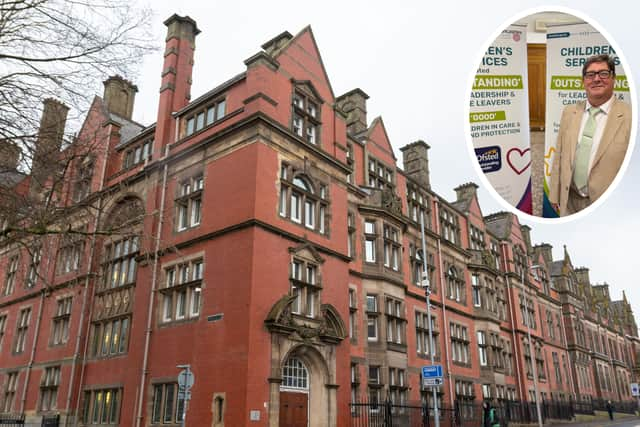
The authority was judged to have “a confident and stable senior leadership team” and a wider children’s social care workforce that say “they genuinely love working for Lancashire County Council” - an environment that has led to a reduction in staff turnover and reliance on agency workers.
It is the stable and enabling culture highlighted in the report that Reform UK cabinet member for children’s services Simon Evans - who has worked in children’s social care for over 25 years - believes is largely responsible for the Ofsted inspection result.
“That makes a big difference, [when] you've got a good, solid, well-motivated staff group.
“I know from my own experience, you would see a massive turnover of staff [to the extent that] there was a [private] joke that you’d go to meet a child and say, 'Hello, I'm your new social worker - I'll be leaving next week.’
“I've worked at three local authorities with children and families and I haven't come across such a happy workforce in all my days. It’s very refreshing. because that underpins everything,” County Cllr Evans told the LDRS.
The report was not flawless - it highlighted a need to better recognise the requirements of young carers and also found that the “consistency and quality of [protection]plans… focused on addressing the immediate risk of harm” could be better. Inspectors acknowledged a service awareness that there was “still more to do“ to embed a consistent approach to “safety planning”.
However, County Cllr Evans said the authority’s investment, over the past three years, in a network of 29 family hubs - providing a one-stop-shop for family services - had played a big part in the inspectors’ overwhelmingly positive verdict and was something that would have a growing impact over the long term.
“It’s that kind of prevention stuff, which you may not see the immediate results of. But we're hoping that 10 years down the line is when it pays off and we're not having to build more children's homes and have massive [numbers] of foster carers,” explained County Cllr Evans.
However, for the care home capacity that is required, the authority's focus remains on the ongoing expansion of its own in-house facilities. The LDRS understands that 18 are now open across the county and two more are set to start operating shortly.
County Cllr Evans says the target is for 29 homes which will provide around 100 beds. He said the facilities would benefit the children who needed placements - and the budget that has to fund them.
“They get better care [in a council-run home] - and we are also under the national average for costs for residential places.
“In the private sector, it's very big money - we're talking £20,000 a week per child. And if you start multiplying that by X number of children, that's that's an awful lot of money.
“Plus, if you’ve got a child sitting in your office at five o'clock on a Friday [in need somewhere to go], that's what drives the price, because the private sector knows that [it’s a seller’s market],” he said.
The cash pot for children’s social care placements overspent by £6.1m in the 2025/26 financial year, according to a report presented to the county council’s cabinet last month. That spike was attributed to more children with complex needs requiring agency residential homes and an increase in placement costs compared to previous years. There was also an increase in the number of children coming into care in the first half of the year, in spite of the three-year downward trend, as the figures can fluctuate.
Nevertheless, Ofsted said there had been "continuous financial investment in services” which had also supported their redesign when necessary.
County Cllr Evans said the financial pressure explained the need for the shift towards in-house provision and a growth in foster carers - which have increased by more than 40 over the past 12 months.
He added that investment this year was “on the back of…the lowest council tax rise in 12 years [for the
Reform UK won control of the authority in May 2025, after an eight-year Conservative administration.
What about Southport?
The inspection report unsurprisingly made reference - albeit briefly - to the Southport tragedy in July 2024. The attack, in which three young girls - Bebe King, who was six, Elsie Dot Stancombe, aged seven, and nine-year old Alice da Silva Aguiar - were murdered during a dance class was committed by Axel Rudakubana. As a resident of the West Lancashire village of Banks, he lived in the county council area.
The first report from the public inquiry into the killings, published in April, made a dozen recommendations to the authority based on its contact with Rudakubana prior to the attack.
County Cllr Evans said County Hall’s response - much of which will consider “exactly…how we identify those risk factors” - is due to be submitted to inquiry chair Sir Adrian Fulford in October.
For its part, Ofsted said the county council’s “safeguarding responses have been strengthened through targeted workforce training, enhanced quality assurance and management oversight, leading to improved threshold decision-making”.
“There has been an increased understanding of contextual safeguarding, online harm and improved information-sharing,” the inspectors noted.