
How Preston will choose which derelict buildings benefit from £1.5m government cash boost
Heritage campaigners say the money could be spent many times over.
Preston City Council says it will seek the views of the public and property owners before deciding how to spend the £1.55m it has been given to help deal with dilapidated and disused buildings.
The authority was announced last week as one of 60 to be allocated a share of the government’s new £125m Derelict Buildings Fund (DBF). It will now consider which of the premises on its "priority list” would be best placed to benefit from a cash injection.
However, the Preserving Preston’s Heritage (PPH) group described the sum as “a drop in the ocean” - and suggested some of the money might be better invested in ensuring that bids for other, more substantial, sources of funding had the best chance of success.
Join our WhatsApp channel
Nevertheless, the organisation’s chair, Rachael Bryson, did give the Local Democracy Reporting Service a wishlist of projects towards which she would like to see the DBF cash directed.
“For privately-owned buildings, it would be Arkwright House, College House, St Joseph's Orphanage, the Old Dog Inn and Sheraton House and, out of the city centre, The Shawe's Arms, The Acregate Pub and Barton Old Hall.
“And in terms of those owned by the council - The Tithebarn, the Guild Hall, Lancastria House, The Larder and The Tea Bar,” Rachael said.


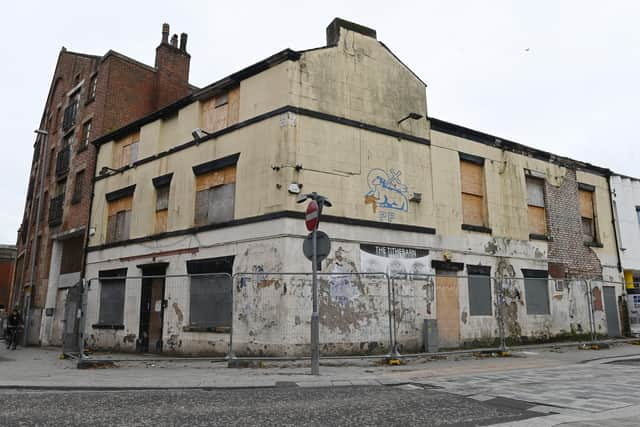
The former Tithebarn pub, opposite the bus station, has been at the centre of a demolition saga in recent years, having closed back in 2016. PPH campaigned for part of the 230-year-old structure - which it claimed was salvageable - to be turned into a heritage centre for the city.
The city council said the estimated £500k-£750k costs of such a scheme - even if it were physically possible, following the effective condemnation of the building last year - could not be justified. However, the pub is still standing, pending the completion of public realm works nearby - and so hope could remain alive if the necessary funding could be found.
Meanwhile, earlier this year, permission was granted to turn Arkwright House - which played a pivotal role in the industrial revolution as the place where the spinning machine was developed - into 11 apartments after being vacant since 2021.
Rachael said of the DBF cash: “Just over a million [pounds] is a start, but a drop in the ocean to save all the buildings on our ‘red’ and ‘amber’ lists.
“It may be wiser spent on education and bid-writing training, so these [building] owners can apply [to the likes of] the National Lottery Heritage Fund and Architectural Heritage Fund - and access more money to actually secure repairs to their properties.”
Preston City Council’s cabinet member for community wealth building and city regeneration, Valerie Wise, said the DBF allocation was “a huge vote of confidence in Preston and a welcome boost to tackle some of the issues with our empty heritage buildings that are in need of attention”.
She added: “The funding could provide a valuable opportunity to carry out some essential renovations to bring one or more of these properties back into use.
“We were only informed of [it] last week and so we have not yet had a chance to consider fully where this funding will be best spent.
“However, we have a priority list of heritage properties that are in the most urgent need of attention and through public consultation, collaboration with stakeholders, property owners and landlords, we will make an informed decision on where the money is spent in terms of feasibility and deliverability in line with the timescales and guidelines of the funding criteria.
“Ongoing investment such as this will help us to create a more vibrant, attractive and resilient city centre, support our local businesses and high street retailers and attract further investment and business onto our high street.”
The government’s guidance for the DBF says the cash should be used “to bring long term vacant and/or derelict buildings back into productive use for the benefit of the high street, town centre or local neighbourhood and the communities they serve”.
“Projects should focus on prominent buildings whose restoration and reuse would help address visible decline, strengthen local confidence and support wider regeneration. Funding may support the acquisition, restoration and reuse of high street buildings, including shops, offices, former places of worship, department stores and other heritage buildings, pubs, theatres or cinemas,” it adds.
Local authorities will not need government approval for the projects they ultimately select, but will have to provide details by next spring, with work intended to begin shortly thereafter.
The city council is already undertaking remedial work at several of its own heritage properties - including the former base of The Larder cafe on Lancaster Road - to make them watertight and weatherproof.
The authority set aside £270k for that purpose when it set its budget for the year back in March. At the same time, £100k was reserved for feasibility studies into proposed heritage preservation and redevelopment projects.
Preston’s DBF allocation comes almost two years after the authority established an empty properties task force following a spate of fires at vulnerable - and historically valuable - premises. The group aims to ensure owners take responsibility for making their buildings being secure – and pushes for them to be brought back into active use.