
Preston and Chorley's 2026 local elections in doubt amid 'cancellation' plans
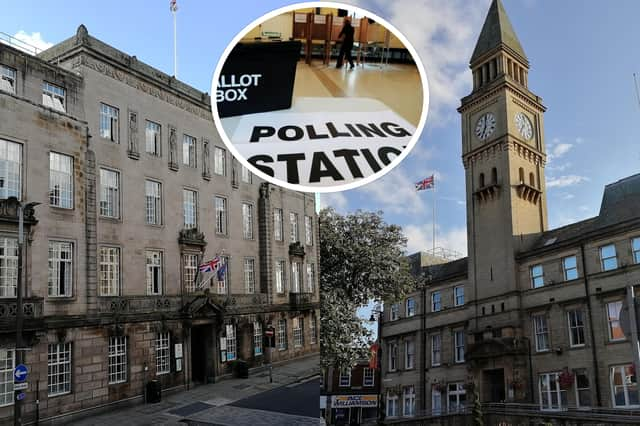
A question mark has been placed over the local elections scheduled to take place in Preston and Chorley next year after the leaders of the councils for the two areas said they were likely to back a move for the polls to be scrapped.
Both authorities are set to be abolished in 2028 as part of a government-ordered shake-up that will redraw the council map right across Lancashire.
A final set of elections to the town halls in Preston and Chorley is currently planned for May 2026.
However, Preston City Council’s cabinet is set to decide next week whether it wants to ask the government to cancel that vote – and the authority’s leader, Matthew Brown, has told the Local Democracy Reporting Service (LDRS) he is “minded” to support doing so.
Meanwhile, all members of Chorley Council will be asked on Tuesday evening to approve making a request for permission to scrap next year’s borough poll – which council leader Alistair Bradley says would make sense because of the broader overhaul on the horizon.

All 15 main Lancashire councils are facing the axe in 2028, seven of which – Blackburn with Darwen, Burnley, Chorley, Hyndburn, Pendle, Preston and West Lancashire – are due to hold elections next May.
When approached by the LDRS earlier this month, only the Liberal Democrat leader of Pendle Council overtly backed pressing ahead with the planned poll – with the others being either non-committal or silent on the subject. Since then, the Labour leaders of Blackburn with Darwen and Hyndburn councils have both come out in favour of cancellation.
The 15 existing councils are currently finalising proposals to the government for the number and shape of the larger authorities that will replace them, which will come into force in April 2028.
Competing proposals for between two and five new council areas are set to be submitted to Whitehall by a deadline of 28th November – with Preston and Chorley councils supporting the same one – and a public consultation into those favoured by ministers will be held early next year. The government will then choose a final option for implementation.
Against that backdrop, Preston’s Labour leader says a period of “continuity” is required, because of the complexity of the reorganisation process that lies ahead.
“It will need further discussion with the ruling Labour group – however, I’m minded at this stage to say that the elections should be postponed next May,” Cllr Brown told the LDRS.
“The reality of the situation is that when we get to this time next year, there will already be a transitional process taking place – so obviously we need to make sure there’s a continuity in terms of…implementing the proposals we’re [currently] arguing for.
“We want to make sure that when we go through the transition to the new council that we can do it in a way that is going to make sure it’ll work for the people of Preston and beyond as powerfully as possible.
“There will also be a significant saving to benefit Preston residents in the context of the big changes we are going through.
“I understand people may be disappointed [if the elections are cancelled], but what we’re doing is looking to the future and the big opportunities that will come from these new councils – because in terms of powers and resources, we will have significantly more [than we do at present],” Cllr Brown said.
The current political make-up of Preston City Council means that Labour could lose control of the authority at any poll that did take place next year – whereas Labour’s present dominance on Chorley Council means the party would retain its majority in the borough even if it lost every seat up for grabs in 2026.
Nevertheless, Chorley leader Alistair Bradley says he supports cancelling the 2026 elections in Lancashire so that the same faces who are currently shaping the county’s local government future are there to maintain stability as that process continues next year.
“At the moment, the government have got the councils that they’re dealing with now – but then they could basically come back next year [after the elections] and find that the people who put the proposals in aren’t there anymore.
“It’d be like someone sending party invites out and then moving house,” Cllr Bradley told the LDRS.
A report to be presented to a meeting of Chorley’s full council on Tuesday also suggests that, amidst the “extremely resource intensive” shake-up being demanded by the government, an absence of the further changes that could result from elections might “best protect local services” during the revamp.
However, the document adds: “The bar for postponing any elections is understandably extremely high. Local councils are democratically accountable to their residents – and regular elections ensure that they remain accountable and responsive.”
The government said earlier this month that its “starting point is for all elections to go ahead unless there is strong justification otherwise”. However, both the current and previous administrations have cancelled local pools in other parts of the country that have been going through the reorganisation that is now coming Lancashire’s way.
West Lancashire Borough Council said it was "not aware of any further developments or discussions" regarding the elections.
Burnley Council leader Afrasiab Anwar said: "The official line from MHCLG [the Ministry of Housing, Communities and Local Government] remains that the 2026 local elections shall take place as planned. If this is no longer the case, MHCLG need to let us know as soon as possible and provide cogent reasons for their change in position."
All of the Lancashire councils due to stage elections next year elect their memberships in thirds – by holding a poll in three years out of every four. Each individual councillor serves for a four-year-term.
That means that in Preston, 16 out of the authority’s 48 seats – one in each multi-member ward – are due to be elected next year; in Chorley, it is 14 seats out of a total of 42.
Should the vote be cancelled, members elected to both authorities back in 2022 would have their terms extended until April 2028, when the existing councils would cease to exist.
Preston City Council estimates that £109k would be saved by the cancellation of the elections – although any by-elections subsequently held because of councillors quitting before their time was due would each cost £30k.
Chorley Council says that it could save £253k by not staging the 2026 elections.