
Lancaster City Council's merger upheaval might just be worth it, leader says - here’s why
Big changes are on the way - but will they bring any benefits?
The upheaval caused by merging Lancaster City Council into a new authority that also covers Preston and Ribble Valley could be partially offset by the opportunity it provides to improve services - including for the most vulnerable residents.
That was the verdict of Lancaster’s current leader, Caroline Jackson, after the government announced last week that Lancashire will be split into four new local authority areas from April 2028 as part of the biggest change to the council landscape in the county for more than 50 years.
The county’s 15 main councils will disappear and be replaced with standalone ‘unitary’ authorities - including one provisionally named ‘North Lancashire’. That option - binding together Lancaster, Preston and Ribble Valley - had been backed by the trio of current district councils that cover the places it will incorporate. It was one of the five possibilities that had been put forward by the county’s existing local authorities as part of the government-ordered overhaul.
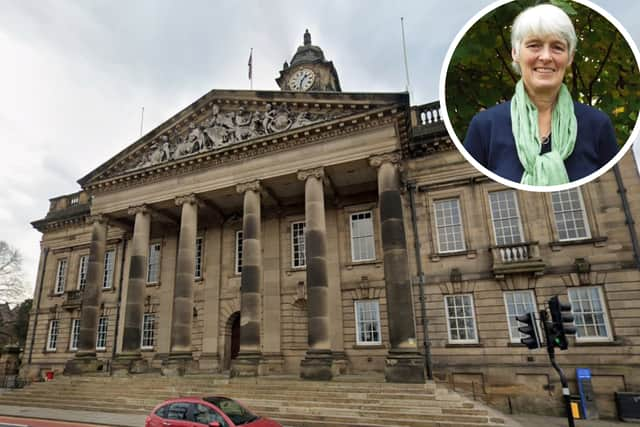

Cllr Jackson acknowledged that she had started out deeply opposed to the shake-up – and still believed there were serious downsides to it, including the fact it will result in fewer councillors representing the area.
However, the Green Party leader told the Local Democracy Reporting Service she was now hopeful the move could at least offer an opportunity for “new ways of working” that could transform how services are delivered – especially the more challenging ones, many of which are currently the preserve of the county council.
“[We will be able to] look at our adult and children’s [social care] services and say, ‘Where are the new ideas?’
“I think top-tier services do present a challenge – and that’s something that we’re going to have to get to grips with.
“But one of the big opportunities is that [we will have] teams [with] experience…and they’ll have the freedom to think about how they would [provide these services] for a much smaller footprint.
“What are the things they’ve always wanted to do – and how can we create a service that’s really responsive on the ground and fits our needs? [Answering those questions] is the exciting bit of becoming a unitary.
“To start with, I didn’t like the notion of local government reorganisation at all. But now I’ve come round to [believing] it’s an opportunity for new thinking…and providing better services – and so that there might be some compensation for the huge disruption, enormous costs and the loss of democratic voice, which I think is really serious,” Cllr Jackson added.
She added that while the three constituent areas that will make up the new council “do not yet identify with that broader grouping”, there are sufficient commonalities to make their merger make sense.
“We’ve got quite strong SME [small and medium enterprise] and entrepreneurial work going on in Lancaster, Morecambe and Preston – and we’ve got [the] two universities who are both rivals and work co-operatively together. There is also the common rural background between Lancaster and Ribble Valley. – but, as yet, I think it’s all unexplored territory,” Cllr Jackson said.
Lancaster City Council, Preston City Council, Ribble Valley Borough Council and Lancashire County Council will all continue to operate until 31st March, 2028.
The replacement unitary – serving 374,000 residents – will come into being in so-called ‘shadow’ form from May 2027 when the first set of elections will be held for it.
The three other new councils that will be created by the redrawing of the local, government map in Lancashire will bind together: Chorley, South Ribble and West Lancashire; Blackpool, Fylde and Wyre; and Blackburn with Darwen, Burnley, Hyndburn, Rossendale and Pendle.