
Lancashire ordered to build thousands of new homes by the government - here's where they are going
The number of new homes Lancashire is expected to build each year will more than double following the government’s overhaul of the planning system.
The county’s minimum annual housebuilding target has gone from fewer than 2,900 properties to just over 6,500 – a 128 percent increase of more than 3,600 dwellings.
However, that collective rise masks some even bigger leaps within Lancashire’s 14 individual council areas – two of which will be required to deliver a more than six-fold annual hike in new housing. A trio of others will see their targets more than treble, while the expected tallies will be more than doubled in all bar three local authority patches.
Some places are already exceeding the figures laid down under the previous system, which was scrapped under the last Conservative government 12 months ago when the targets became only advisory.
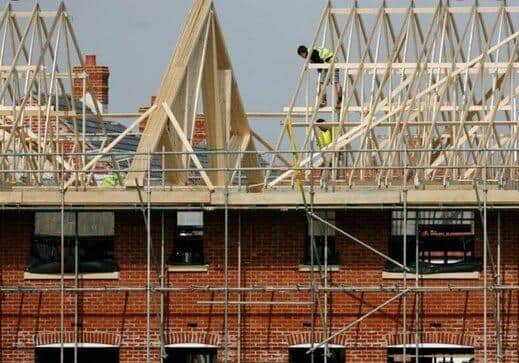

The total now being demanded of Lancashire has reduced by almost 650 compared to the number suggested in a consultation into the proposals launched in the summer – with most areas seeing dozens of dwellings shaved off their previously-proposed minimum yearly requirements.
The new mandatory targets brought in by Labour are the basis of the party’s push to build 1.5 million homes nationwide over the next five years.
Across Lancashire, Burnley will see the largest proportional increase in the homes it is expected to deliver annually – up by 567 percent – followed by Hyndburn with a 502 percent rise.
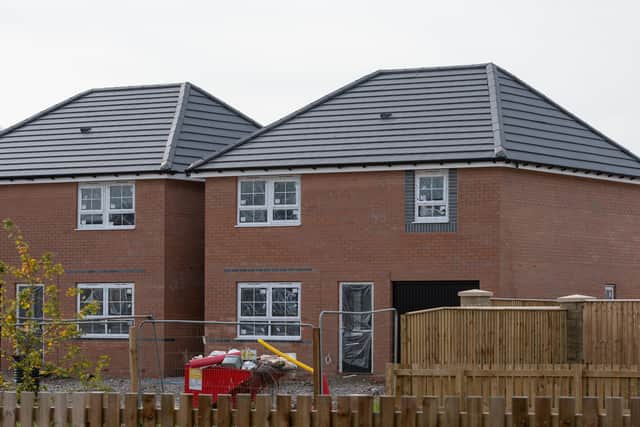
The biggest numerical increase will be in Blackpool, where an extra 438 properties will be required each year, while West Lancashire and Blackburn with Darwen will have to build more than 370 extra each. Meanwhile, Preston and South Ribble will be expected to produce around 320 more homes compared to their minimums under the old system.
Chorley will get the lowest increase by both proportion and actual number – 58 extra dwellings – but will still be required to build over 550 homes a year, in spite of repeated calls from the borough council for targets to reflect the 2,800 properties built within its borders as part of the Buckshaw Village development a decade ago.
Lancaster has ended up with the highest overall annual target – 619 properties – followed by Preston with 590, Blackpool on 585 and Wyre coming in at 582.
WHERE HAVE THE NUMBERS COME FROM – AND WHAT DO THEY MEAN FOR THE GREENBELT?
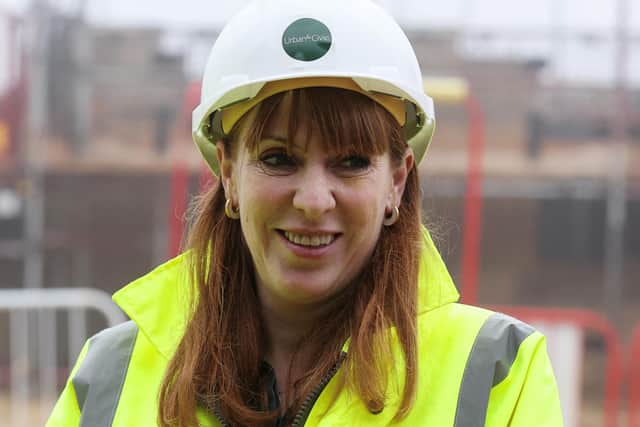
The new, so-called ‘standard method’ used by the government to calculate housing need targets arrives at a figure by taking 0.8 percent of an area’s existing housing stock and adjusting that total by a formula designed to deal with local affordability issues.
The wider reforms to the National Planning Policy Framework (NPPF) will also allow for development on what has been dubbed ‘grey belt’ – land within the greenbelt which has been previously built upon and which does not “strongly contribute” to the latter’s core purposes.
Meanwhile, building on other areas of greenbelt land will not be considered inappropriate if there is “a demonstrable unmet need for the type of development proposed” for the location. Nevertheless, the NPPF maintains that councils should give “substantial weight” to any harm caused to the greenbelt – as a reason to refuse a proposal – when they are considering planning applications.
If local authorities decide to release areas of greenbelt for housebuilding as part of their long-term local plans, at least half of the resultant developments should be made up of properties that fall into the discounted ‘affordable homes’ category.
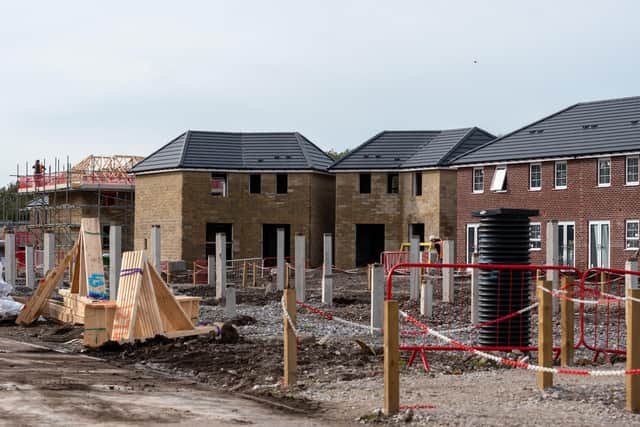
However, a developer will be exempt from that requirement if it can show that fulfilling it would make their scheme financially unviable – the same caveat that applies to existing locally-set affordable housing criteria on new estates.
Deputy Prime Minister and Secretary of State for Housing, Angela Rayner said of the planning overhaul her department has instituted: “From day one I have been open and honest about the scale of the housing crisis we have inherited. This mission-led government will not shy away from taking the bold and decisive action needed to fix it for good.
“We cannot shirk responsibility and leave over a million families on housing waiting lists and a generation locked out of home ownership. Our Plan for Change means overhauling planning to make the dream of a secure home a reality for working people.”
COUNCILS CONSIDER IMPACT OF NEW TARGETS
The Lancashire Post approached all 14 of the Lancashire councils with responsibility for housebuilding for comment on their new targets – and six have so far provided a response:
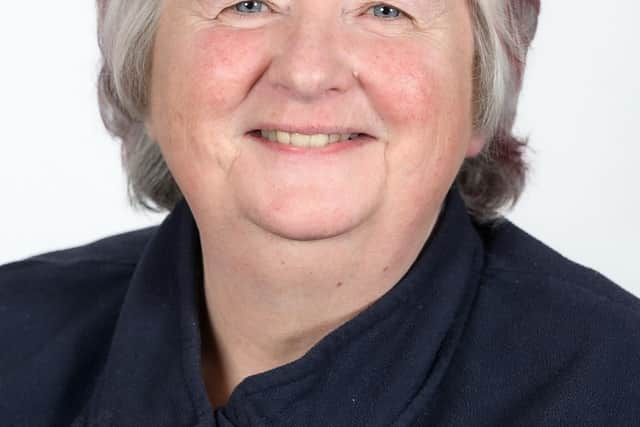
Blackburn with Darwen
“The government’s new national planning policy highlights the importance of having a robust plan. Earlier this year, we set out our ambitions in our new local plan.
“The council is in a strong position to work with government to meet the needs of the borough with a target of 447 new homes each year, which was exceeded in 2023/24 as we built 598 homes, which I am extremely proud of.” Executive member for growth and development Quesir Mahmood
Blackpool
“We welcome the government’s plan to tackle the housing crisis the country is facing and we share their vision.
“It will take some time to digest the plan, analyse what it means for Blackpool and calculate how the challenging target can be achieved. To be able to successfully tackle our local housing need, we will require grant support for social housing and we welcome the ongoing dialogue with government to explore innovative solutions to addressing Blackpool’s challenges.
“There is a significant need for affordable homes in Blackpool. Our town is intensely urban and compact with very limited land available for development and this is why one of our key priorities is regenerating and improving existing neighbourhoods and creating aspirational and high quality homes.
“To help in delivering new homes, we welcome the government’s commitment to the provision of additional resource to support councils in the delivery of their local plans and the increase in planning fees and officers to improve capacity in development management teams in determining planning applications.” Council leader Lynn Williams
Chorley
“In real terms, since the summer consultation, housing numbers for Chorley have decreased from 601 to 564 new homes per year. We are pleased that this government has listened to our concerns, given that under the last government we tried time and time again to let them know that Chorley’s numbers were too high and that we had done our fair share to deliver new homes.
“The number is still high and we are doing all that we can to make sure that development coming forward in this borough is done in a planned way, working with partners to develop the Central Lancashire Local Plan. We are pleased that the new government has listened to the concerns we raised in the summer by recognising the need to progress with plans that are already well-advanced.
“We know that more affordable homes need to be built to meet demand – and once again I will say that we are not anti-development, it just needs to be done in a planned way to make sure the homes are affordable, and that infrastructure can keep up.” Council leader Alistair Bradley
Lancaster
“The city council commenced a review of its local plan for the district earlier this year and this process will continue throughout 2025. The new local plan will explore how much development, including residential development, is needed and it will consider where and how that development should be provided.
“The local plan will be subject to statutory consultation and, eventually, to examination in public by the government’s Planning Inspectorate.” Council spokesperson
Rossendale
"The challenge to build enough of the right type of houses to meet the needs of communities across the country is substantial and no less so for Rossendale. Increases in our housing targets of nearly 80 percent will be difficult to meet, but it is important that over the next few months we work with communities to ensure that the necessary plans are developed co-operatively and, as best as we can, place the right house in the right place." Council spokesperson
South Ribble
“While the 489 homes figure seems stark in comparison to 169, in real terms our target under this government for home building, since the summer consultation, has dropped from 546 to 489 new homes per year – and this council has been delivering above the 169 figure for several years, recognising the important contribution that new homes and infrastructure make to our communities.
“What is important is that development comes forward in a planned way and we are pleased that the government has listened to our comments so that the new framework gives us a little more time to continue to advance our plan-led approach through the Central Lancashire Local Plan.
“We are pro development of housing as we know there is unprecedented demand for social housing and homes at affordable prices however it must be done in the right way, where it can be sustainable. We’re pleased the government have listened to our concerns in this respect and has reduced the target.” Council leader Jacky Alty
West Lancashire
“We are looking at the context of the revised framework and will be working with our planning officers and councillor colleagues to evaluate what this means for West Lancashire.
“We will continue to develop the emerging local plan in the context of protecting the borough’s productive agricultural land.
“Any future development across the borough must be backed by appropriate infrastructure, roads, schools, GPs and health services and leisure facilities.” Deputy council leader and cabinet member for planning and community safety Gareth Dowling
LANCASHIRE’S HOUSEBUILDING LEAGUES
This is how the new targets will affect the 14 local planning authority areas in Lancashire.
Minimum number of new homes required each year
LANCASTER – 619
PRESTON – 590
BLACKPOOL – 585
WYRE – 582
CHORLEY – 564
WEST LANCASHIRE – 562
BLACKBURN WITH DARWEN – 506
SOUTH RIBBLE – 489
FYLDE – 410
BURNLEY – 340
PENDLE – 333
ROSSENDALE – 321
RIBBLE VALLEY – 310
HYNDBURN – 301
Source: government data
Numerical increases in minimum annual housebuilding targets (compared to previous system)
BLACKPOOL – 438 extra properties
WEST LANCASHIRE – 396 extra properties
BLACKBURN WITH DARWEN – 372 extra properties
PRESTON – 321 extra properties
SOUTH RIBBLE – 320 extra properties
WYRE – 302 extra properties
BURNLEY – 289 extra properties
HYNDBURN – 251 extra properties
PENDLE – 209 extra properties
LANCASTER – 204 extra properties
RIBBLE VALLEY – 197 extra properties
FYLDE – 153 extra properties
ROSSENDALE – 142 extra properties
CHORLEY – 58 extra properties
Source: Lancashire Post analysis of government data
Percentage increase in minimum annual housebuilding targets (compared to previous system)
BURNLEY – 567 percent
HYNDBURN – 502 percent
BLACKPOOL 298 percent
BLACKBURN WITH DARWEN – 278 percent
WEST LANCASHIRE – 239 percent
SOUTH RIBBLE – 189 percent
RIBBLE VALLEY – 174 percent
PENDLE – 169 percent
PRESTON – 119 percent
WYRE – 108 percent
ROSSENDALE – 79 percent
FYLDE – 60 percent
LANCASTER – 49 percent
CHORLEY – 11 percent
Source: Lancashire Post analysis of government data