
‘It’d have been the last straw’: Lancashire opts not to charge ‘tourist tax’ on overnight stays
The county was given the chance to levy a fee on visitor accommodation - but declined.
Lancashire has chosen not to introduce a charge on overnight visitors after senior councillors concluded it would risk damaging the county’s £5.7bn tourist sector.
The government is planning to offer local areas with devolved powers the chance to levy the fee - which has been dubbed a ‘tourist tax’ - and reinvest the proceeds in the places where they are generated.
However, the Lancashire Combined County Authority (LCCA) devolution body - made up of representatives of Lancashire County Council and Blackpool and Blackburn with Darwen councils - voted at a recent meeting not to pursue the policy, at least for now.
The decision was welcomed by hoteliers in the county, who told the Lancashire Post the price hike could have deterred some prospective visitors from taking a multi-day trip to the county.

The LCCA has opted to keep “a watching brief” on the situation. The authority’s chair - and county council leader - Stephen Atkinson said Lancashire had “price-sensitive holidays - and we've got to reflect that”.
He added: “I'm very happy that we're not putting an extra cost on families who want to go on holiday. I think it's an enlightened approach - and let's see how many other places [take it].”
An overnight visitor levy would be based on a percentage of the price of the accommodation where someone is staying. It would be applied per person, bed or room for each night of a visit.
However, the meeting heard that the government legislation permitting the levy - which is currently making its way through Parliament - would require it to be set at the same rate across the entire county, with no variation between tourist destinations or individual hotels within the same combined authority patch.
LCCA member Phil Riley, the leader of Blackburn with Darwen Council, said that was where the problem lay for places like Lancashire, which boast a “mixed” visitor economy.
“The discussion around the visitor levy has been very much based [on] urban centers…but Lancashire is not unique in terms of having…coastal and rural [attractions as well]. We all understand that there's a very different market in those kind[s] of places.
“There are clearly some [areas] where this levy would probably be inappropriate, but there are some other places where it will make very little difference to the amount of money that people are paying,” Cllr Riley said.
Meanwhile, Wyre Council leader Michael Vincent - who sits a non-voting associate member on the LCCA, representing Lancashire’s dozen district councils - said a visitor levy would have been “hugely detrimental” to the Fylde coast by taking away its “competitive edge”.
“The fact that we can't differentiate…between cheap bed and breakfast in Blackpool or Wyre and [say] Stanley House [in Ribble Valley]…means that we're in a much better position by not not doing it,” Cllr Vincent said.
‘People just see the overall price and think: “How much?”’
The LCCA’s concerns about an overnight visitor levy were echoed by some of the hoteliers at the heart of Lancashire’s tourism industry.
Ian White, secretary of Blackpool’s visitor accommodation association StayBlackpool, said the policy had been “poorly thought out” - and would have “badly affected” the resort.
“The way that the cost-of-living is still hitting things hard, it really would have made the difference between people deciding to come or not,” he said.
“The [national] politicians who were pushing for this have just got no respect for the hospitality sector, which we all know is under significant pressure.”
Mr. White added that there would also have been an inherent unfairness in the charge, which could have been escaped by less scrupulous operators who failed to register their businesses as holiday accommodation.
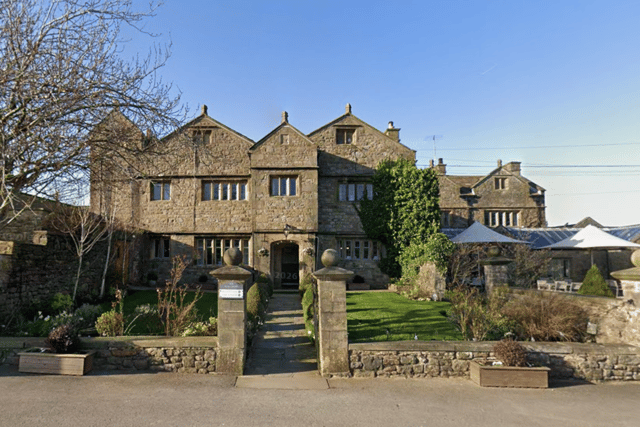
Meanwhile, Paul Caddy, owner of the Stirk House Hotel in Gisburn, told the Post that what some may dismiss as a small additional cost would have likely been “the straw that breaks the camel’s back” for many would-be visitors to Lancashire.
“People don’t look at the extra charge [in isolation] - they look at the headline figure and think, ‘How much? Should we or shouldn’t we go?’
“And many people are at that straw level at which point they say: ‘No, we won't.’”
Mr. Caddy added that any money generated for reinvestment in an area could be lost several times over as a result of tourists deciding to stay away.
“These people are also spending while they're here. So if you lose two or three room nights from a hotel like Stirk House, that will be [several hundred] pounds that will be missed out on by other businesses in the area as well.”
Tourism body Marketing Lancashire was also approached for comment.
Never say never
While the LCCA has declined to explore an overnight visitor levy at the moment, the option remains for it to revisit the idea at any point in the future.
County Cllr Atkinson said it was an example of “true devolution”, whereby a power had been offered to the county and it had been able to decide against using it, because “it doesn't work for Lancashire at this moment in time”.
Any future move to introduce the charge would require a local public consultation to be carried out first.
Speaking when the government’s plans were announced in September, local government secretary Angela Rayner said: “Our amazing towns and cities, and our picturesque rural and coastal communities welcome millions of visitors every year - local leaders should have the power to make the most of that popularity.
“This measure will give [local areas] the choice to raise and reinvest funding where it’s needed most. It’ll help support the local services, public spaces and attractions that both residents and visitors rely on, with decisions taken by people who know their area best.”
Under the proposal, both elected mayors and non-mayoral ‘foundation strategic authorities’ - as the LCCA currently is - can introduce a tourist accommodation levy.