
Housing plan that 'makes accident with schoolkids near certain' back on the table
A controversial bid to build a new housing estate in Leyland – which was rejected by councillors because of road safety concerns – is to be decided by a planning inspector.
South Ribble Borough Council’s planning committee refused permission for the 23-dwelling development, off Cocker Lane in Moss Side, after hearing a litany of objections from locals – chiefly about the risk they claimed it would pose to children walking to and from school.
However, that decision, taken last May, was appealed against by the firm behind the proposal – and now a hearing will determine whether it is upheld or overturned.
The Planning Inspectorate will take evidence during what is scheduled to be a one-day session on 10th March, at a yet-to-be-chosen venue.
Council planning officers had recommended that the blueprint be approved, but committee members went against that advice once they were told that the narrow, largely pavement-free route was a popular cut-through to Moss Side Primary School – with an estimated 150 children using it at any one time.
The youngsters walk in the road for much of their journey along the semi-rural road, councillors heard, because of the absence of a footpath between the junction with Birchwood and the proposed development site.
At the meeting, mother-of-two Abigail Saunders quoted a comment from Moss Side Primary headteacher Andrew Wright, in which he said the estate created a scenario “where an accident is near-certain to occur involving children, either outside our school or on the roads close by”.
Abigail herself asked the committee: “Are you happy to roll the dice…with my child’s life?”
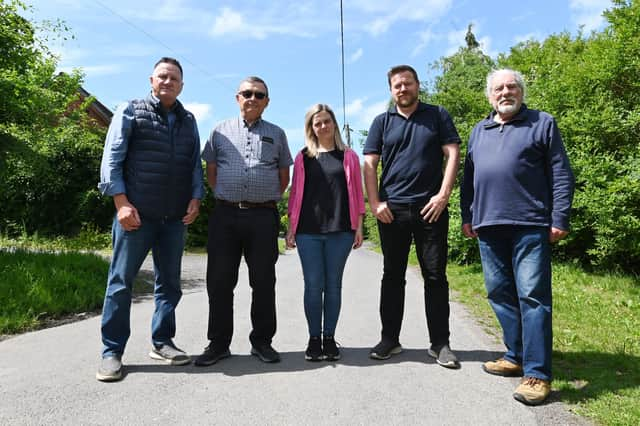

A highways plan submitted on behalf of the applicant – BW SIPP Trustees Ltd. – proposed the creation of continuous pavement on the south side of Cocker Lane, to replace the narrow grass verge that currently exists – and the removal of the equivalent strip of greenery on the north side to allow the carriageway to be slightly widened.
However, local resident Adrian Dean said the proposed 1.8m-wide footway was not enough to “safely accommodate the hundreds of school children that walk the lane every school day”.
The proposal was ultimately refused on the basis it would have a “detrimental” impact on the character of the immediate area, after committee members were advised by council planning officers that it would be difficult to defend a rejection on road safety grounds – because highways bosses at Lancashire County Council were satisfied with the plans.
However, the meeting heard it had taken seven reworkings of the blueprint – over a 15-month period – to persuade the road experts at County Hall that the route could be made safe for both construction traffic and the increase in vehicles generated by the new homeowners.
Chris Betteridge, the agent for the proposal, said it came with “a number of improvements to Cocker Lane…which will enhance [it] and provide a safer route for all users – not just those of the proposed development”.
He said it would be particularly beneficial for the schoolchildren who currently have “no choice but to walk in the road”.
Meanwhile, the highways consultant acting on behalf of the applicant told the committee that the repeated rethinks surrounding the road layout were a positive – and not the flaw some residents were suggesting.
The Lancashire Post understands that the The Friends of Cocker Lane group has submitted evidence for the appeal hearing in support of the council’s refusal.