
Fresh delay over Andy Burnham-style Lancashire mayor after meeting cancelled
The county hit an unexpected hurdle in its devolution negotiations with the government.
A meeting that could finally have put Lancashire on the road to getting an elected mayor was cancelled last week – for the second time in as many months.
The Local Democracy Reporting Service (LDRS) understands that the plug was pulled on the crunch gathering – between local authority leaders and the government – which had been due to take place in Whitehall on 12th May.
It was called off because the State Opening of Parliament had subsequently been scheduled for the following day. But political turmoil would have torpedoed the talks in any case after the government minister who was set to lead them resigned hours before they were due to begin.
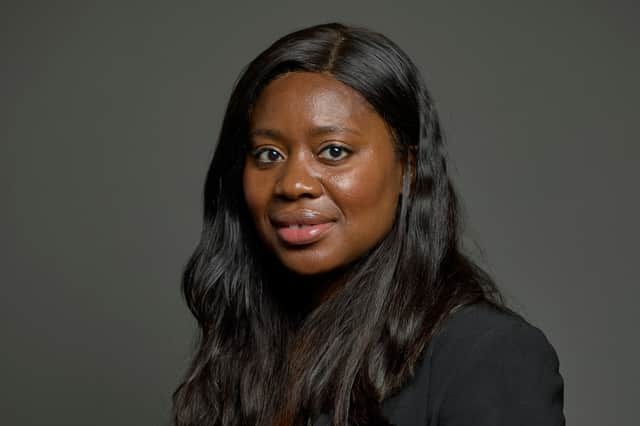
Devolution minister Miatta Fahnbulleh quit on the morning the meeting had been planned, as she became the first member of Prime Minister Sir Keir Starmer’s team to walk out over his leadership.
Her departure means Lancashire has lost the key government contact with whom it has been negotiating the next steps on its devolution journey since last September – a period during which there have been substantial developments, including a demand for a guaranteed £1bn investment package for Lancashire over the next three decades to go with any mayor.
Last week’s meeting had been scheduled to enable the leaders and chief executives of the county’s three top-tier local authorities – Lancashire County Council, Blackpool Council and Blackburn with Darwen Council – to discuss with Ms. Fahnbulleh how Lancashire might move towards the creation of an Andy-Burnham type figurehead.
The event – which would also have been attended by officials from the Ministry of Housing, Communities and Local Government – had originally been scheduled for March, but had already been cancelled once at the request of the government, because of the timing of Parliamentary business. The LDRS understands no new date has been set for Lancashire’s representatives to meet with the newly-appointed devolution minister, Nesil Caliskan MP.
It is unclear whether the ongoing leadership speculation surrounding the Prime Minister will delay work within the government on Lancashire’s devolution progress – or provide an impetus to speed it up.


The cancelled meeting had been set to revolve around a series of requests previously made by the trio of council leaders who would have been in attendance – as well as consideration of the outcome of a local “governance review” of Lancashire’s devolution arrangements.
In unpublished correspondence sent shortly before Christmas – since seen by the LDRS – Lancashire County Council’s Reform UK leader Stephen Atkinson and the respective Labour leaders of Blackpool and Blackburn with Darwen councils, Lynn Williams and Phil Riley committed to exploring “the principle” of a mayor-led system for Lancashire.
However, what they described as their willingness to “engage positively” over the subject was set out as being “contingent” on confirmation of the funding that would come with the post, the timescale for the introduction of the role and the outcome of a public consultation into the new set-up.
The three also formally floated the idea – previously mooted by County Cllr Atkinson, a longstanding opponent of elected mayors as part of the devolution process – of Lancashire being able to access that mayoral finance before the new, all-powerful politician is actually in place.
The three politicians sit together at the helm of the Lancashire Combined County Authority (LCCA) as the heads of its constituent councils.
That organisation was established in February 2025 to oversee the implementation of Lancashire’s existing devolution deal. The agreement did not include an elected mayor – a prospect that has proved politically controversial in the county throughout what is now a decade of wrangling between all 15 main Lancashire councils over the issue.
Devolution is the process by which local areas are handed powers that were previously the preserve of central government – and funding to accompany their new responsibilities.
The letter sent to the government in December was the latest response to a ministerial demand for the LCCA to bring forward plans for “deeper” devolution – widely interpreted as code for moving to a mayoral model and securing the additional cash and powers that the post would bring, including over some elements of transport, housing and economic development.
The top-tier council leaders, in their roles as constituent members of the LCCA, resolved in October to consider introducing a mayor – but only if “clear and substantial benefits” could be demonstrated by the government beforehand.
County Cllr Atkinson was particularly keen to establish exactly how much additional funding would come Lancashire’s way if it took the mayoral route favoured by ministers.
In reply, Ms Fahnbulleh stressed that a commitment to mayoral authority funding being delivered over a 30-year period was laid down in legislation – but would not be drawn on specifics. She said the amount available to Lancashire would be “subject to further decisions following consideration of the Combined County Authority’s proposal to pursue mayoral devolution”.
In their December correspondence, the LCCA members once again attempted to secure a government commitment to a precise figure for a Lancashire mayoral ‘investment fund’, stating that their “fiscal assumption is that this would be in excess of £1bn, or [circa] £36m per annum, when gauged against [those] which have been agreed for other new or emerging Mayoral Strategic Authorities”.
They also noted in other areas working towards an elected mayor that the government now wanted the new role introduced only after completion of any separate changes to streamline the local council set-up in those places. Lancashire is poised to undergo such an overhaul in April 2028, when its existing 15 local authorities will be abolished and replaced with an as-yet-undetermined smaller number of councils.
Against that backdrop – and the resultant minimum two-year wait for any elected mayor that is ultimately agreed for Lancashire – the LCCA said it believes there is “merit in releasing 50 percent of [any mayoral] investment to Lancashire earlier in the process [in order] to create new opportunities to maximise the benefit of existing resources, with the balance available in full when a mayor is in place”.
The letter also highlighted what its authors described as “the unique position which Lancashire now faces regarding reduced levels of capital investment and [combined authority] capacity funding, as one of only two non-mayoral CCAs in the country”.
Meanwhile, on the subject of a public consultation over an elected mayor for Lancashire, the LCCA members stated their desire to “ensure that the views of Lancashire’s residents and stakeholders are fully considered”.
Last week’s gathering would have seen the government respond to the county’s raft of requests – a duty now set to fall to Nesil Caliskan at a later date. She becomes the third person to occupy the post of devolution and local government minister since Labour came to power in 2024, after the original officer-holder, Jim McMahon, was shuffled out of the job last September.
Lancashire is currently the only part of the North of England neither to have an elected mayor nor be formally en route to installing one.
County Cllr Atkinson told the LDRS back in November that he believes a mayor actually “centralises power” – and so is at odds with the essence of devolution. He also said he wanted Lancashire to “understand exactly what we will get” out of the arrangement before signing up to it.
However, Cllr Riley said it would be “insane for Lancashire to end up being the only place in the North of England that doesn’t have a mayoral authority – it makes absolutely no sense whatsoever”.
Cllr Williams added that the county was “missing opportunities” by not being led by a mayor – and that it had “a lot of catching up to…do” with Greater Manchester and the Liverpool City Region.
Lancashire has ‘major role to play Northern growth’
The North of England united to put itself in the shop window for investment opportunities from around the world earlier this week – and a senior Lancashire politician says the county is well place to benefit from the pan-region’s move to put itself on the world stage.
The inaugural Great North Investment Summit, which took place in Leeds on Monday, brought forward what has been described as “a pipeline” of potential projects that could generate tens of thousands of new jobs.
The Great North Partnership, chaired by North East Mayor Kim McGuinness, saw mayors and leaders from across the North team up for the first time to present a single proposition for investors.
County Cllr Stephen Atkinson, chair of the Lancashire Combined County Authority devolution body, said: “Lancashire has a major role to play in the North’s growth story. It has one of the largest economies in the North West with strategic industries of nuclear, UK Cyber Force and defence.
"Alongside our great towns and cities, county areas like ours bring nationally significant strengths in advanced manufacturing, aerospace and clean energy, with the skills, supply chains and capacity these sectors need to thrive.
"That is why Lancashire is central to any serious proposition for northern growth.
"Major international events also help us showcase that offer to the world. When the Tour de France comes through Lancashire in 2027, it will put our landscapes, communities and economy on a global stage, provide a real boost for local businesses and help demonstrate why the North is such a strong place to live, work, study and invest.”