
‘Better for battery hens than humans’: Chorley HMO plan rejected over room sizes
The house-share proposal was one of two being considered by councillors in te borough.
Plans to convert a family-sized home in Chorley into a house of multiple occupation (HMO) have been kicked out by councillors – after some of the rooms were likened to battery hen cages.
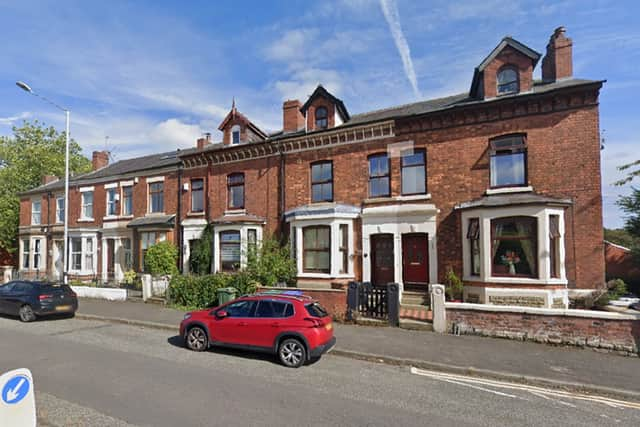
The proposal would have seen a property on Park Road in Astley become a seven-bedroom HMO on its ground, first and second floors, with a self-contained bedsit located in its basement.
The blueprint had been recommended for approval by Chorley Council planning officers after being deemed to comply with local policy.
However, the size of some of the proposed rooms drew the ire of the authority’s planning committee – in spite of the fact they exceeded nationally-set minimum space standards.

The bedrooms that were to make up the HMO – each of which was to have come with a separate ensuite – ranged in area from 6.81 to 12.96 square metres. The minimum allowable floor space for a room in an HMO is 6.51 square metres for a single occupant.
However, the compliance of the plans with that rule cut no ice with councillors – who expressed concern about the impact of the smaller rooms on their future occupants.
Committee member – and the council’s cabinet member for planning and development – Cllr Alex Hilton branded the smallest of them “cruel”.
“Imagine your entire life living in 6.81 meters squared – that is not acceptable. This is not Dickensian London – this is Chorley.
“Nobody should be expected to live in that – prison cells are probably bigger. I’ve compared [some HMOs] to dog kennels before. This is like battery hens – it’s getting even worse,” Cllr Hilton told the meeting.
Richard Pike, the agent for the applicant, Alan Horne, stressed that the recommendation of officers was to give the conversion the green light.
He acknowledged that the term “HMO” came with negative connotations which could cause “serious concern and uncertainty to a local community”.
However, he said the “stigma” surrounding such developments did not reflect the changes in the type of people who were likely to occupy them.
“Due to housing market conditions, the opportunity for young people to take a step towards independent living…is constantly reducing, which is why cheaper…accommodation is [becoming] more appealing and therefore more in demand.
“The market for this type of studio accommodation is one consisting mainly of young professionals or degree apprenticeship students, particularly those [such as from] the nearby hospital, looking for a decent, safe and sustainable place to live,” Mr. Pike said.
Application documents set out a desire to create an “outstanding” HMO – but that was not how committee members judged the proposal before them.
Cllr Russ Green rubbished the claim that the accommodation would appeal to professionals.
“A professional person has a desk and [wants] space to be able to do some work. If you put a desk in those bedrooms and a wardrobe and side bed, what room have you got [left]? You’d have to be paper thin to get into the room.
“It’s just taking the mickey out of people. If you really cared about people in our health service, you could provide them a better quality of amenity,” Cllr Green added.
Committee chair Cllr June Molyneaux said the box room in her house was “bigger than [the one] you [are] expecting people to live in”.
A report by planning officers noted that a separate application for an HMO licence would be required – a process that would itself include an assessment of the space available for occupants. However, planning committee members nevertheless unanimously rejected the planning application.
At the same meeting, a retrospective application for an already operational five-bed HMO on Eaves Lane was also refused.
A resident living next-door-but-one to the property said she had been plagued by the “antisocial behaviour” of its occupants – “including cannabis being smoked in the rear yard, with the fumes entering my home, [and] groups of males congregating at the front of the property, drinking and smoking cannabis throughout the day”.
Cllr Hilton said: “This is not the kind of accommodation we should be aspiring to have in Chorley – it is not necessary. If they were to turn a house like this into two self-contained flats…that’s what we need.”
The agent for the application, Rob McKenzie, reminded members that until a change in local regulations late last year, an HMO of the size that had been established would not have needed planning permission.
He added that local concerns over a lack of off-street parking for the property were misplaced, because “a car is simply not needed here” – because of its proximity to public transport options.
Once again, town hall planners had recommended the committee approve the proposal, noting that it was in line with the forthcoming Central Lancashire Local Plan (CLLP). That strategy – although not yet in force – was able to be afforded some weight because of its advanced stage and the fact that the existing Chorley Local Plan – which it will replace – does not include a specific HMO policy.
Under the CLLP, HMOs are to be permitted if they meet five criteria – including that the property is not to be substantially extended and would not ‘sandwich’ an ordinary dwelling between two HMOs or create a block of three or more HMOs in a row.
Nevertheless, citing concerns over the pressure the development could place on limited on-street parking in the area, councillors refused the application.
From next month, government-ordered changes mean only the most significant planning proposals can be determined by committees of councillors – with the remainder being decided solely by council planning officers.
HMOs will fall into the latter bracket, meaning the two refused on Park Road and Eaves Lane would – based on the recommendations given to the committee by those officers – have been approved had they been considered under the new arrangements.