
Plans in place for new Chorley Blue Plaque Trail - here's what needs to happen first
A new Blue Plaque Trail to celebrate the history of Chorley is in the works - but planning permission needs to be secured first.
Chorley Heritage Centre Group (CHCG) has already created an informal heritage trail for Chorley, preparing leaflets and online materials that guide visitors on a self-led walking tour of the town’s historic sites.
The initiative is to raise awareness of the town’s heritage and encourage residents and visitors to engage more deeply with the town’s built environment. Expanding on this work, the group wants to introduce a Chorley Blue Plaque Trail - a total of thirteen plaques across the town centre, each commemorating a person, place or event of historic significance to Chorley.
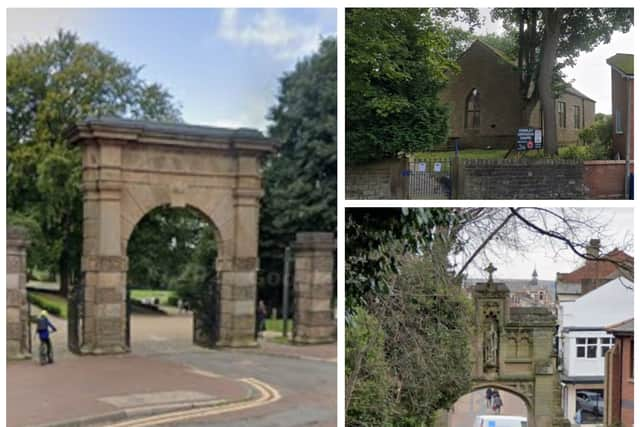
Three planned sites for commemorative blue plaques are Grade II listed structures, and so Listed Building Consent is needed from Chorley Borough Council for proposals at Chorley Unitarian Chapel, St Mary’s Church Gateway, and the Astley Park War Memorial Gateway.
Each plaque will be placed at eye-level, measuring approximately 350 mm in diameter and be fabricated in cast aluminium alloy with raised lettering and rim, finished in a durable blue enamel coating, consistent with the nationally recognised blue plaque design. The plaques will display concise, factual inscriptions commemorating individuals, buildings or events of recognised local importance.
The group’s agent told the council: “The proposed plaques are small in scale, surface-mounted, and fully reversible. They do not alter historic fabric and are therefore assessed as resulting in no harm to the significance of the listed buildings.”

The listed sites and their importance
Chorley Unitarian Chapel: The Unitarian Chapel (founded 1725) is of special architectural interest as a well-preserved early 18th-century Nonconformist chapel. Its significance derives from its simple classical façade, round-arched windows, and restrained stone detailing typical of the period. The building has historic interest for its association with the long-established Unitarian community in Chorley and contributes positively to the town centre’s varied religious and civic townscape. Its setting comprises modest 18th-century streetscape and landscaped frontage.
Gateway to the Roman Catholic Church of St Mary: The gateway, dating from 1910, forms part of the entrance to St Mary’s Roman Catholic Church (the church itself dating from 1852–53) and is listed for its architectural and historic interest. Its significance lies in its carved stone piers, decorative metalwork and its role as the formal threshold to one of Chorley’s principal historic churches. The structure contributes to the group value of the church complex and provides a visually important boundary feature within Market Street’s historic townscape.
War Memorial Gateway to Astley Park: This early 20th-century memorial gateway holds strong architectural and communal significance. Erected after the First World War, it comprises stone piers, iron gates and commemorative inscriptions. The gates were relocated to their current position from their original location at the entrance to Gillibrand Hall, adding to their historical narrative. Its special interest arises from its memorial function, craftsmanship, and role as a ceremonial entrance to Astley Park. It forms a key heritage landmark reflecting Chorley’s social history, civic memory and public identity.
A decision will be made by Chorley Council in coming weeks.
For the latest public notices from your area, please visit: https://publicnoticeportal.uk/