
Relief as pigeon rescued from 'lethal' netting at Preston bus station
It’s a common quip that one of firefighters’ many jobs is rescuing cats from trees.
But for many of the crew called to Preston Bus Station this week, it was certainly their first time rescuing pigeons from nets.


On Wednesday (September 9), crews were called to the ground floor of the station after passers-by grew concerned over a pigeon in distress.
Its wing had become badly caught in a bird net strung near the ceiling, trapping it against a row of anti-climbing spikes.
“I was on my way back from Bamber Bridge when I noticed people were looking up,” a witness told the Lancashire Evening Post. “The pigeon was caught in the netting, and I was worried that it was going to die if it didn’t get out.
“I would have climbed up if I could have done, but it was too high up. I called the RSPCA, a couple of wildlife rescues, and a vets, who were quite helpful.
“Then I went and got a security guard and asked who they had called, and they said they’d called pest control. I was really shocked!”
Bird nets are used in a variety of environments across the UK.
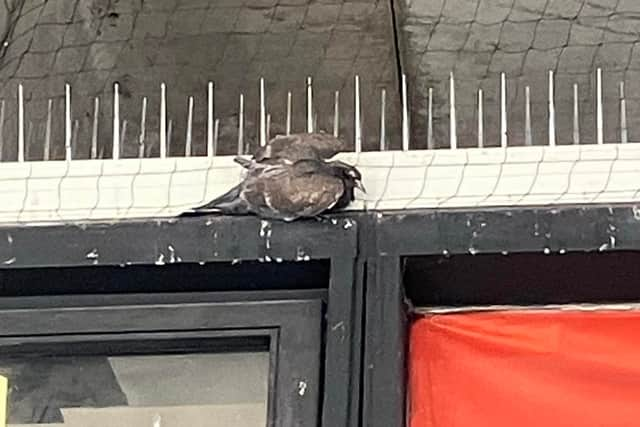
While often used by gardeners to protect plots from damage, they have grown more popular in urban spaces such as transport stations, universities, and listed buildings.
Though not strictly illegal, some charities like the Royal Society for the Protection of Birds (RSPB) have said they should not be used as “an easy alternative”.
However, despite the risks of entrapment or injury posed by bird netting, others say they are a better option than the harsher measures seen deployed in other areas of the UK.
In 2022, a pigeon trapped in a net in Preston railway station was reportedly “left to starve to death” despite concern from passers-by.
Meanwhile in July, a BBC investigation revealed that more than 2,000 pigeons had been shot dead across ten railway stations in the UK. A separate investigation into Manchester’s Victoria Station by the Manchester Mill confirmed the same.
“Some people consider pigeons to be pests, or ‘dirty’,” the witness said. “I don’t. People refer to them as ‘flying rats’. I understand that some people don’t like them, that they might be scared of them or that they spread diseases, but to kill something because it’s there just isn’t right.
“[These nets] are like fishing nets, and they can be lethal. Once they get in their with their beaks and feet and wings, they can’t get out of it. The more they try, the worse it gets, because they get tangled.
“I thought, ‘I’m going to have to do something here’. I said, ‘If we can find a solution, can you cancel the pest control?’, and the staff said yes.”
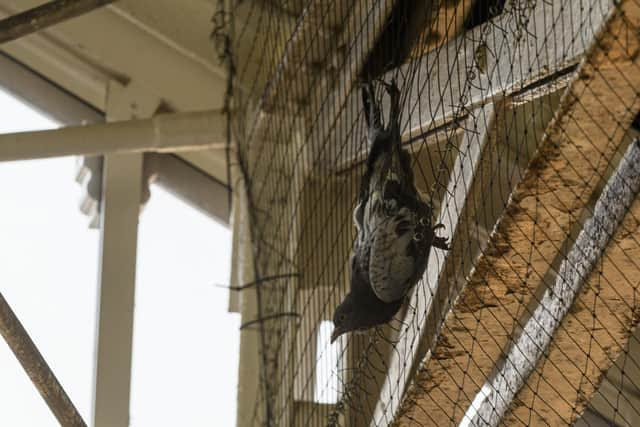
After the vet recommended calling the fire brigade, the woman got in touch with Preston fire station, who told her to dial 999.
“Obviously no one wants to ring the fire brigade unless they absolutely have to,” she said. “But they were amazing, and so professional. They walked in there and they had a really good look through the netting, and there were four other pigeons trapped behind.
“Those pigeons would have starved to death if they couldn’t get out. They actually made a hole so they could get out afterwards.”
Despite initially calling pest control, the woman said the staff at Preston Bus Station had been “incredible” throughout the ordeal, and had been happy to see the bird safely rescued.
After being taken down by firefighters, the staff provided a box for the pigeon to settle in so the woman could take it for further care.
“I went to Bamber Bridge vets with the pigeon, and they said it was doing fine,” the woman said. “But, it was really thin because we didn’t know how long it had been trapped in the netting for, so it’s now gone to a rehabber in Preston.
“I love animals, and I’ve rescued quite a few in the past,” she continued. “There are other ways of repelling pigeons that are more humane, that aren’t going to kill them.
“There are things like sound boxes and bird gels, which aren’t supposed to be toxic to birds. You can use lasers, or wire mesh, like those you see on a rabbit hutch. It would be good to see places deal with them in a different way.
“I don’t think all this was a case of people not caring. I think it’s a case of educating people.”
Don’t miss the stories shaping Lancashire. Sign up to our free breaking newsletter