
'I'm so glad I did'- Penwortham cancer survivor urges others to complete bowel screening kits

“The screening test only takes a few minutes to do, but it could make all the difference.”
A Penwortham man who is now cancer-free is urging other Lancastrians not to ignore the routine bowel cancer screening kits.
Taras Daneliuk, 65, was diagnosed with bowel cancer three years ago after completing a bowel cancer screening test sent through the post.
Following surgery at Royal Preston Hospital to remove the tumour, he was told the cancer had been successfully removed.
Taras said: “When I received my bowel cancer screening test through the post, I completed it straight away and I'm so glad I did. The results led to an appointment with a nurse at my GP practice, followed by a colonoscopy, which revealed a tumour. Within two months, I had surgery at Royal Preston Hospital and was told soon after that all the cancer had been successfully removed.
“Hearing that news was one of the biggest reliefs of my life. The care I received throughout was fantastic, and three years on I'm living a completely normal life.
“The screening test only takes a few minutes to do, but it could make all the difference. Bowel cancer symptoms can often be mistaken for other conditions, so screening can help identify problems before you even notice anything is wrong.
“I think some people are frightened by the word 'cancer', but the earlier it's found, the more treatment options there are and the better the chances of a positive outcome. If I had ignored the test, who knows what might have happened. For me, completing that kit was a no-brainer, and I'd encourage everyone who receives one to do it as soon as it arrives.”
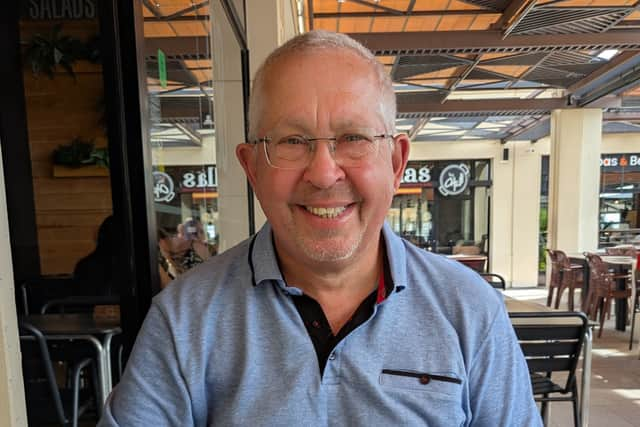

The University of Lancashire has shared Taras’ story as they highlight the importance of improving participation in bowel cancer screening, with thousands of people across the UK failing to complete a simple test that can help detect cancer early.
Bowel cancer screening is one of the most effective ways to detect cancer at an earlier, more treatable stage.
According to NHS figures, 70,000 cancers have been caught and almost 85 million people have been screened since bowel cancer screening began 20 years ago.
The faecal immunochemical test (FIT) is automatically sent to people aged 50 to 74 and checks for tiny, invisible traces of blood in a small stool sample.
Despite the potentially life-saving test being quick and easy, participation remains lower among some population groups, including people living in more deprived communities, people with disabilities, some ethnic minority communities and others who face practical, emotional or accessibility barriers to taking part.
Evaluated by the University of Lancashire, the Call for a KIT initiative was delivered in Lancashire and aims to increase bowel cancer screening among people who do not respond to their initial invitation.
The programme found that offering non-responders a conversation with a health promotion team member, either in person or by phone, significantly increased screening uptake, with face-to-face appointments proving particularly effective.
Designed to remove barriers to participation, consultations were tailored to individual needs, offering practical guidance on completing the test, opportunities to discuss concerns and support in requesting a replacement screening kit.
Overall, the intervention achieved a 14.9% response rate among people who had previously not responded to screening invitations, meaning 1,608 kits were returned that would otherwise have been ignored.
As a result, the University of Lancashire has published a practical guide for health care practitioners to run their own Call for a KIT initiative and improve screening participation on a larger scale.

Dr Rebecca Jefferson, from the University of Lancashire’s Health Technology Assessment Unit, led the creation of the implementation manual.
She said: "The success of the Call for a KIT programme shows that a simple conversation can make a real difference. When barriers are removed and people are given personalised support, participation in bowel cancer screening can increase.
"Many people intend to complete their bowel cancer screening kit but life gets in the way, or they're unsure what the test involves. The important thing is not to ignore it. Screening can help identify potential problems early, often before symptoms appear, giving people the best chance of successful treatment if cancer is found.
"We encourage everyone who receives a screening kit to take a few minutes to review the information provided and make an informed decision about participation. Anyone with questions or concerns should know that support is available through the NHS Bowel Cancer Screening Programme to help them understand their options and make the choice that is right for them."
The results of the implementation evaluation, From Evidence to Action: Launching the Call for a KIT Implementation Manual, was shared at an event for health care practitioners on the 21 October with the aim of rolling out the initiative more widely across the NHS.
The programme is supported by funding from NHS England North West, Lancashire Bowel Cancer Screening Programme, North West Cancer Research and the National Institute for Health and Care Research Applied Research Collaboration North West Coast.
Organisations interested in implementing the programme can contact the CFAK team via [email protected].
Download a copy of the Call for a KIT Implementation Manual - CFAK Implementation Manual FINAL V1.1 22102026.pdf