
Royal Preston Hospital horror as dad warns family - ‘I am going to die if they don’t help me’

“I am going to die if they don’t help me” were the tragic last words of Ronald Sunners as his frantic family watched him gasping for breath from his bed at Royal Preston Hospital.
Daughters Rose and Stacie were heartbroken after their father died 24 hours after being admitted to the hospital due to his COPD in January.
They watched with horror as their dad’s condition rapidly deteriorated and believe mistakes were made that contributed to his death. This is their father’s tragic story in their own words...
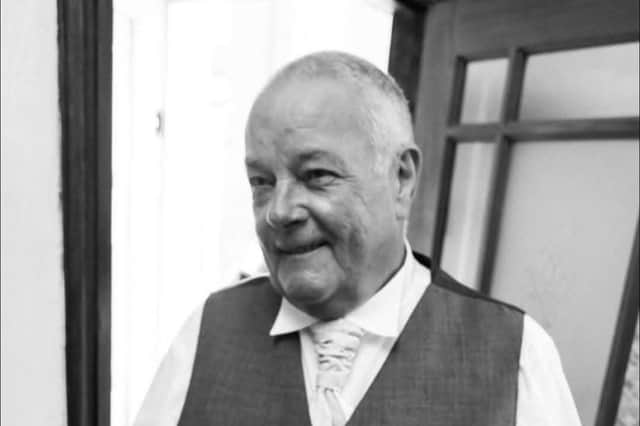

I am going to die if they don’t help me
“Royal Preston Hospital - You ruined our last memories with our dad," say sisters Rose and Stacie.
"All we see is a scared man with tears in his eyes and the haunting memory of his last words, "I am going to die if they don’t help me".
“On the 10th of January 2025 our lives changed forever. Our dad, Ronald Sunners, was taken to Royal Preston Hospital by ambulance on the 8th of January struggling to breathe due to his COPD. This usually wasn’t something we would all worry about as he had attended before in the same situation and had always been treated brilliantly, with good timing, steroids, the right care, and a speedy recovery.

He was begging for help
“However, we did not know that on the 9th of January my dad would still be in A&E, begging for help. He was so scared, and knew nobody was listening or taking him seriously, that he phoned his daughter and told her to drive 200 miles to come and support her sister in trying to get him help.
“It was visibly obvious that my dad was extremely distressed and terrified. When I arrived at 4:30pm he was in a room closest to the nurses’ desk in A&E, breathless and barely able to talk.
“At his feet was a nebuliser, cracked, broken, and falling apart. Despite us telling staff several times that he could not breathe to use it properly, they insisted that this was all they could offer.
“He could not even stand to use the toilet and it took us asking seven times before they finally brought him a commode. Every time we asked for help, or something as simple as dignity for my dad, we were made to feel like we were an inconvenience to their shift.
“I cannot count the number of times my sister ran out of the room begging staff to help our dad. Eventually, we persuaded them to do a blood gas test. The result showed he was unwell, but we were told he was “not poorly enough for intervention.” They told us his CO₂ levels had to be even higher before they would help.
“All the while, my dad begged us over and over to ask them for help. With fear in his eyes, he told us repeatedly: “If they do not help me, I am going to die.” Just two hours later he collapsed. Only then was he rushed to resuscitation.
“We thought at last he was going to get the help he needed. But what happened next was even worse...
“In resus, I watched nurses look confused trying to figure out how to connect the tubing. I directly asked the nurse ‘do you know what your doing’ and with a smile on her face she replied “I’ve never seen this type of tubing before”.
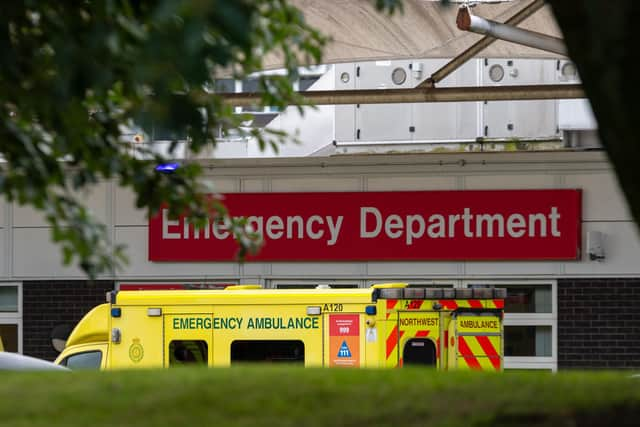
“The staff had connected my dad to a machine to help him breathe, but they used the wrong tubing. For at least 30 minutes he was breathing back his own carbon dioxide. During this time, his condition got worse. His CO₂ rose dangerously, from 9.8 to 14.2, yet this critical error was not even written in his notes. We later found out the hospital only reported it seven days later, after my dad had already died.
“My dad’s body was week from trying to fight for hours being ignored and begging for help, and after this error in my opinion the sudden rise in CO₂ left my dad unable to fight any more and unable to recover. He was left on the NIV for around 10 hours - unresponsive for 9.5 before they finally told us that he was dying.
“What haunts me most is what happened when the machine was first put on. My dad kept trying to pull the mask off his face. We were told by staff to move his hands away and stop him because “the machine was going to help him.” But now I cannot stop wondering, was he trying to take it off because he actually could not breathe?
‘No accountability, just excuses’
“Later, over a phone call, I was told that testing had been carried out on that very machine, and that the test showed “a person could not breathe” through it when it was set up wrongly. This leaves me with the unbearable thought that my dad knew it was hurting him, and we were told to stop him from fighting it.
“The hospital now admits this error happened, and that it contributed to his death. But they tried to soften the truth, writing that he may not have improved anyway because of his underlying illness. That is not accountability. That is an excuse.

“What hurts us even more is that the hospital’s report claims that before resus, dad was “commenced on 1L oxygen via nasal cannula.” This is not true. As his family, we were present with him the entire time. He was never given oxygen in this way. To read something false in black and white in their official report has added to our pain.
The lack of dignity was unforgivable
“And when Dad’s final moments came, the lack of dignity was unforgivable. As he lay dying, surrounded by his family, two staff members walked into his bay and started a training session on a machine in the corner. They did not acknowledge my dad, did not speak to us, and carried on as if his life did not matter. Watching that as my dad took his final breaths is something that will haunt us forever.
“On the 10th of January 2025, at just 71-years-old, my dad passed away. A kind, loving man, our family’s rock, left without the safe, compassionate care he deserved.
“The hospital has admitted an equipment error, delays, and poor reporting. But they call the harm only “moderate” and suggest he may have died anyway. How can we believe what is written in their report when they cannot even get his time of death correct? We reject their excuses. We were there, we saw what happened, and we know how badly he was failed.

We love you dad - and we won’t remain silent
Rose added: “We are sharing this because we cannot stay silent. My dad’s life mattered. His story matters.
“I feel that too many people are viewed as just a number, including hospital staff. We are people, they are people and my dad was a human being.
“And we will keep fighting so that no other family has to endure the same neglect, the same excuses, and the same heartbreak. We love you dad.”
Rose and Stacie are now urging the NHS to take steps to ensure other families are spared the same heartbreak by ensuring patients and their families are listened to.
The siblings are considering starting a petition, ‘Ronald’s legacy: compassion and safety for every patient’, and are encouraging other families to come forward and share their own hospital experiences.
Rose added: “This is not meant to sound like us bashing the staff of the NH, as I know there are so many lovely hardworking staff.
“But the event horrified me and my family. I blame the people at the top for the working environment and culture they have developed. Mistakes happen but are we really learning from them?
“I am a registered care manager myself and I would not dream of treating anyone like this, it’s not about defending what’s happened, it should be about taking accountability of what has happened and most importantly listening to how they made us feel and how they made my dad feel.
“My dad was a strong man, I’ve never in my whole life seen him scared. That day my poor dad was terrified.
“I want the government and NHS to strengthen protocols and staff training for people attending A&E, and also revise the training on compassion and empathy across the NHS.

What Lancashire Teaching Hospitals said
A Lancashire Teaching Hospitals spokesperson said: “We offer our sincere condolences to the family and friends of Ronald Sunners and unreservedly apologise for the experience in January. We also apologise for delays in communication which have caused additional distress.
“An internal investigation has now concluded and Mr Sunners’ family have been assigned an experienced colleague who has taken them through the findings of this and will keep in touch with the family to ensure any further questions and feedback can be meaningfully heard and responded to.
“We welcome the independent scrutiny of the Coroner and are fully committed to applying any learning identified from both the investigation and any future inquest.
“Feedback from patients and their families about the care and treatment they receive is important and we would always encourage patients or their families to contact our Patient Advice and Liaison Service (PALS) to discuss any concerns they have, so that any issues can be resolved as soon as possible.”