
Blaise Tapp: The future is password free – but I’ll still be saying sorry
One of my biggest flaws, I am told, is my propensity to apologise at the earliest opportunity, regardless of whether or not I'm actually at fault. It's one of many reasons why I'd be a lousy politician.
It’s become progressively worse with age, especially when technology is involved - my go-to phrase is 'sorry, I'm an idiot/dinosaur’ whenever I’m faced with a standard piece of technology such as a card machine in a restaurant or supermarket. It doesn’t matter how many times I’ve used the said card that day, it is not uncommon for me to make a complete pig’s ear of the simple act of tapping and don’t get me started on my pin.
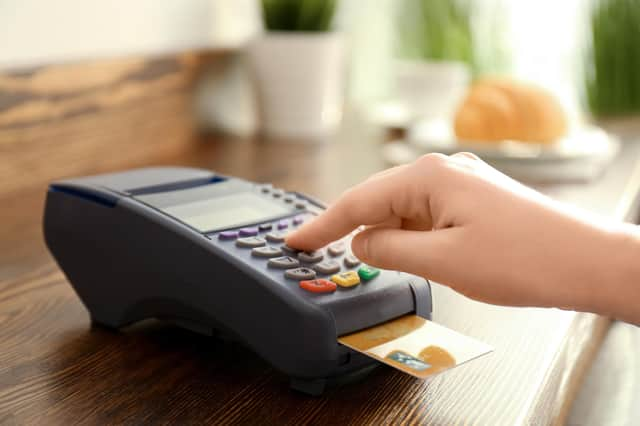

Unlike millions of others, I’m still using my bank card rather than my not-so-smartphone to tap, due to the fact I’m just as likely to dial in members of a family group chat than I am to successfully pay for a meal deal and a bunch of bananas.
Which is why I’m heartened by suggestions that accessing one’s technology could get easier in the not-so-distant. According to the National Cyber Security Centre there’s clear evidence that our digital information would be a lot safer, not to mention simpler to use, if society ditched passwords and moved to passkeys. The digital whizzes at the cyber centre say that passkeys, which are stored in devices rather than addled minds, are the future as they are more secure than passwords, which let’s face it have always been a shambles.
Unless you are one of those ultra sensible people who attaches house keys to your belt, the likelihood is that you’ll either a) reuse the same password across a number of accounts b) use the most obvious password imaginable c) write all your passwords down in an easy-to-pinch notebook or d) all of the above. Personally, I’m all for the eradication of passwords for everything as I spend half my life resetting them and don’t get me started on the memorable word which, as it turns out, isn’t memorable at all.
While I have been made to use passkeys for some accounts and do see the obvious benefits, there are drawbacks, including the fact that they are used along with fingerprints and biometrics. As someone with digits like Cumberland sausages this is a genuine problem for me on a daily basis and my one recent attempt to complete a task by using facial recognition, ended up with my phone nearly ending up in next door’s garden.
Quite frankly, it doesn’t matter how much clever people advance technology, folk like me will forever be apologising for making a hash of it.