
Office space in police cells - how one of Preston's most handsome buildings is being sensitively refurbished
The architects behind the reimagination of one of Preston city centre’s most historic buildings have spoken about how they’re turning it into a workspace fit for the 21st century.
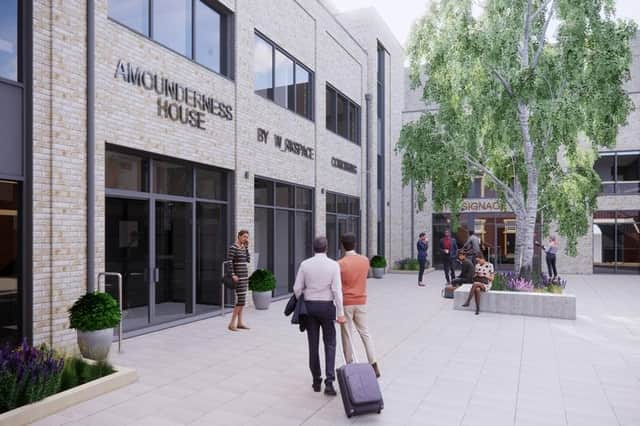
Leading architecture, design and masterplanning practice FWP has used all its experience working on the conversion of Amounderness House in Lancaster Road.
The building was originally constructed in 1857 as a police station with holding cells, before being extended in 1901. FWP's transformation of the former magistrates' court includes a striking new entrance that will enable the building to function as a modern commercial space.
The FWP design also includes transforming the building's courtyard area into a vibrant public space that will act as a centrepiece of the development.
Neil Ainsworth, partner at Preston headquartered FWP, said: “The original 1857 and 1901 buildings will be retained and sensitively redeveloped, including any necessary restoration or repairs. Internal reconfiguration works will be "minimal and as sensitive as possible" whilst retaining heritage features."
What to expect
Four commercial units will be created, two in the former courthouse cells. A central hub will be developed on the ground floor and will feature breakout, 'hot desk', and social space, along with self-contained office units. As part of the transformation, former cells on the first floor will also be converted into office spaces. And further office space will be created on the second floor.
Neil added: “We have worked closely with the city council on plans for this flagship project in Preston city centre. It has been a detailed and thoughtful process. Our design work has been focused on bringing a long-disused building back into use as a modern office hub that meets the needs of businesses, while preserving its great character.
“We have worked to ensure the building's original elements will be retained and sensitively redeveloped, with restoration work a key part of what is to come. Part of that design has involved the innovative use of the courthouse's former cells, and the centrepiece of the development will be its impressive central courtyard. We're looking forward to the regeneration of the building playing its part in the continued development of the Harris Quarter. These are exciting times for the city centre."

About FWP
FWP, which is headquartered in Preston's business district, has played a major role in several high-profile projects in its home city, including leading on the award-winning £5m regeneration of its markets and the restoration of their iconic Victorian canopies.
The FWP team also spearheaded the acclaimed regeneration of Preston North End's Deepdale ground.
Regionally and nationally, it has built a strong reputation for its expertise on sensitive restoration and regeneration projects, including the recently completed transformation of Rochdale Town Hall.
Founded in its home city of Preston in 1960, today its work covers all aspects of construction, from cost management to architecture and masterplanning. It is truly multi-disciplinary. With offices in Manchester and London, for more than six decades, FWP has played its part in delivering iconic developments across the UK.
FWP is also the creative force behind some of football's most innovative stadium projects, working with clubs at all levels to make a real difference to their communities.
Additionally, FWP has worked on a wide range of NHS projects, including the delivery of the award-winning £9.4m Wesham Rehabilitation Centre on the Fylde coast.