
Storm Desmond 10 years on: 'Person seen floating in the floods in Lancaster holding on to wheelie bin'
The one-in-100 year flood which hit Lancaster 10 years ago left 55,000 homes without power and wreaked havoc in the city
It’s 10 years ago that Storm Desmond caused devastating flooding in Lancaster which effectively cut off the city from the outside world.
Torrential rain and gale force winds hit with a vengeance and caused widespread flooding and carnage. The north of the county - in particular Lancaster and surrounding areas - were by far the worst hit. Army trucks were stationed at the Royal Lancaster Infirmary to act as ambulances after flooding cut the city off from the power grid and blocked all but one access route.
From domestic electrical faults to people stuck in cars in flood water, Lancashire Fire and Rescue Service was inundated with calls for help. A spokesman for Lancashire Fire and Rescue Service said they had 300 calls in a day and attended 200 incidents. He said at the time, “Basically, most of the incidents are where people’s houses have been flooded or they have been stuck in cars.
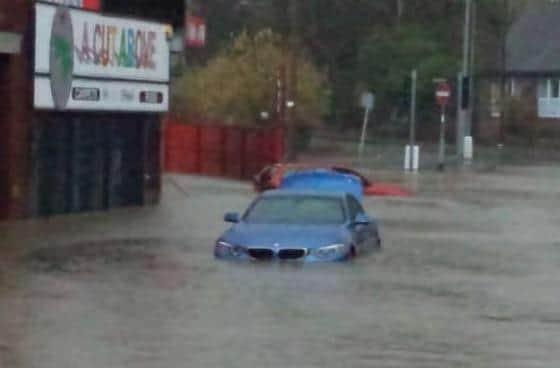

“Most of it has been going from one property to another, either rescuing people from cars or to pump out water.
“We got to the stage last night where it was difficult, with people asking us to pump water from houses, but there was nowhere to pump it because it was that wet.
“In some places where ambulances couldn’t get through, fire engines were taking casualties to Lancaster Infirmary.
“In Lancaster, firefighters had two boats which were transferring people through flooding from one side to the other in an emergency.
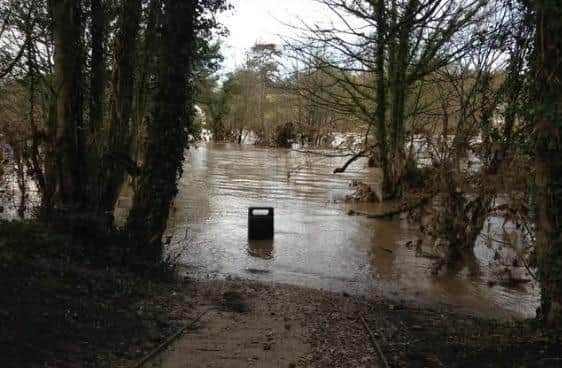
“There was a person floating in the floods seen holding on to a wheelie bin in Caton Street. That whole area was flooded.”
Flood defences which had upgraded in 2010 to withstand a one-in-100-years flood were breached and 55,000 properties in Lancaster, Morecambe, Carnforth and the surrounding area were without power for a number of days following the flooding of the major electricity substation on Caton Road.
Houses in Morecambe, Heysham and Carnforth also lost power, and Lancaster University and the Lancashire Campus of the University of Cumbria were forced to evacuate students, cancel teaching and postpone deadlines.
Restoration of electricity supplies took days for the majority of customers, depending on the level of damage.
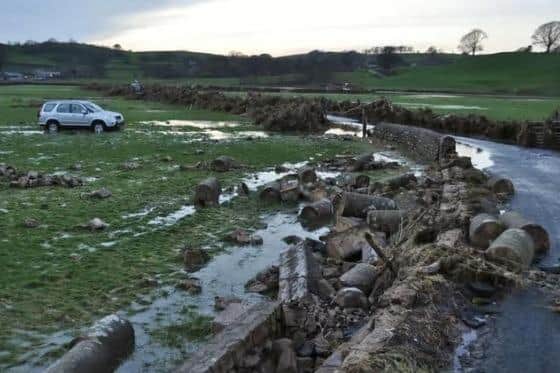
Generators were delivered to key sites determined to be most in need, including a respite centre which was set up at Salt Ayre Leisure Centre in Lancaster. Another 4,000 properties were without power across Cumbria.
Mobile generators had restored electricity to most homes by December 7, 2015 when unforeseen damage caused up to 42,000 to lose power again, resulting in many being left without electricity for three consecutive nights . Electricity North West sent vans out to various streets in the district so people could have a hot meal. Rail services were badly hit by the severe weather and Northern Rail, along with several other train operators, advised customers not to travel, as many lines and roads were impassable due to flooding.
Morecambe Bay Hospitals called for staff and the public to assist. A spokesman said as result of the weather, a number of staff from both the Westmorland General Hospital in Kendal and the Royal Lancaster Infirmary in Lancaster had not been able to get home or make it into work. As a result of the loss of power to around 55,000 homes, the RLI was operating with the use of its reserve generators. Firefighters used a portable pump to remove the water and called in the utility company to isolate electrical circuits affected by floodwater at commercial premises on North Road, Lancaster.
Also in Lancaster, the occupants of two cars stranded in floodwater were rescued uninjured by firefighters. Shortly after crews rushed to a car stuck in flood water in Hollins Lane, Forton. Electrics were affected by flooding on premises on High Street, Garstang. The same problem affected Main Street, Lancaster. In the village of Priest Hutton, just outside Carnforth, firefighters went to a property where electrics were affected by flooding on Upphall Lane. And they dealt with another car stuck in flood water on Denny Beck Lane, Quernmore, just outside Lancaster, at around the same time.
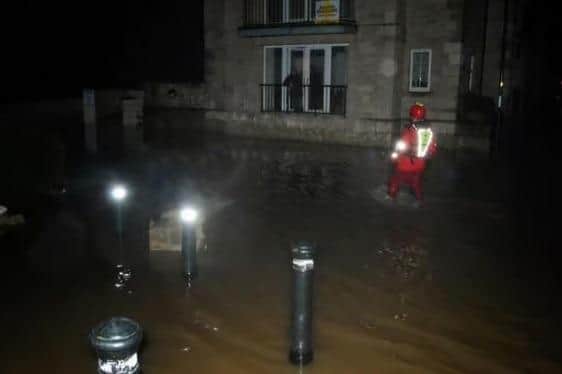
Key areas across Lancaster were flooded, including Caton Road, St George’s Quay, Stonewell, Cable Street, with restaurants, businesses and houses impacted. Storm Desmond was an extratropical cyclone and the fourth named storm of the 2015–16 UK and Ireland windstorm season, notable for directing a plume of moist air, known as an atmospheric river, which brought record amounts of rainfall to upland areas of northern Atlantic Europe and subsequent major floods.
In the UK, the worst affected areas were centred on parts of Lancashire, Cumbria, and the Scottish Borders. Disruption from flooding, high winds and damage to infrastructure led to the suspension of hundreds of rail services across the country, with the West Coast Main Line closed for several days due to flooding and a landslide.
Sports fixtures were also cancelled and more than 43,000 homes across the north of England were left without power, as well as more than 2,000 homes in Ireland and around 700 in Wales.
The expected heavy rainfall was considered to be an extreme weather event by the Norwegian Meteorological Institute, who named it Synne. The Free University of Berlin named the low Ted, as part of its Adopt–a–vortex programme.
In November 2019 a multi-million pound flood defence scheme was completed by Electricity North West in Lancaster. The scheme saw substantial work carried out including the replacement and improvement of various electrical equipment at the Caton Road substation site. The project took place following the mass floods that hit Lancaster in 2015 during Storm Desmond, which caused the Lune to burst its banks, and it is hoped the improvements will help protect power supplies against potential floods in the future. Earlier that year, Electricity North West completed a £2m project which saw 7km of underground cables replaced which power Lancaster, Morecambe and the surrounding areas.