
What was approximately 168 cms tall, weighed around 57 kilos and made a regular appearance on the seafront at Morecambe?
If this was recalibrated at 5’ 6” without stilettos and nine stone packaged in a 36-23-36 frame, you might perhaps guess that this was the archetypical beauty queen gracing the podium of Morecambe’s Super Swimming Stadium in summers long gone.
Selected at heats throughout the year a bevy of bathing beauties would appear on the last Wednesday in August to compete for the title of Miss Great Britain, one of the main attractions at Morecambe’s much-missed Super Swimming Stadium which opened 90 years ago on July 27, 1936.
Introduced in 1945 by the Borough of Morecambe in conjunction with the Sunday Dispatch newspaper, the competition was a light-hearted attempt to provide some much needed cheer after six years of wartime austerity and to give a boost to Morecambe’s economy – everyone loved a pretty girl, pretty girls would draw crowds and crowds would spend money.
The first contest was a relatively modest affair, won by 18-year old local girl Lydia Reid who defeated five other finalists and was awarded a silver cup (to hold for a year), a new swimsuit, a basket of fruit and a cash prize of seven guineas, plus the title National Bathing Beauty Queen (It did not become Miss Great Britain until later).
From this small beginning one of Morecambe’s most popular attractions was born.
Over the next three decades legions of leggy lovelies paraded before the discerning gaze of thousands of spectators and the famous personalities deemed worthy of assessing such mass pulchritude.
For the following year’s contest the Sunday Dispatch donated a silver rose bowl to be presented to the winner (to keep). Some 7,000 spectators packed the stadium to see June Rivers win the new trophy and take home the much improved cash prize of £100.
This increased again two years later to £500 for the winner and then to a staggering £1,000 from 1950 onwards, the title that year going to the aptly named Violet Pretty. The runner-up was awarded £200 while the third received £100.Although most local people were pleased with the success of the event, there were dissenting voices.
A local churchman wrote: “It seems curious that a young woman can walk around before thousands of people as near naked as the law allows in order to have her physical points assessed as if she were some sort of prize animal at a cattle show.”
This view, more forcibly expressed in a later era, was not widely held at the time and was largely ignored. After the Sunday Dispatch withdrew from the competition in 1957 Morecambe Corporation took over its organisation backed by new sponsors.
The generous prize money and publicity attracted contestants from all parts of the UK but always with a strong representation from the North West and Yorkshire. Many made repeated attempts to win. In 1961, out of the 36 finalists 14 had been there in 1959 or 1960.
Contestants in the earlier finals, despite being fewer in number, displayed a greater variety of appearance, ranging from a diminutive 5’ 2” and seven stone two lbs to the dizzying heights of 5’ 10½” and a healthy ten-and-a-half stone.
Post-war austerity did not lead to malnourished matchsticks! In the late 1950s and early 1960s, however, a certain uniformity started to creep in with the majority of competitors clustered around the averages quoted at the beginning of this article.
By this time the programme of events for Grand Final Day had settled into a pattern. In 1959, for example, spectators in the Super Swimming Stadium were entertained by Don Thompson at the ‘Fabulous Silvertone Organ’ during which the finalists were being driven along the West End Promenade in horse-drawn landaus to arrive at the stadium by 2pm.
Excerpts from that year’s Aqua Cascades Show preceded the main event – the Beauty Pageant.
This was remembered later by a local resident as “a bizarre exhibition where women in bathing suits and stiletto-heeled shoes, with full make-up, artificial tan and back-combed hair paraded round the pool clasping their entry numbers in their manicured hands, bosoms enhanced by craftily applied Sellotape!”
Judging was carried out by a representative of the sponsors and a mix of well-known names from the world of entertainment at the time - stars such as George Formby, Laurel and Hardy, Joe Loss, Adam Faith, Max Bygraves, Bob Monkhouse, Morecambe and Wise, etc.
Most winners enjoyed their ‘Fifteen minutes of fame’ and went back to the anonymity of their normal lives, albeit a little bit richer, but some used the prize money as a stepping stone to careers in the beauty industry, modelling, films and television.
The 1951 winner Violet Pretty went on to become a film star under the stage name Anne Heywood while Leila Williams, Miss Great Britain in 1957, found fame as the first female presenter of the BBC children’s programme Blue Peter.
1972 saw TV transmission of the Miss Great Britain contest go nationwide at the peak viewing time of 8pm on the Wednesday evening of the final.
The competition was now being held over two days, comprising a round of casual wear held in the promenade gardens, a traditional bathing beauty parade inside the Super Swimming Stadium and a finale in the Winter Gardens where the contestants donned evening gowns.
While the marks from all the rounds were totted up there was a quick costume change into swimsuits before the verdict of the judges was announced and the winner presented, not just with a sash declaring her to be Miss Great Britain, but with a silver mace and the full regalia of a fur-trimmed cloak and sparkling crown!
But times and attitudes were changing – beauty contests were no longer seen as harmless entertainment but as demeaning ‘cattle markets’ and an affront to female equality.
In 1975 the Super Swimming Stadium, beset by structural and financial problems, was forced to close and Miss Great Britain had to find a new home.
It lingered on in the resort for a few years but its waning popularity and eventual loss of TV revenue led to the decision by Lancaster City Council to withdraw funding and the event was finally axed in 1989.
The veneer of glamour that the Miss Great Britain Contest had once lent to Morecambe had disappeared for ever.
Today Morecambe holds its breath to see if the forthcoming Eden Project can be a worthy successor to the Super Swimming Stadium.
Barry Guise is co-author with Lesley Guise of the book In The Swim: Morecambe’s Super Swimming Stadium. Pictures by courtesy of Morecambe Heritage Centre.
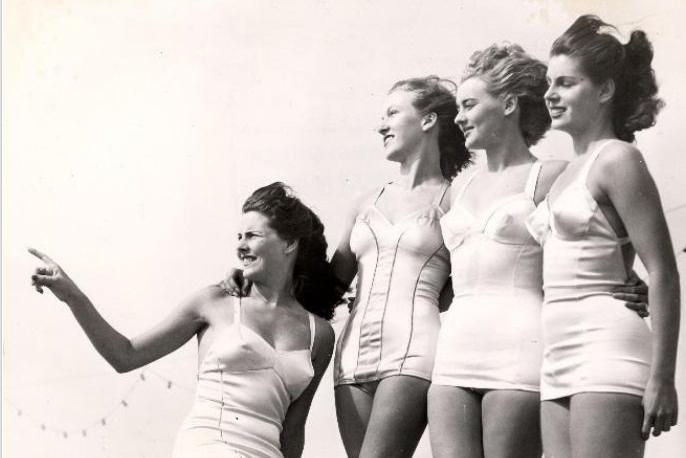
1. Morecambe Super Swimming Stadium
Image from Morecambe Borough Council collections include the archive of the publicity department, who were involved in running the first national beauty contest. Women applied from all over the country, and the final would take place in the Super Swimming Stadium, in Morecambe. Photo: Lancashire Archive. Photo: Lancashire Archive
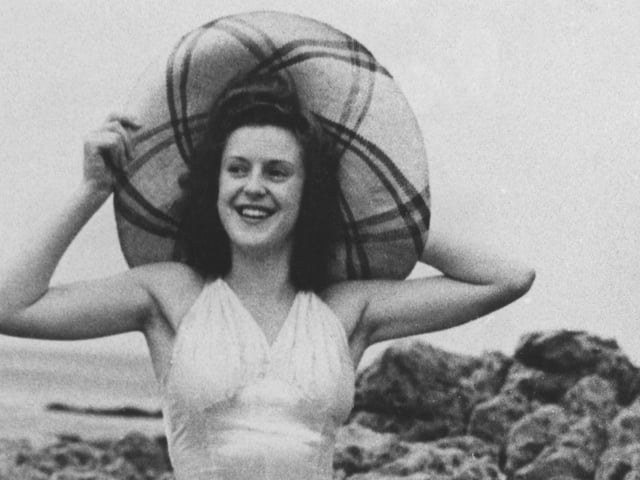
2. Morecambe Super Swimming Stadium
Lydia Reid, winner of the first final in 1945, poses in the white satin swimsuit made specially for the contest by her mother. Photo: Morecambe Heritage Centre
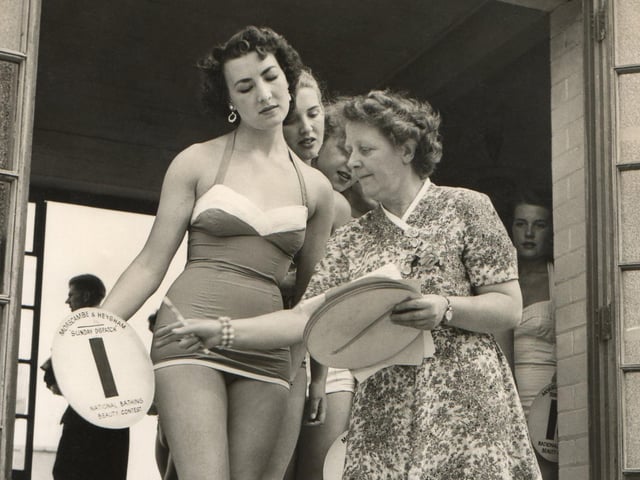
3. Morecambe Super Swimming Stadium
The real 'Miss Great Britain'. Miss Dorothy Fisher from Morecambe publicity department ran the competition from its inception until her retirement in 1973. Photo: Morecambe Heritage Centre
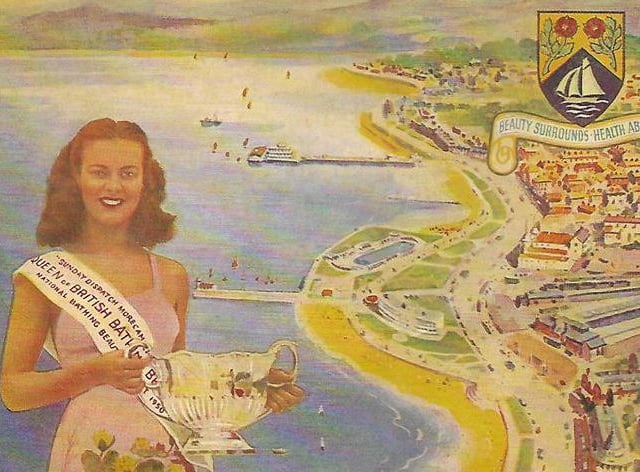
4. Morecambe Super Swimming Stadium
Violet Pretty's image on the cover of the Morecambe 1951 brochure emphasised the importance to the resort of the Super Swimming Stadium and The Miss Great Britain competition. Photo: Morecambe Heritage Centre