
MP to attend public meeting over future of Walton-le-Dale's royal lime trees - and you can too
A public meeting over the issue will be held next month, attended by the Environment Agency and chaired by an MP.
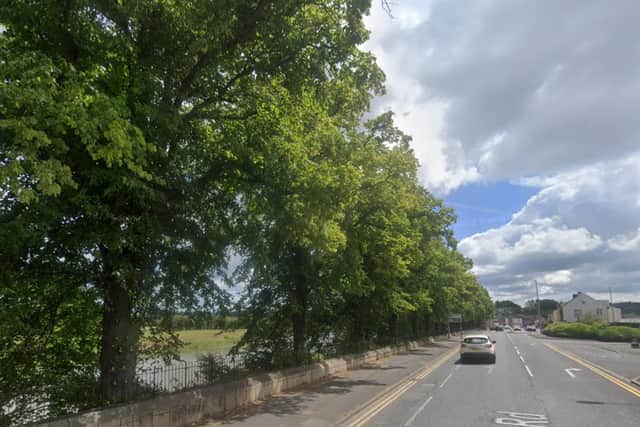
A public meeting has been arranged for people opposed to Environment Agency plans to cut down 18 ‘royal’ lime trees in Walton le Dale.
More than 6,000 people have signed a petition to save the trees in Victoria Road, which are earmarked for removal as part of the Preston & South Ribble Flood Risk Management Scheme in the area. The trees were planted in 1912 as a 21 gun tribute to commemorate the Coronation of King George V.
Damien North, petition creator, said: “We all accept that action needs to be taken to improve flood defences, but there is a viable alternative option that does not result in the felling of these majestic, historic and iconic trees.”
Public meeting
A public meeting is taking place at The Yew Tree Public House on Victoria Road, Walton-le-Dale, on Monday, June 8 from 7pm and will be chaired by Ribble Valley MP Maya Ellis. A representative from the Environment Agency will be on the panel together with local councillors.

What does the EA say in full?
An Environment Agency spokesperson said: "Our priority is protecting hundreds of Walton-le-Dale homes and businesses from the devastating effects of flooding and felling trees is always our last resort.
"We can’t carry out construction from within the River Ribble due to the risk of causing environmental harm to the river, its wildlife, and the surrounding land. Relocating the works further inland is also not feasible, as the road carries essential utilities and regionally significant communications cables. Neither of those two options is financially viable.
"We understand the strength of feeling for these trees from the community and we've taken 180 cuttings to grow at a nursery and replant in the area."
On why the trees can’t be retained:
- Extensive investigations were conducted into alternative designs that could preserve the Lime trees on Victoria Road. This included tree root radar surveys and engineering assessments. Unfortunately, due to the density and spread of the root systems, and the proximity of the trees to the required working area, it is not feasible to retain them.
- The secant piled foundations required for the new wall will cut through the roots anchoring the trees. Contractors also require sufficient space for machinery to operate safely. As a result, the trees cannot be retained.
- The design outlines the removal of 18 trees, but three others at the viewing platform would not interfere with works and would not be removed.
On why the EA can't build around the trees:
- Constructing defences in front of the trees, closer to the river, was considered. However, this option would require temporary obstruction of a section of the river, which would increase flood risk. It would also make the scheme financially unviable and cause serious environmental harm to the river, which is situated within a Marine Conservation Zone.
- Furthermore, the Environment Agency is unfortunately unable to move works towards the pavement and carriageway. This is due to the large number of services that run adjacent to the existing wall, including a critical fibre optic communications cable of regional importance. Surveys also found that the tree roots appear to be causing damage to the pavement and pose a risk to the services beneath it. There is also evidence that the roots have caused damage to the existing surface water drainage system on Victoria Road.
On the need for new flood defences:
- The existing flood wall along Victoria Road is showing signs of movement and needs to be replaced with a more resilient solution.
- While defences have not been significantly overtopped in recent years, they have come close on several occasions, including on New Years' Day in January 2025.
- Recent flood modelling shows that raising the wall height by approximately 0.3 metres is required to reduce the risk of fluvial flooding to the community. This risk is increasing due to climate change.
- The new wall has been designed to have a minimum 100-year design life. The design is adaptive, which means the wall can be raised in the future, to keep pace with climate change, without undertaking further work on the foundations.