
Lancaster University scientists make 'significant' breakthrough in drug to treat Alzheimer’s Disease
An international team of researchers led by Lancaster University have made a promising breakthrough in the development of drugs to treat Alzheimer’s Disease.
For the first time, scientists have developed a drug that works on both major ‘hotspots’ of the Tau protein in the brain - a key driver of neurodegeneration.
The drug, a peptide inhibitor called RI-AG03, has been shown to be effective at preventing the build-up of Tau proteins in both lab and fruit fly studies.
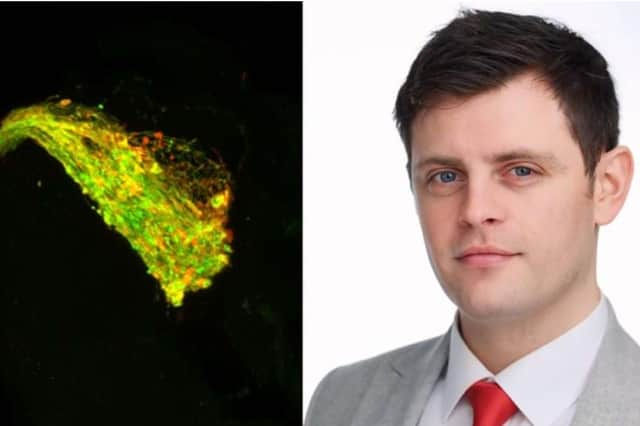
Lead author Dr Anthony Aggidis, former Postdoctoral Research Associate at Lancaster University and visiting researcher at the University of Southampton, said: “Our research represents an important step toward creating treatments that can prevent the progression of diseases like Alzheimer’s disease.
“By targeting both of the key areas on the Tau protein, this unique approach could help address the growing impact of dementia on society, providing a much-needed new option for treating these devastating diseases.”

Medical pilot taking place in Lancashire
The breakthrough comes as it was announced six hospitals across the North West of England will participate in the pilot aimed at reducing avoidable brain injuries in childbirth.
They are the Countess of Chester Hospital NHS Foundation Trust, East Lancashire Hospitals NHS Trust, Lancashire Teaching Hospitals NHS Trust, Liverpool Women’s NHS Foundation Trust, Warrington and Halton Teaching Hospitals NHS Foundation Trust and Wirral University Teaching Hospital NHS Foundation Trust.
According to the Department of Health and Social Care (DHSC), in 2021 around 2,490 babies received care for a brain injury during or after birth. As part of the Avoiding Brain Injury in Childbirth (ABC) pilots, staff will be helped to better identify signs that a baby is showing signs of distress during labour.
It will also help staff when faced with emergencies that happen when a baby’s head becomes lodged in a mother’s pelvis during a Caesarean birth.
DHSC said that the programme could be rolled out nationally next year if the pilot is considered a success.
Baroness Gillian Merron, Minister for Patient Safety, Women’s Health and Mental Health, said: “This is a critical step toward avoiding preventable brain injuries in babies, as we work to make sure all women and babies receive safe, personalised and compassionate care.
“This Government is working with the NHS to urgently improve maternity care, giving staff the support they need to improve safety and ensure women’s voices are properly heard.”